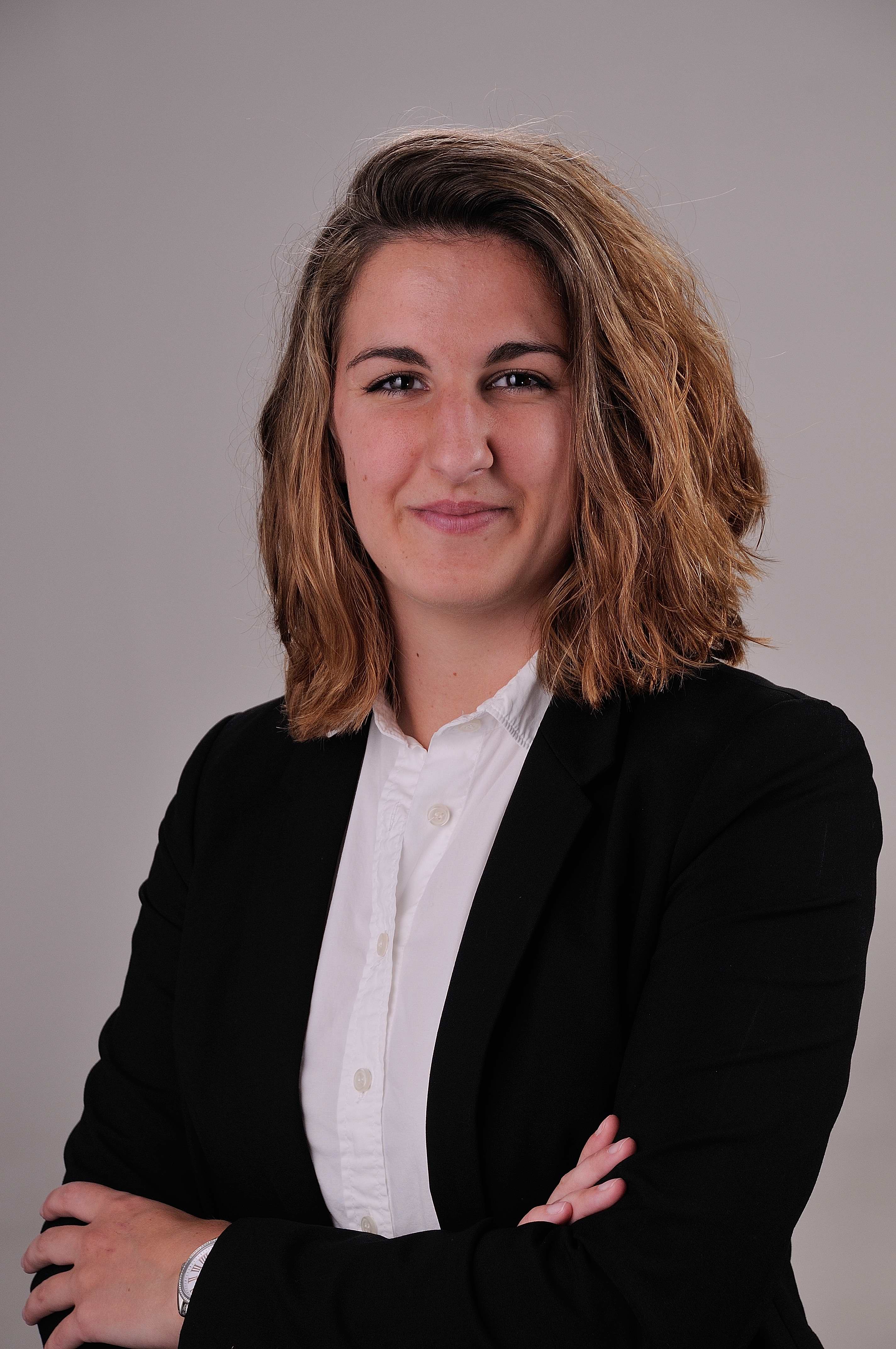
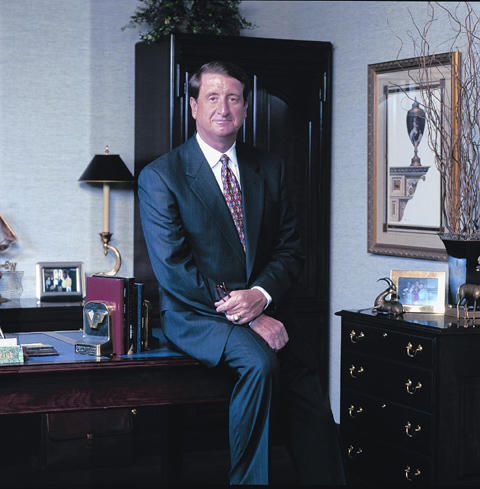
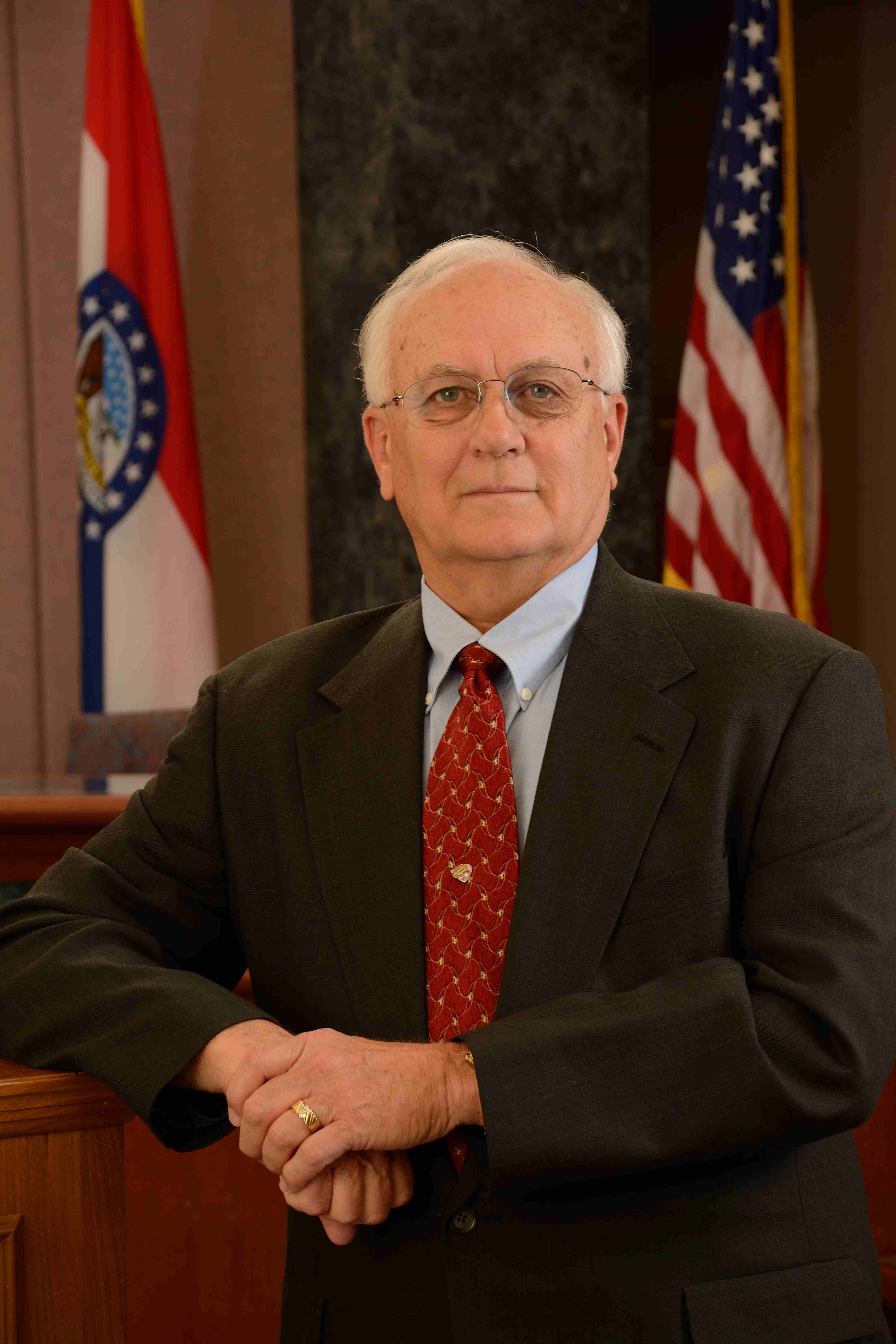
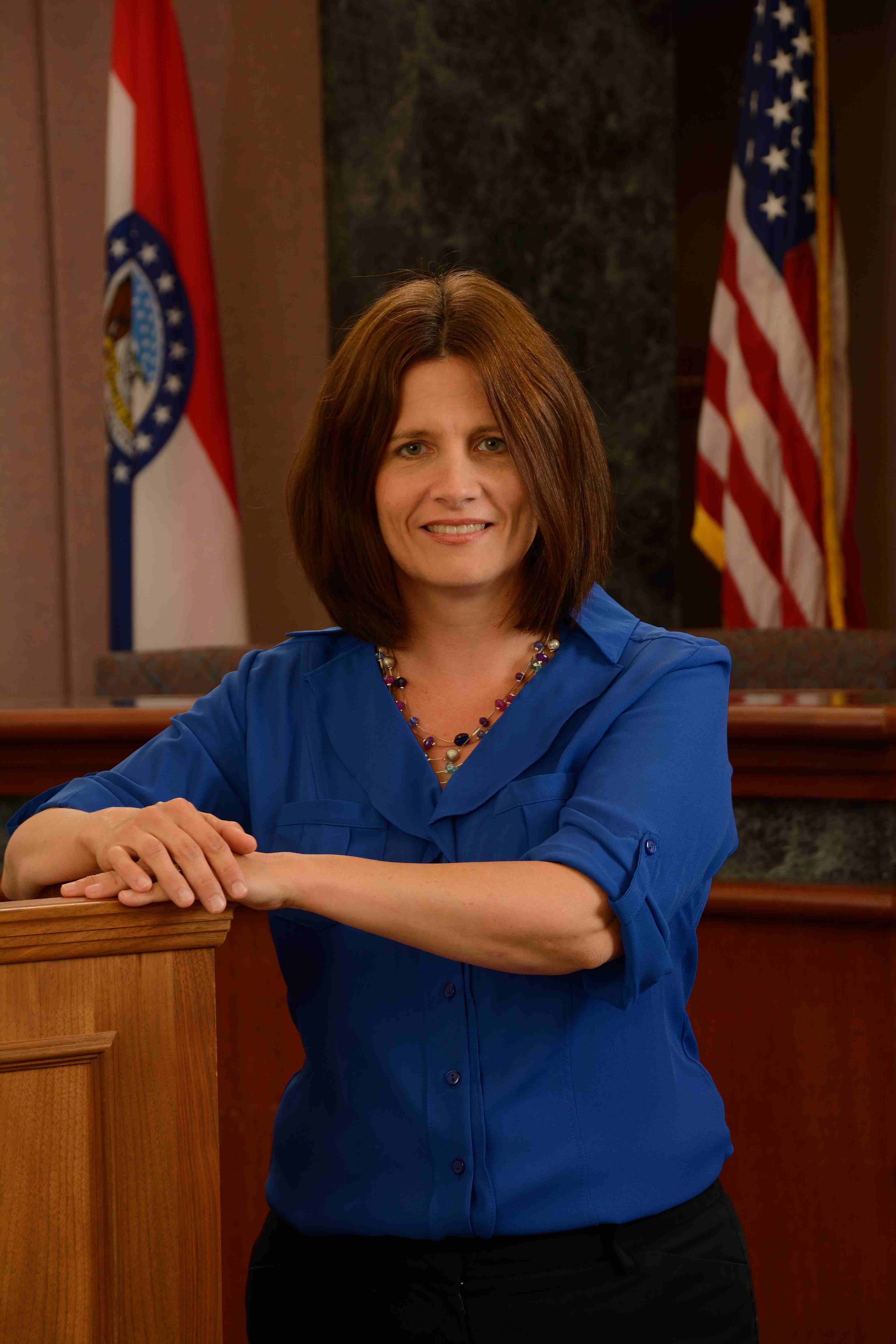
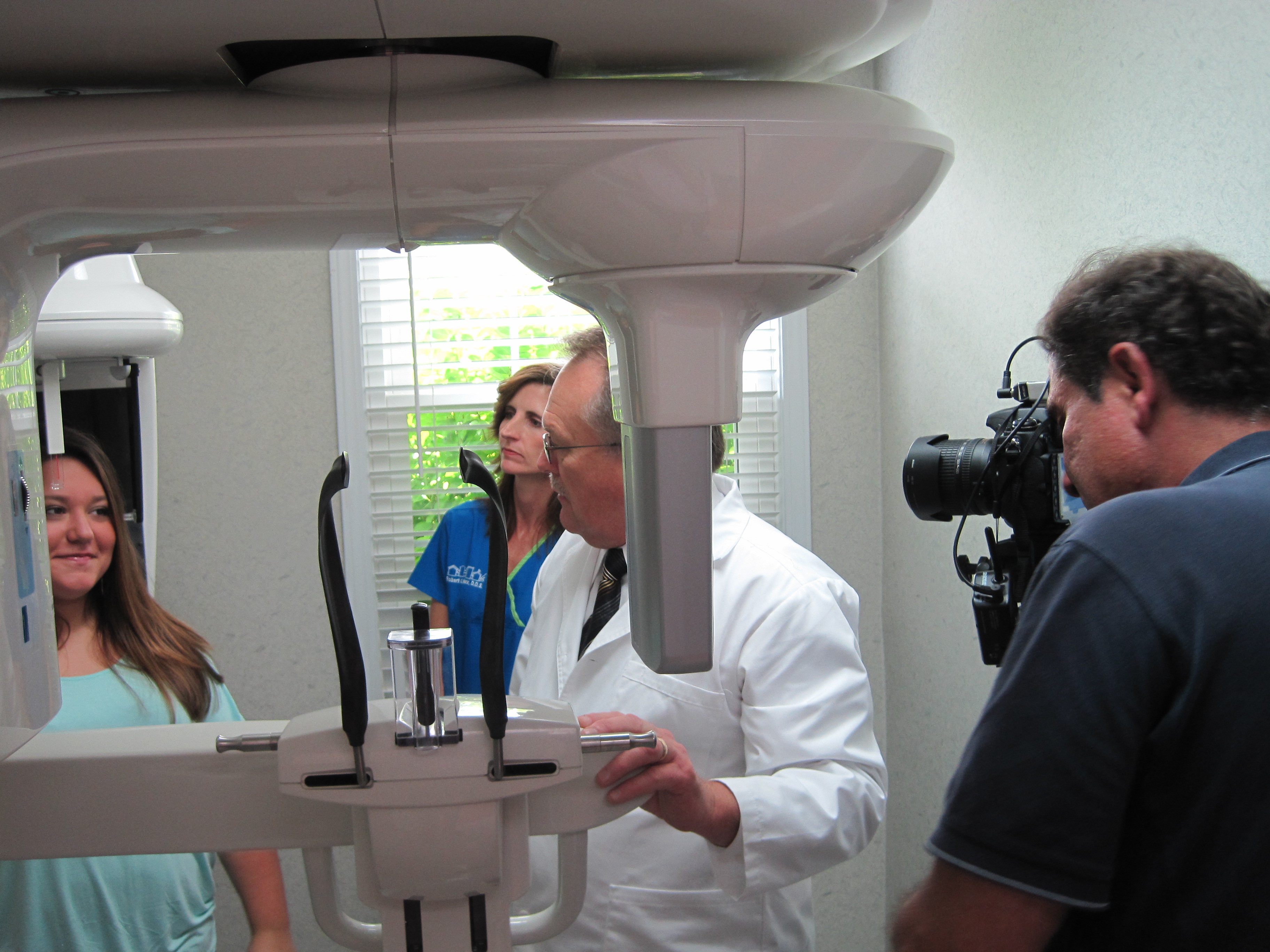
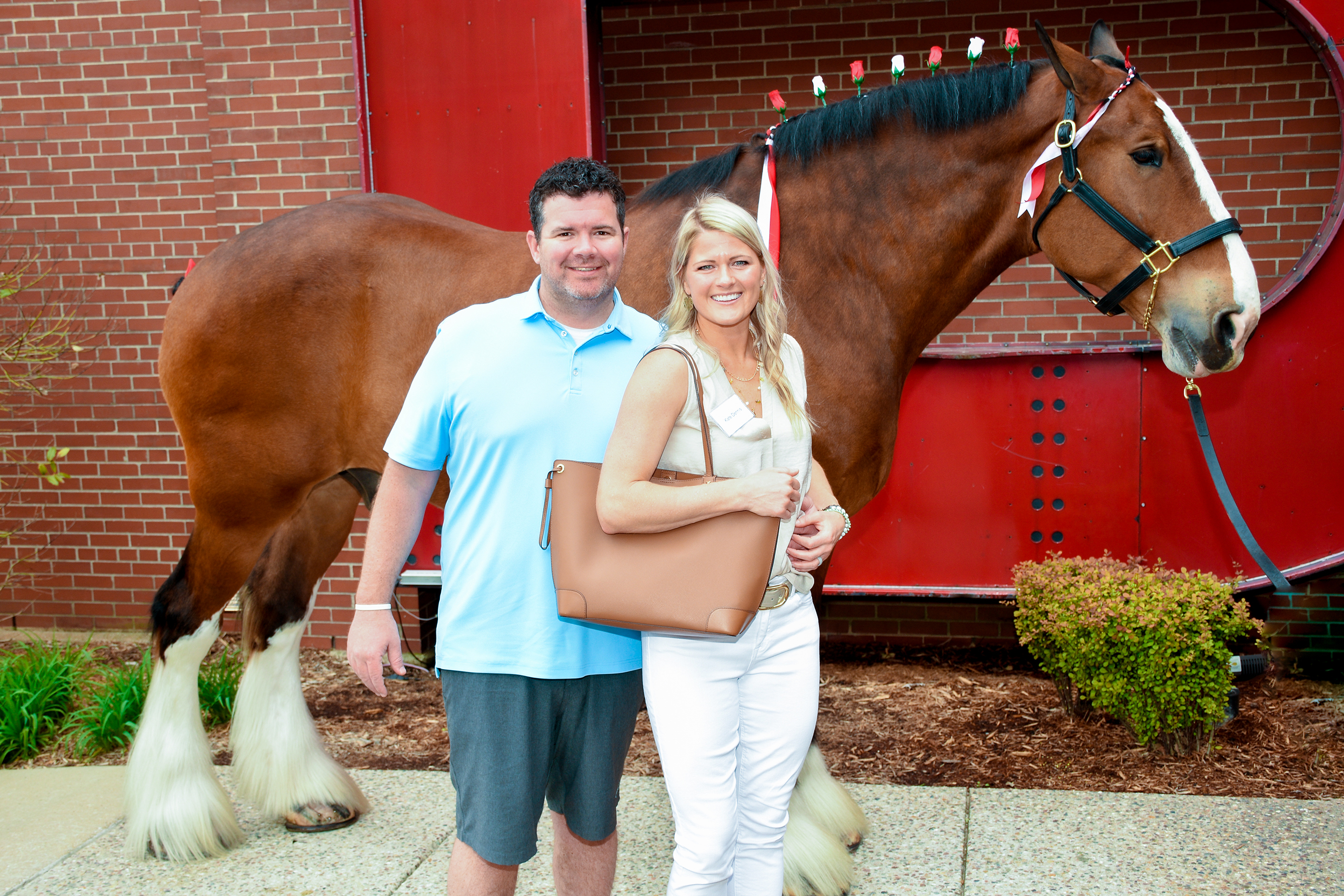
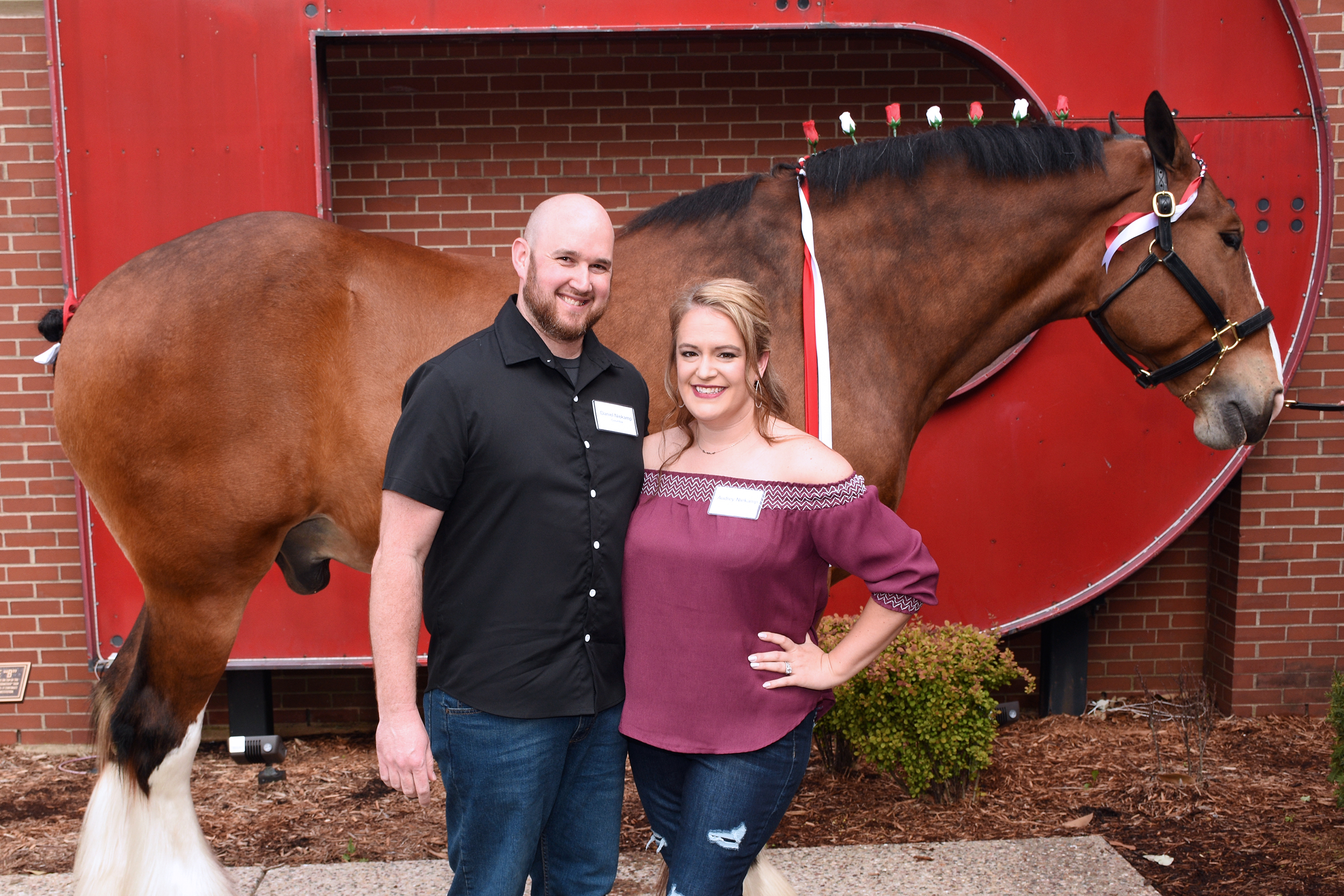
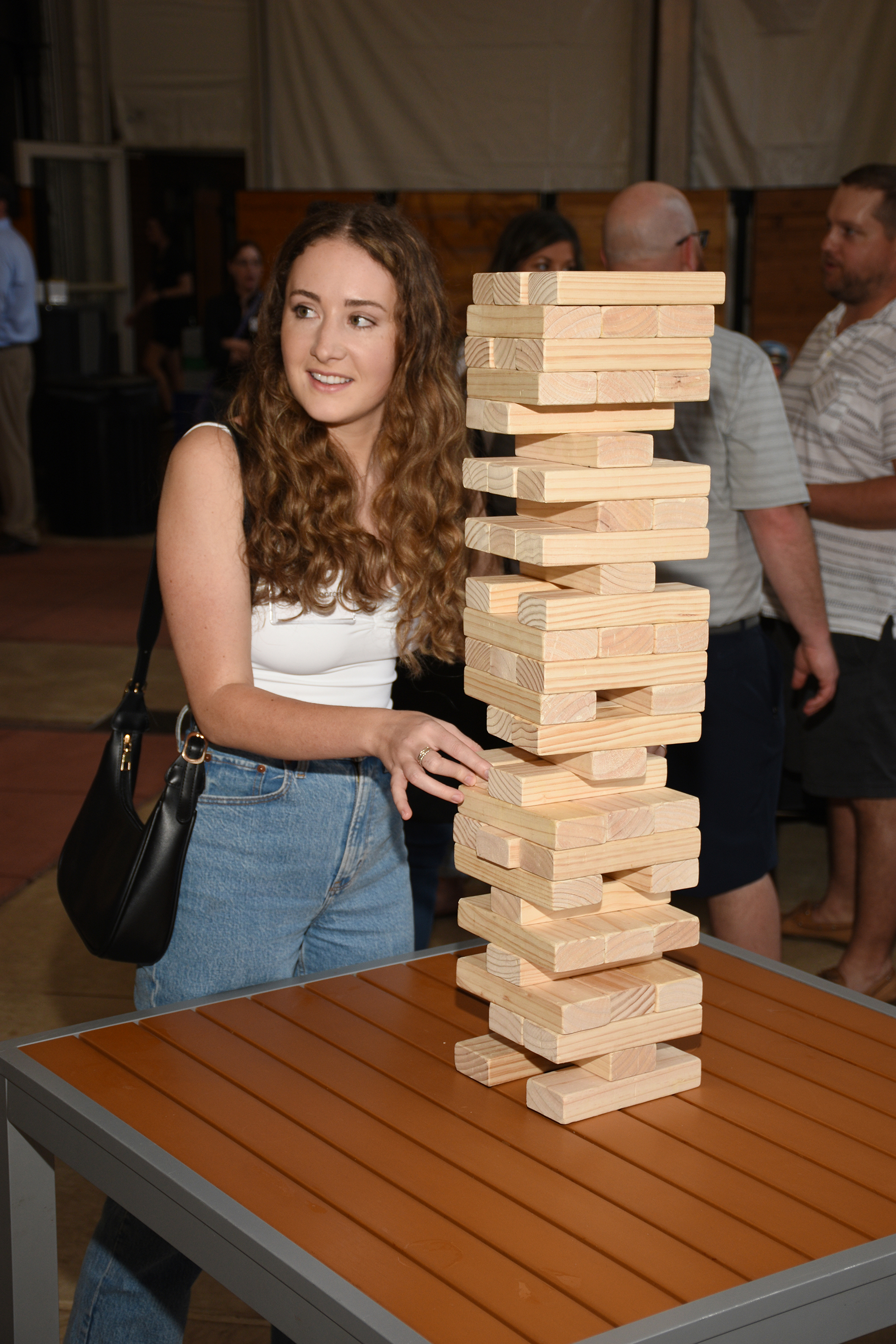
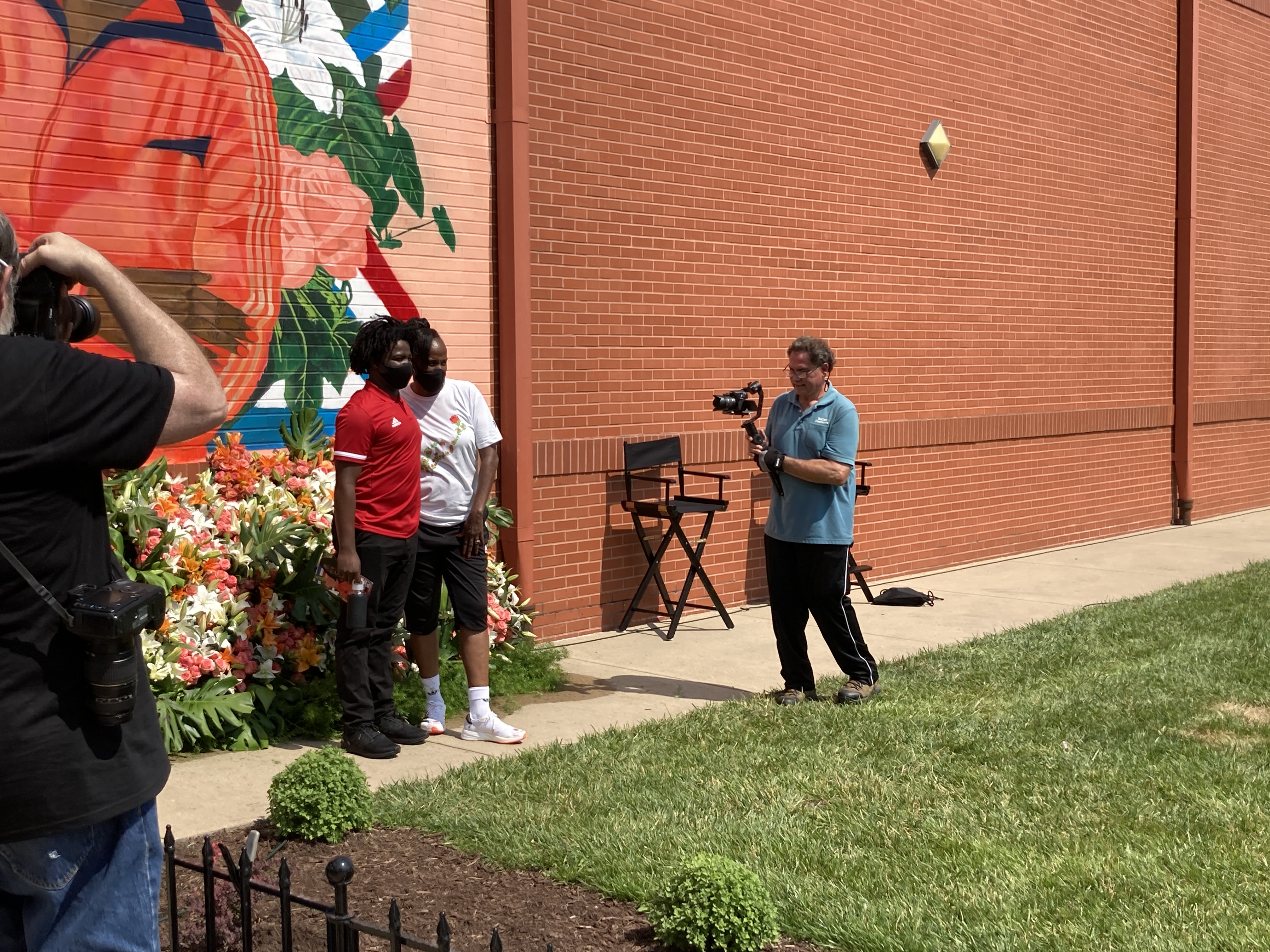
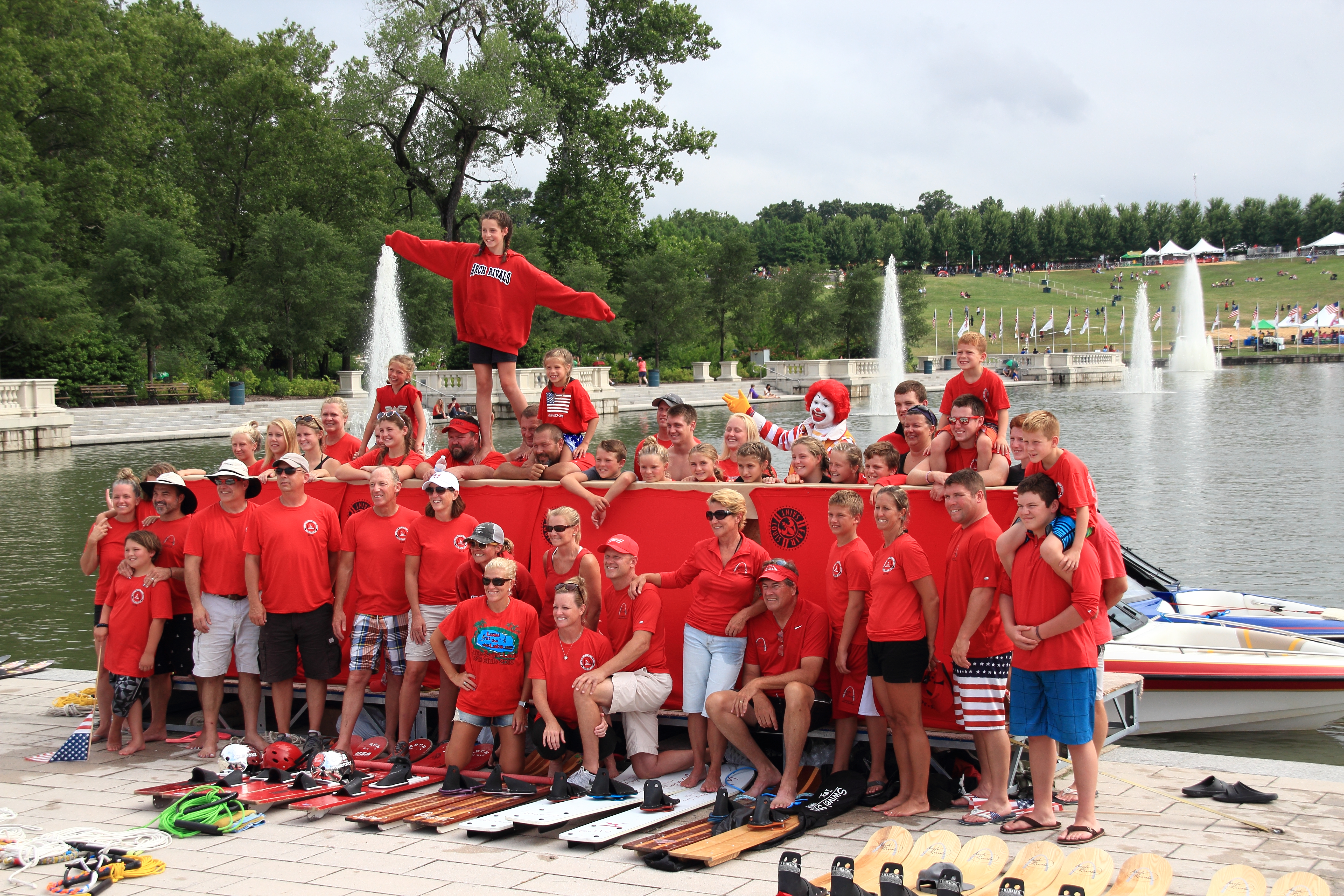
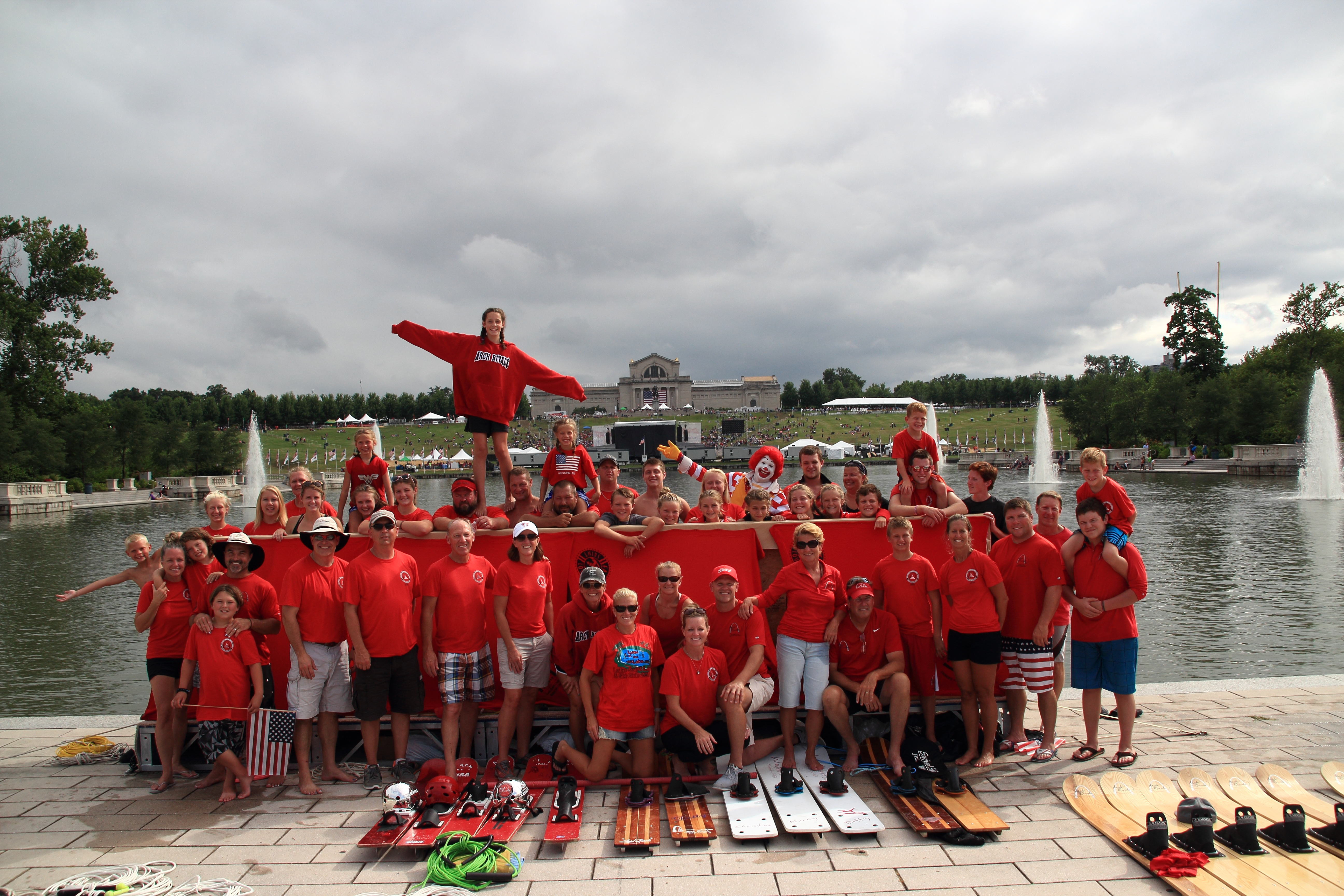
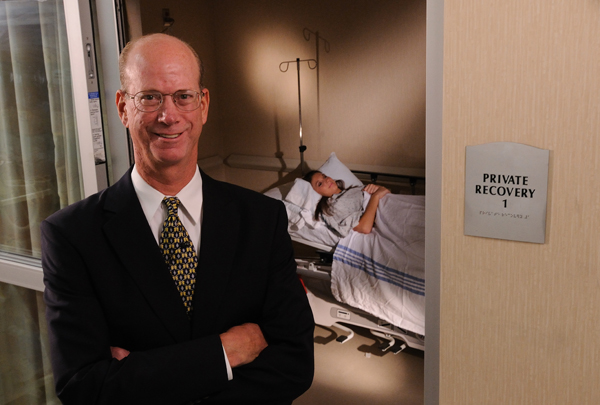
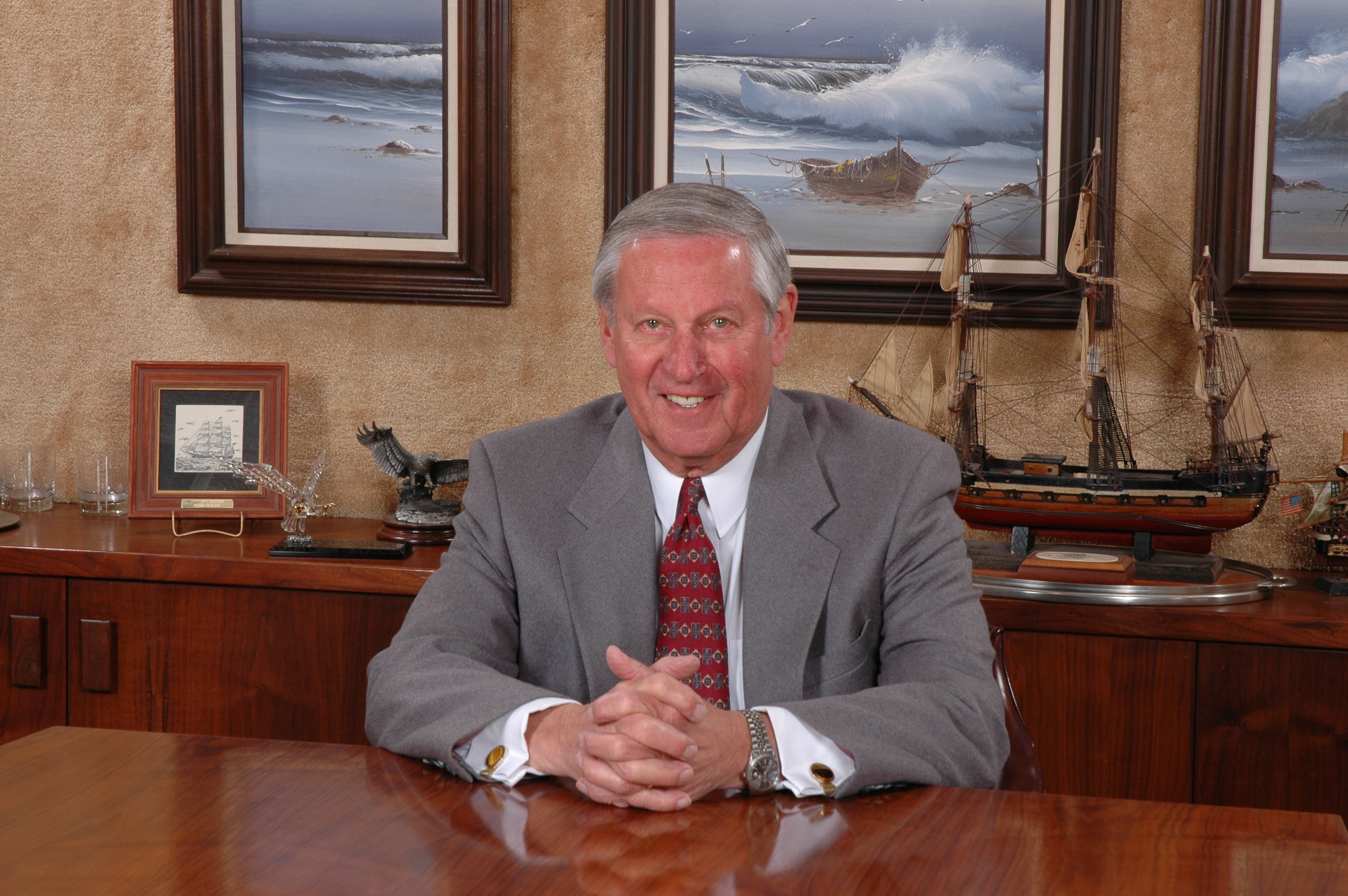
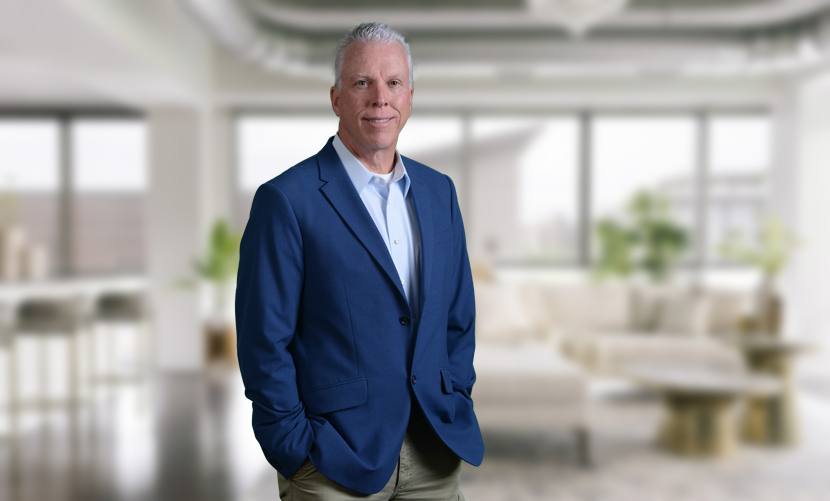
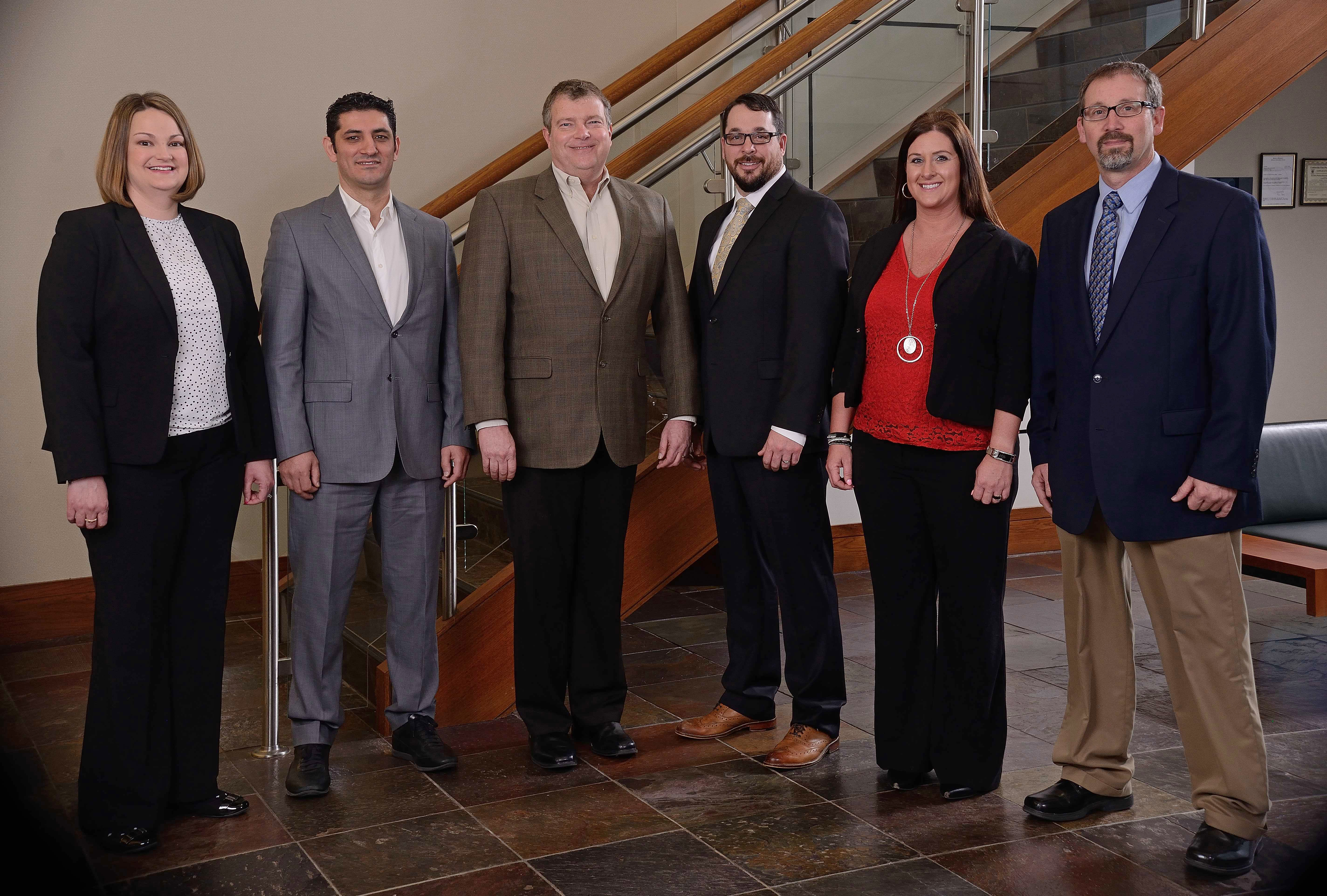
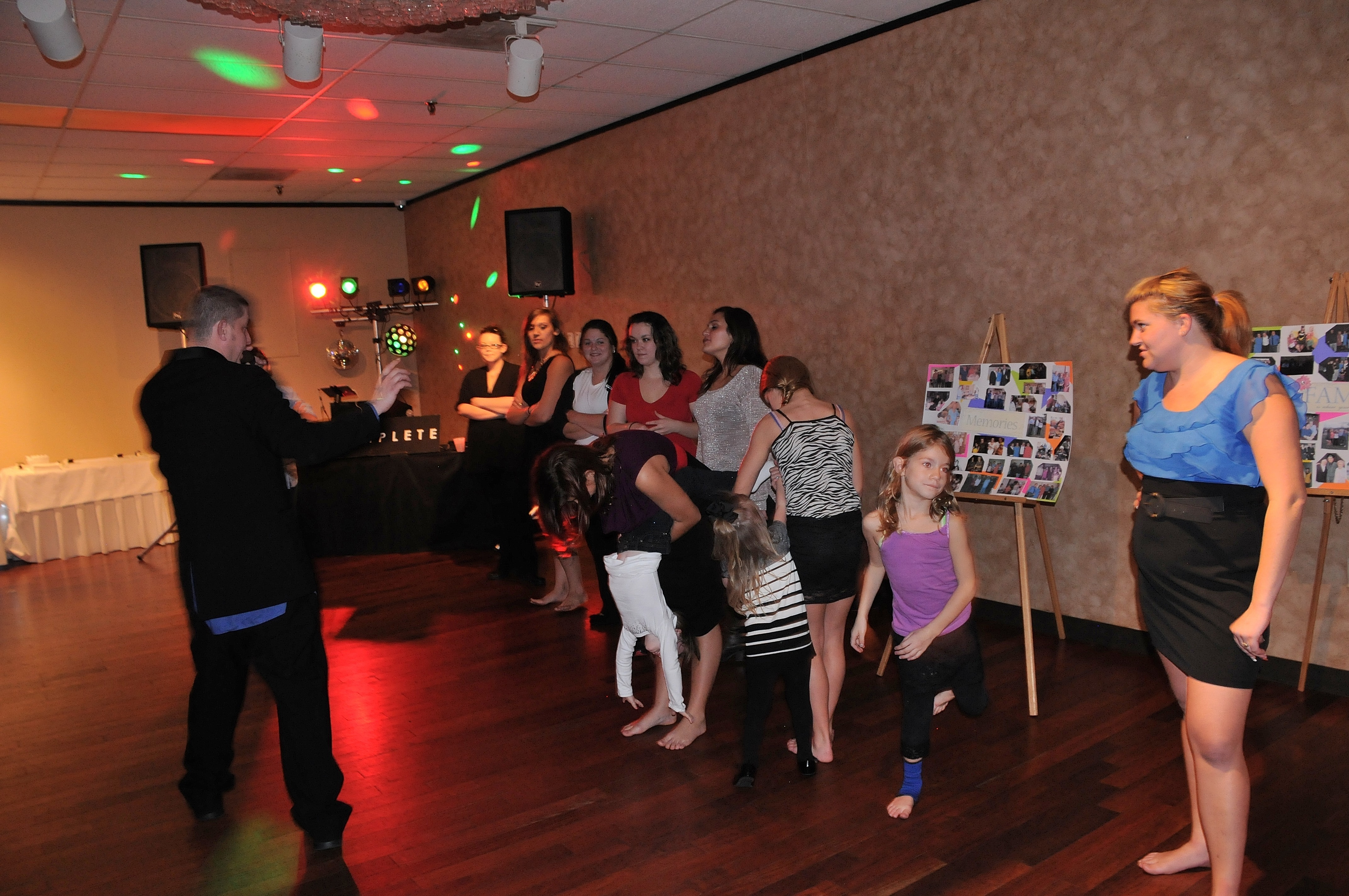
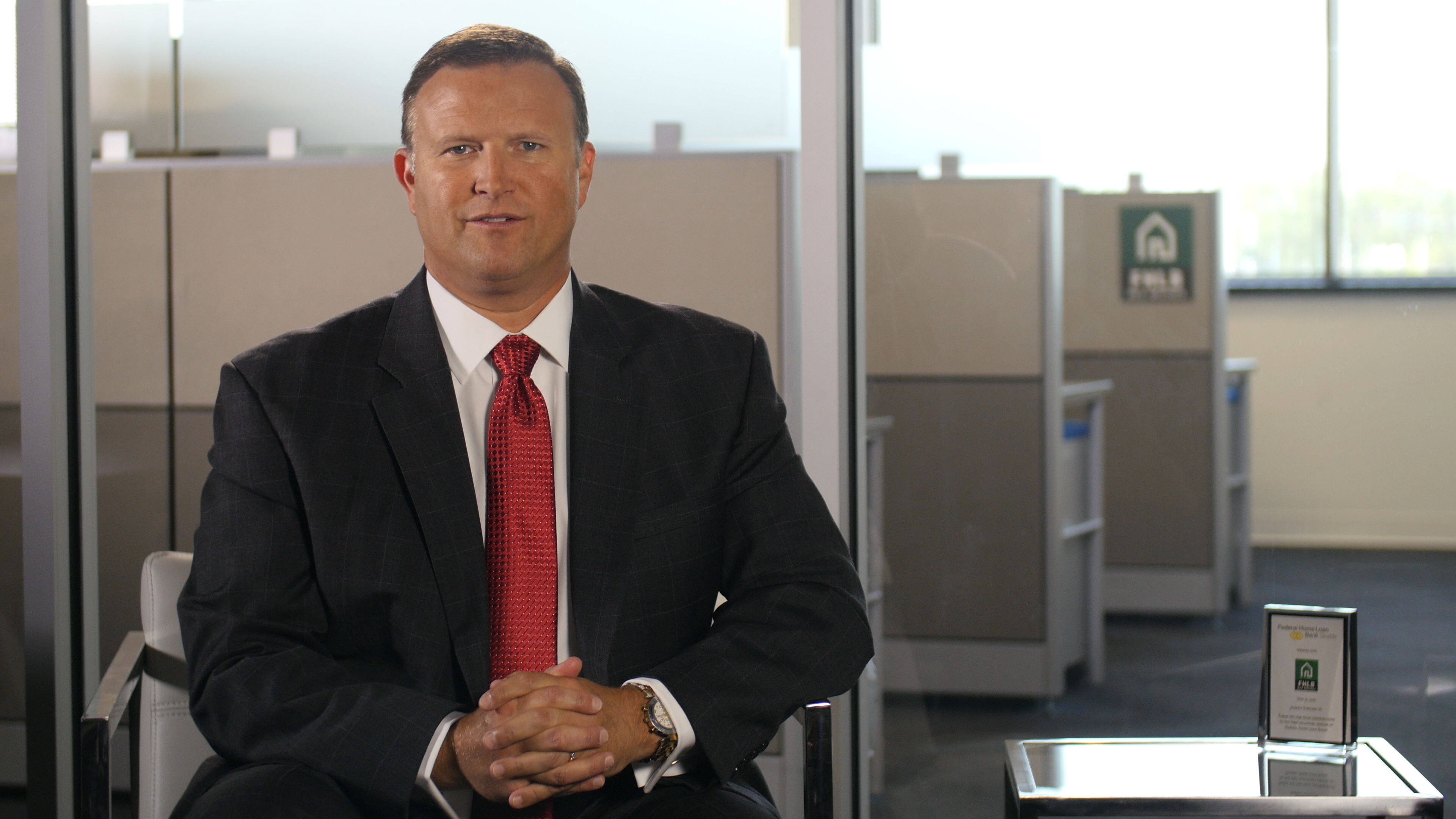
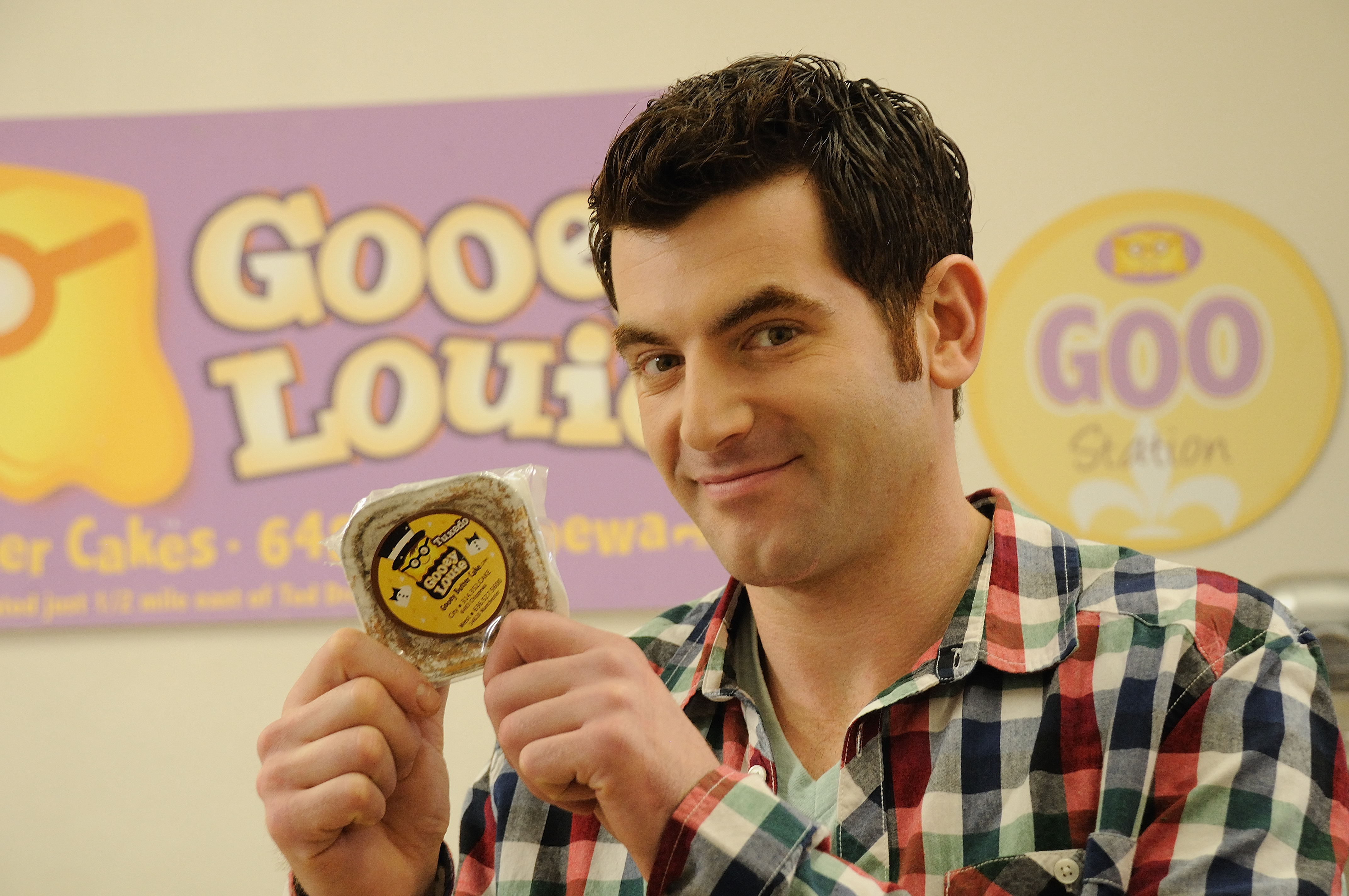
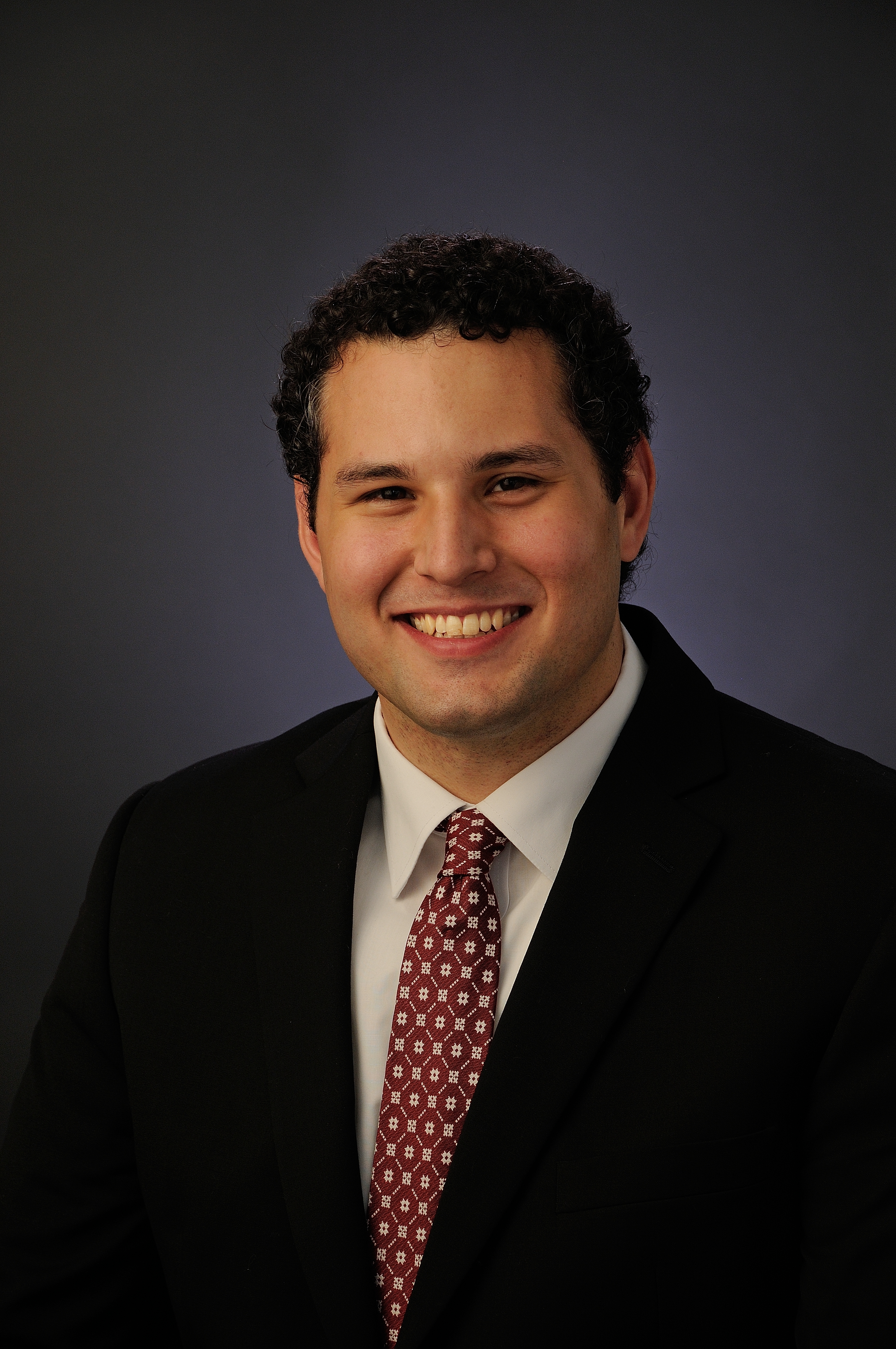
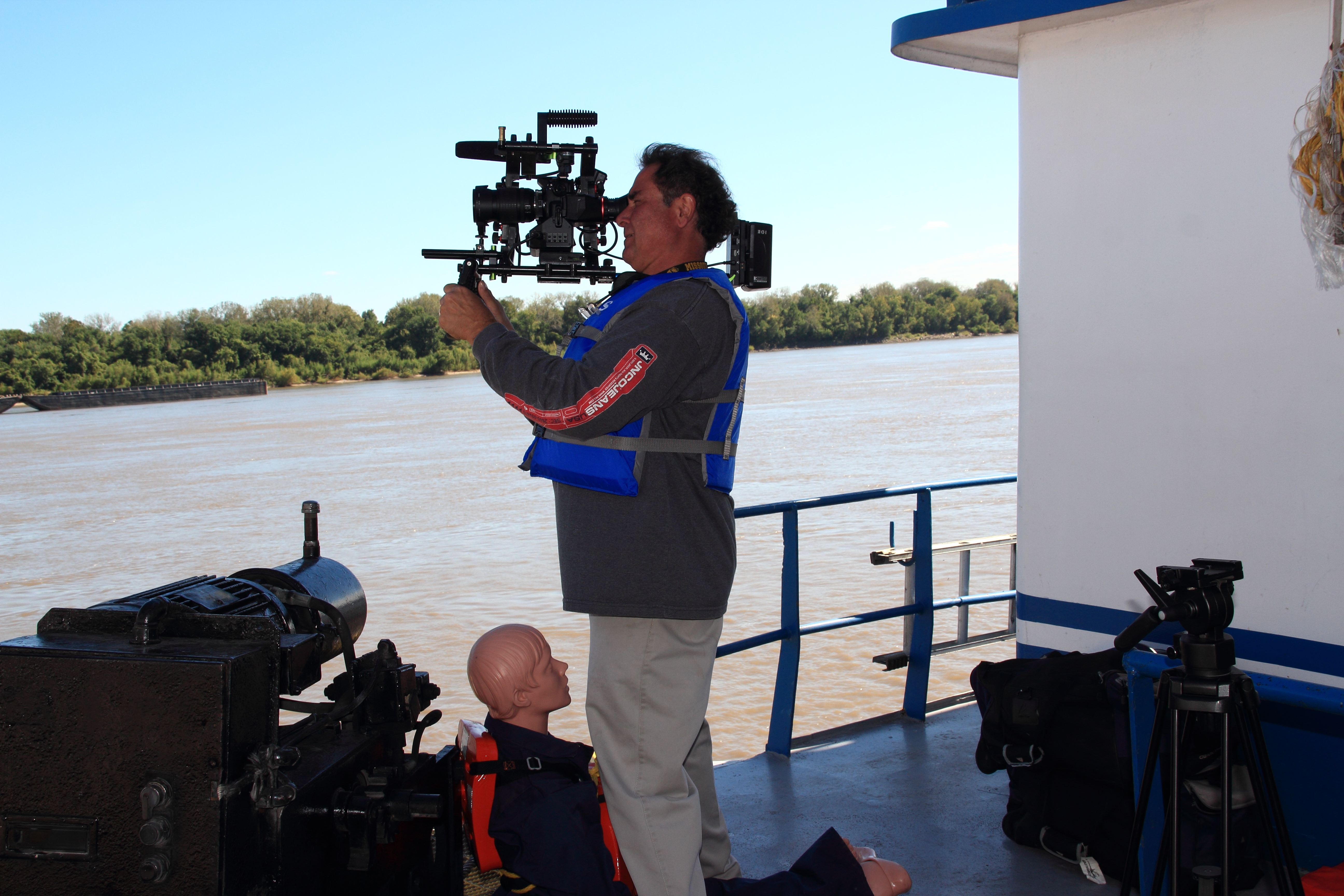
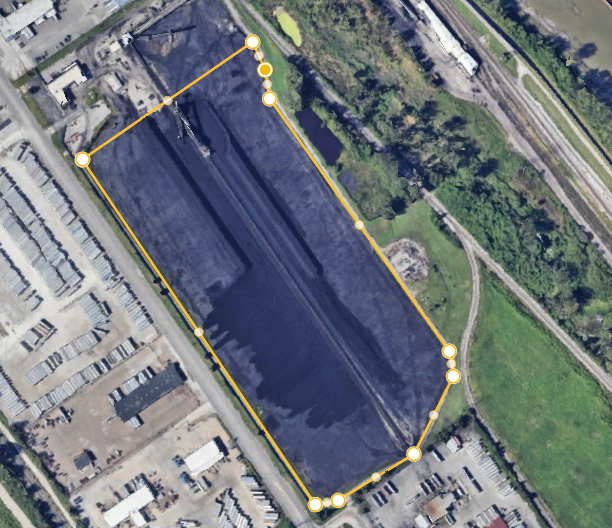
Professional Small Business Headshots and Video Clips for Social Media

Small businesses need professional visuals that help them build trust quickly. Before a prospect makes a call, schedules a meeting, requests a proposal, or visits a location, they often review the company’s website, LinkedIn profiles, Google Business Profile, social media pages, staff photos, and video content. Those first impressions matter.

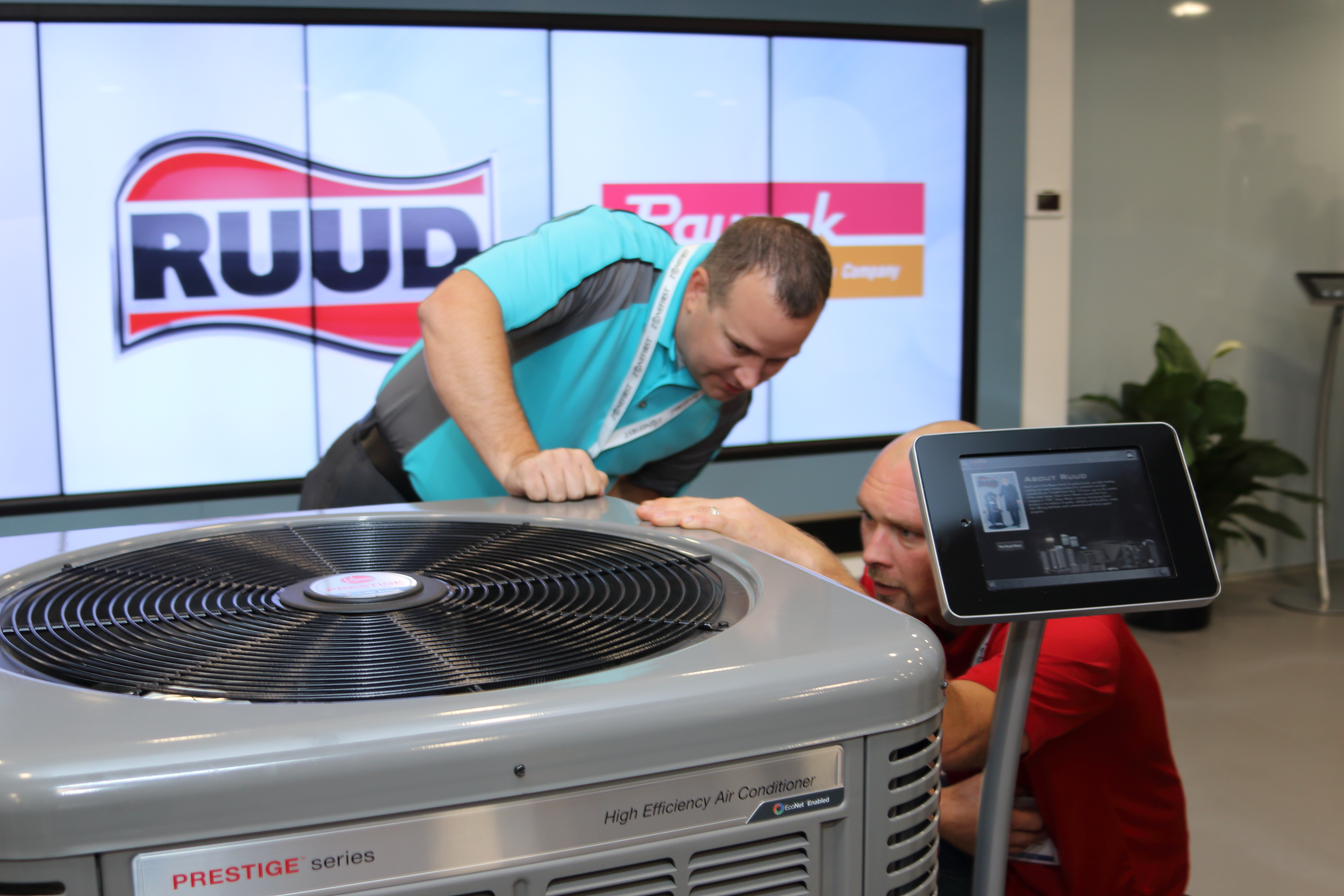
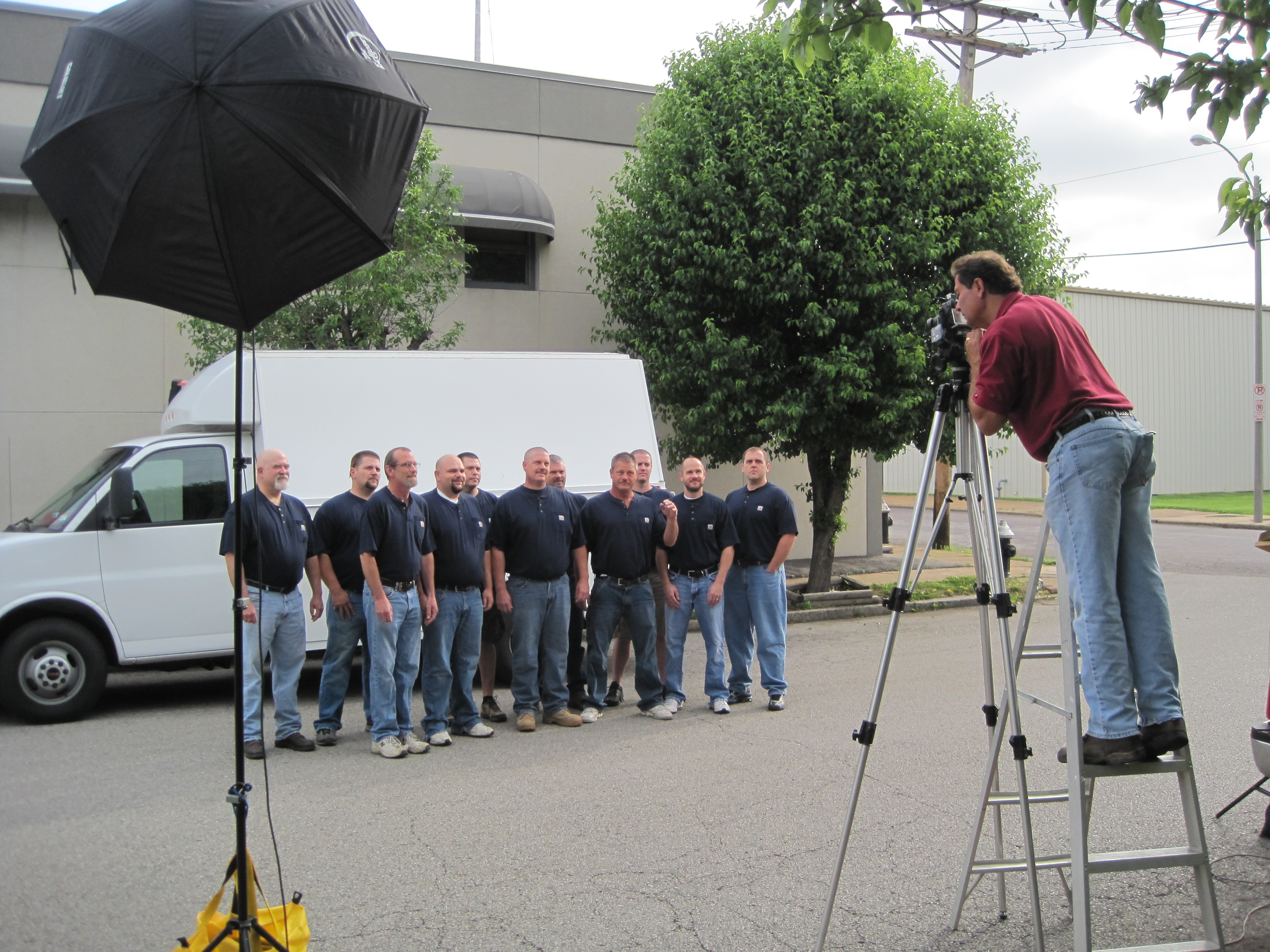
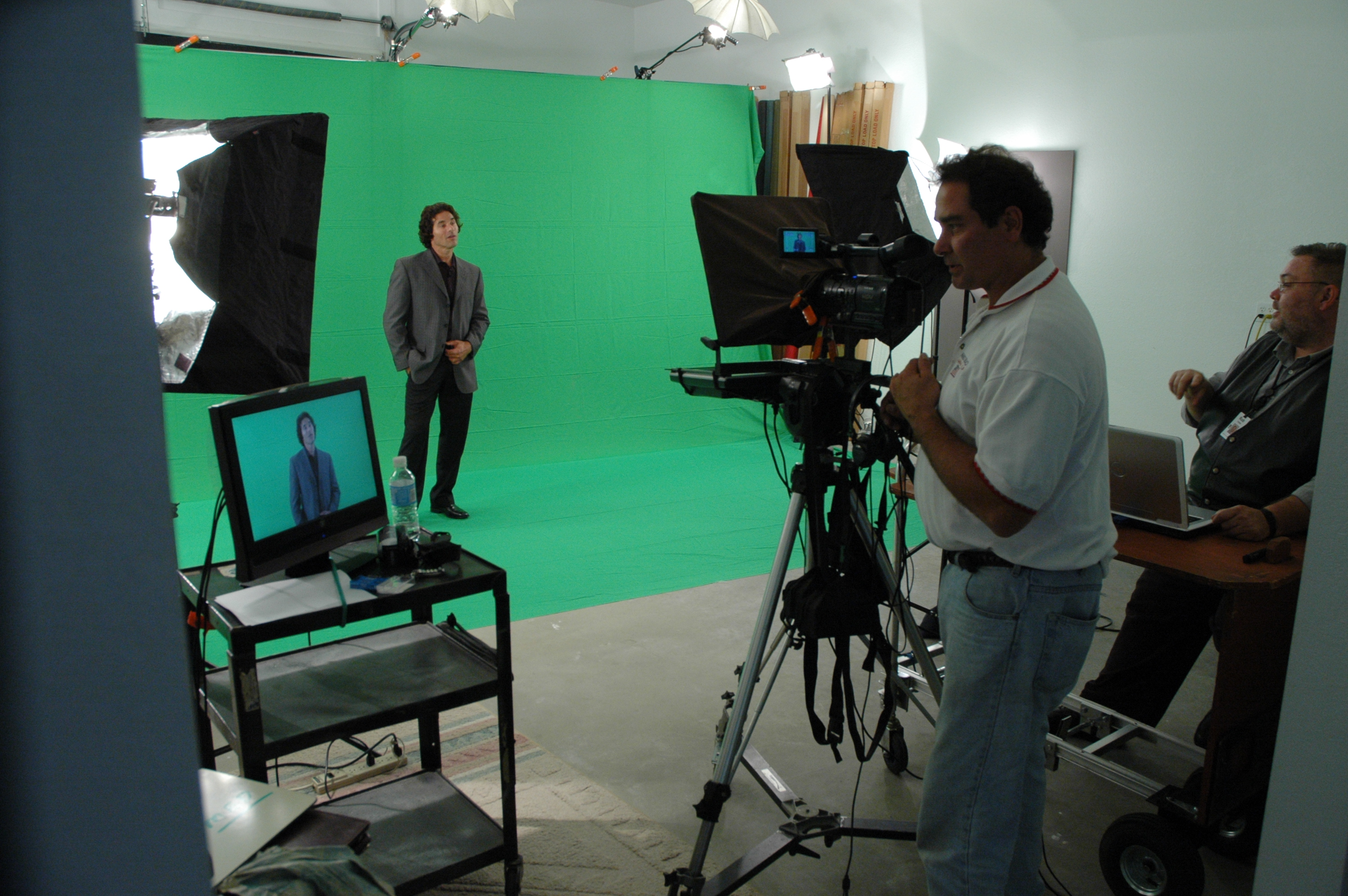
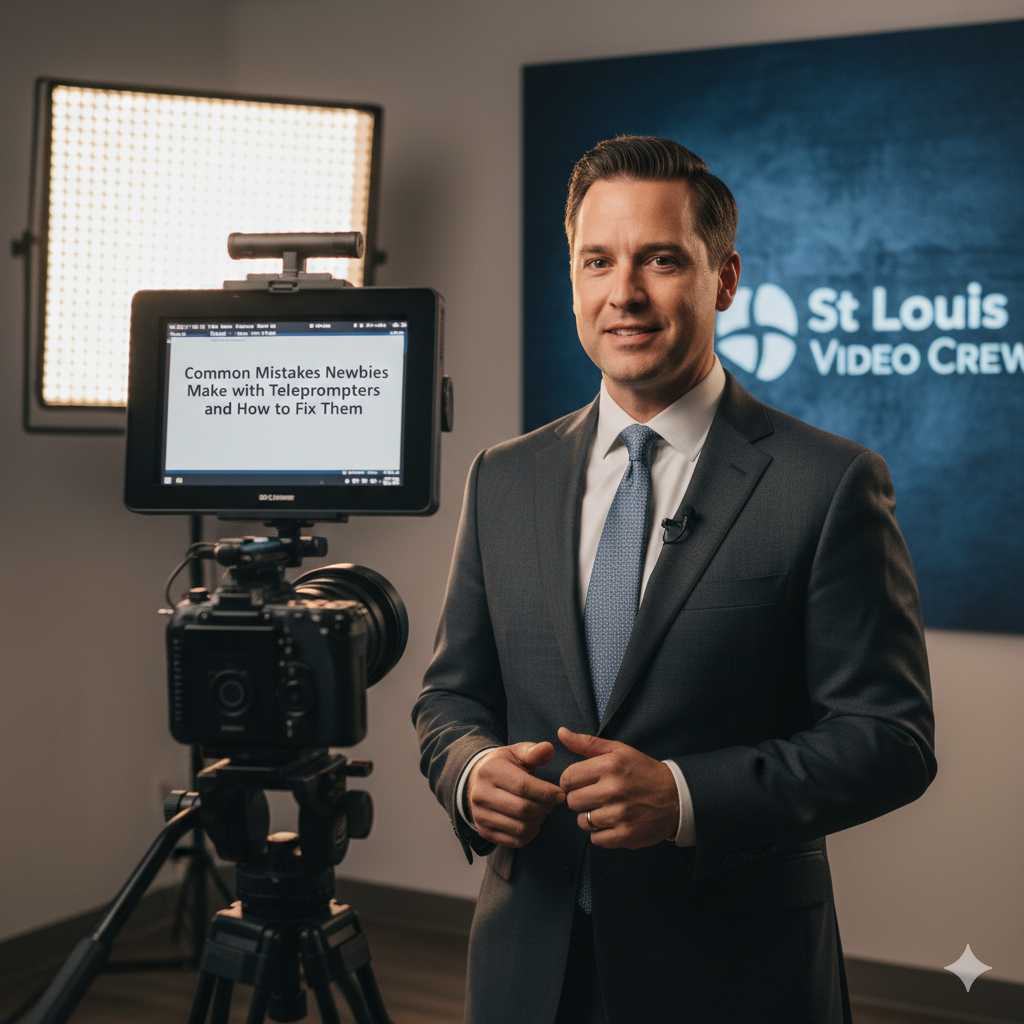
St Louis Corporate Photographers provides professional headshots, corporate portraits, branded photography, social media video clips, interview content, b-roll, and business media assets for small businesses and organizations that want to look polished, credible, and current. For owners, executives, consultants, law firms, healthcare practices, financial firms, contractors, manufacturers, nonprofits, agencies, and professional service providers, quality photography and video can strengthen marketing, sales, recruiting, and customer communication.

Professional headshots introduce the people behind the business. Short video clips explain expertise, services, processes, and customer value. Together, they help small businesses communicate more clearly across websites, social media, digital advertising, proposals, presentations, and internal communications.

Why Professional Headshots Matter for Small Businesses

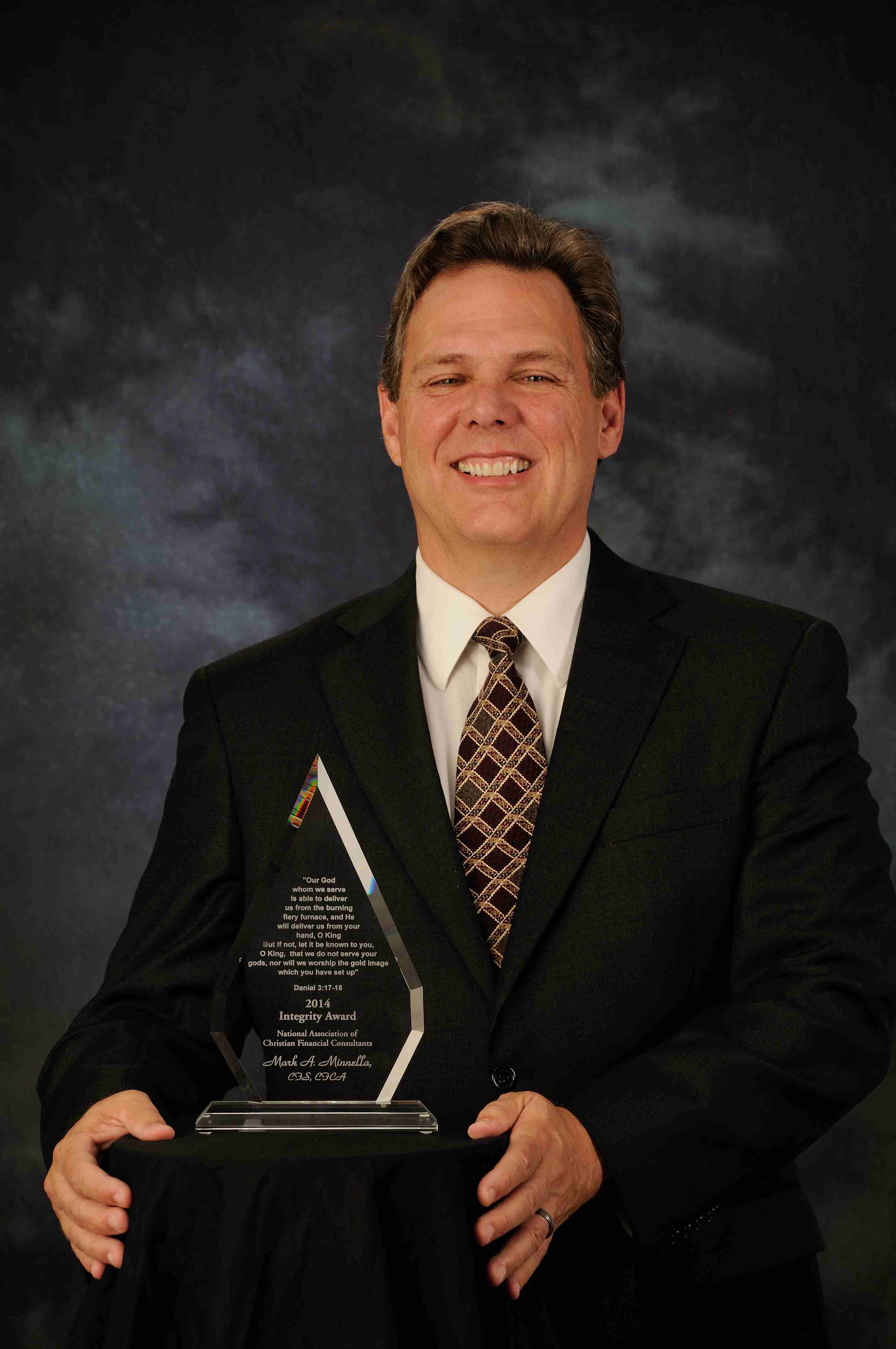
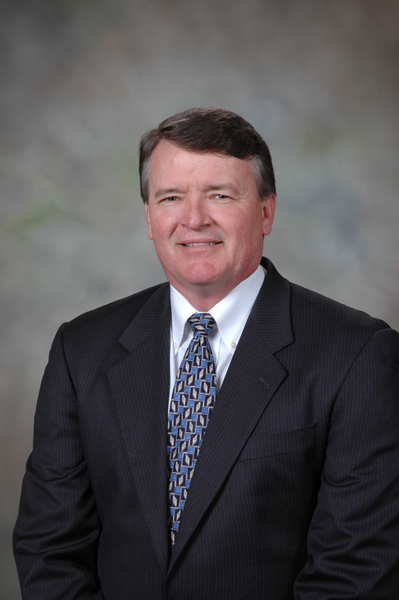
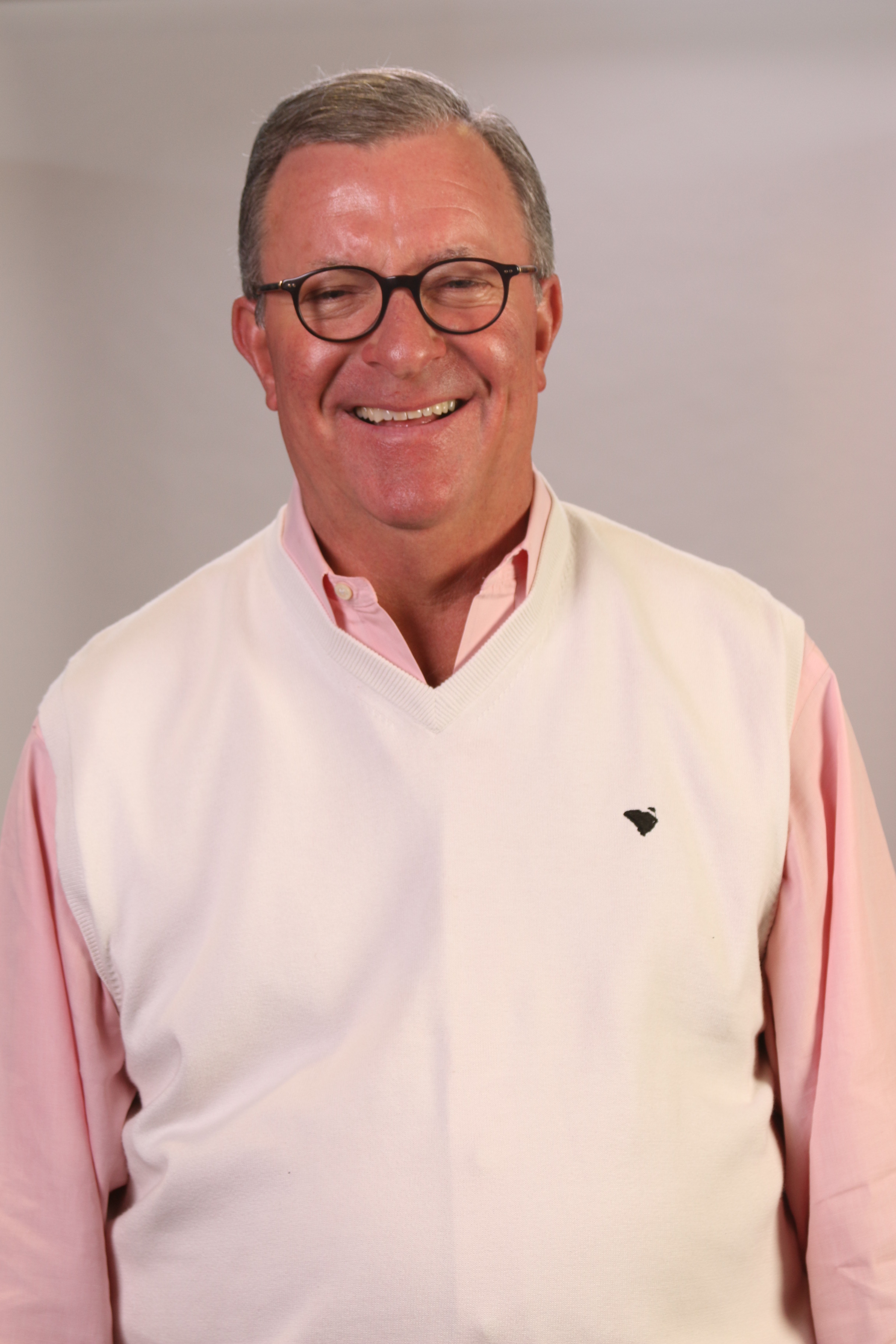
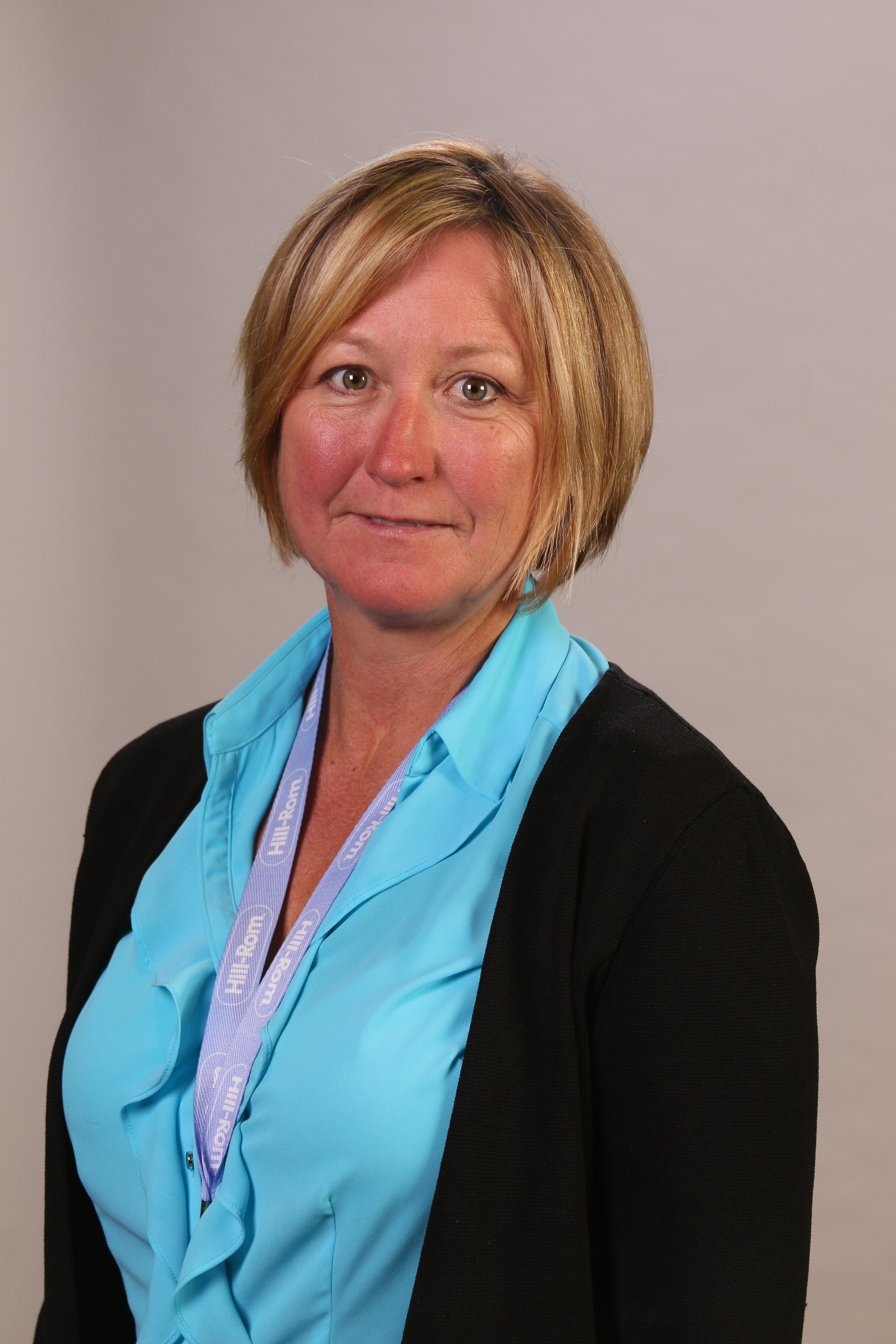
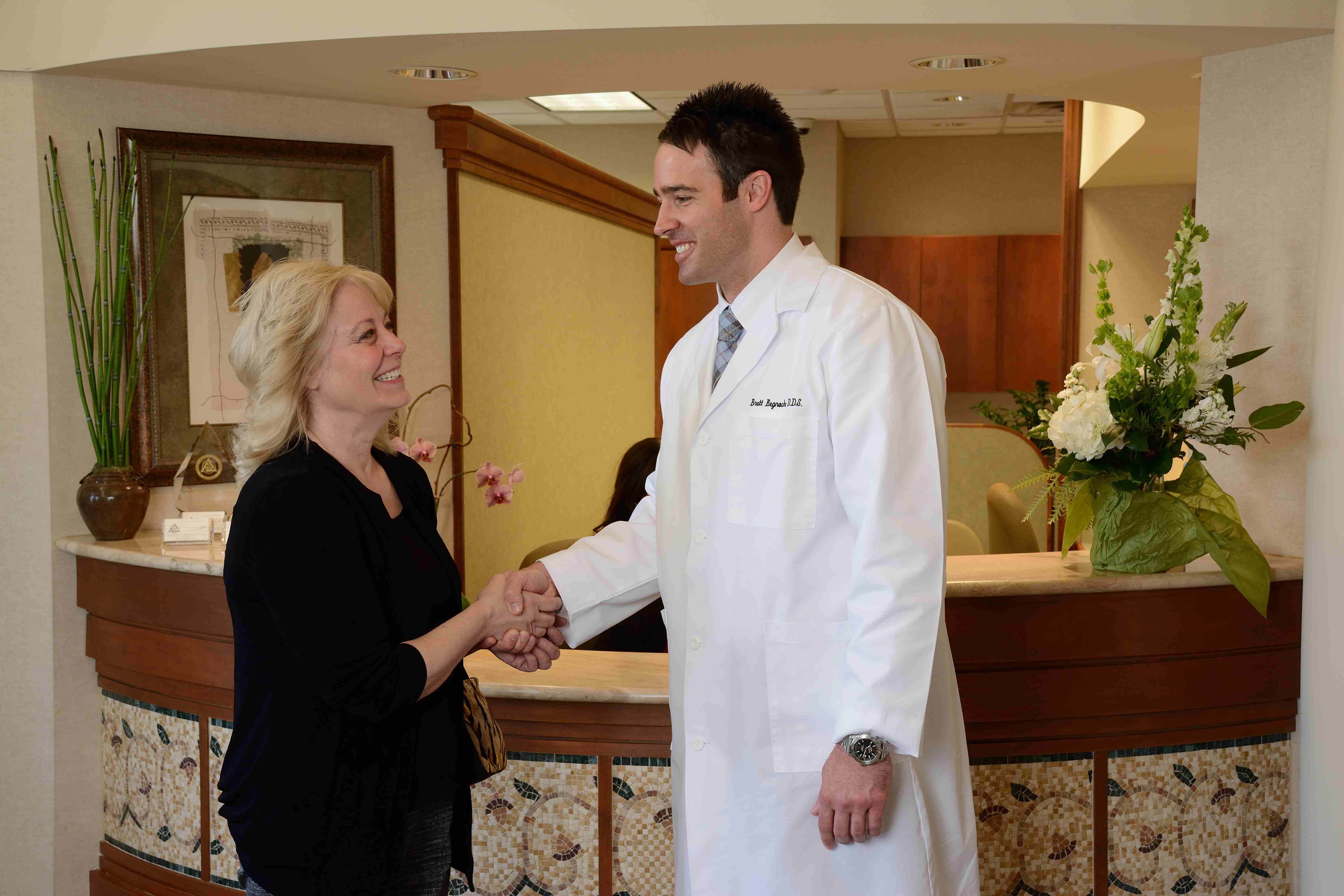
A professional headshot is often one of the most visible images connected to a business. It may appear on a website staff page, LinkedIn profile, email signature, proposal, press release, conference bio, recruiting page, online directory, or social media profile. When those images are outdated, inconsistent, poorly lit, or casually captured, the company can look less professional than it actually is.

Corporate headshots create consistency and credibility. They show that the business values presentation, professionalism, and attention to detail. For small businesses, this is especially important because customers often make decisions based on trust, confidence, and perceived experience.

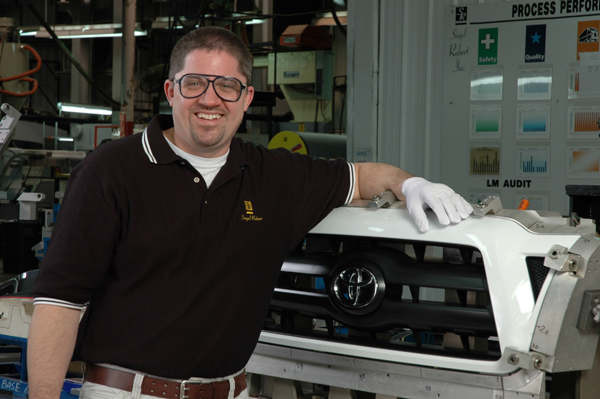
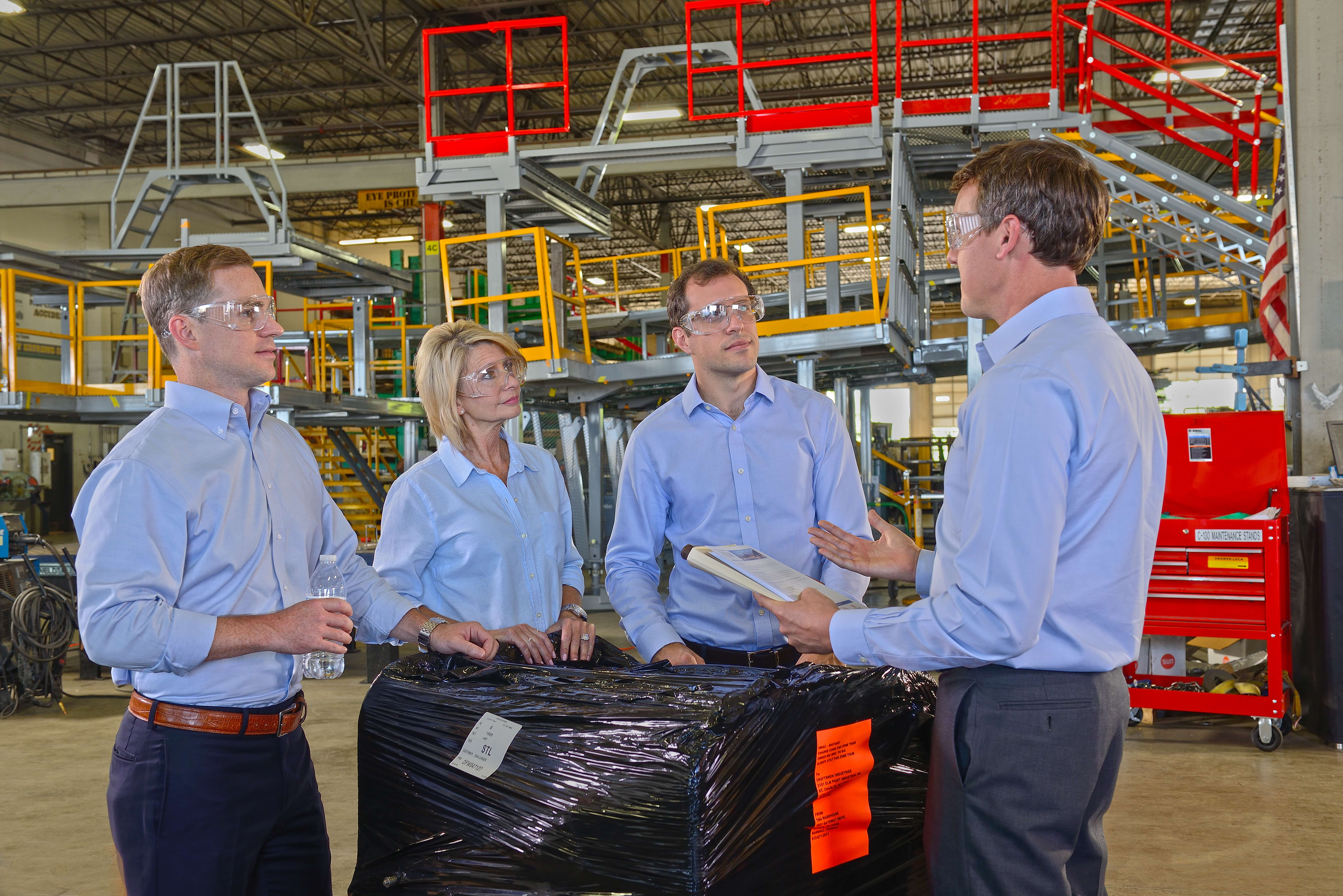
A strong business portrait should be properly lit, well-composed, flattering, and aligned with the company’s brand. Some businesses need formal executive portraits. Others need a friendly, approachable look. A professional service firm may want a clean and confident image. A creative business may want something more environmental and personality-driven. A healthcare, legal, financial, construction, or consulting firm may require a different visual tone.

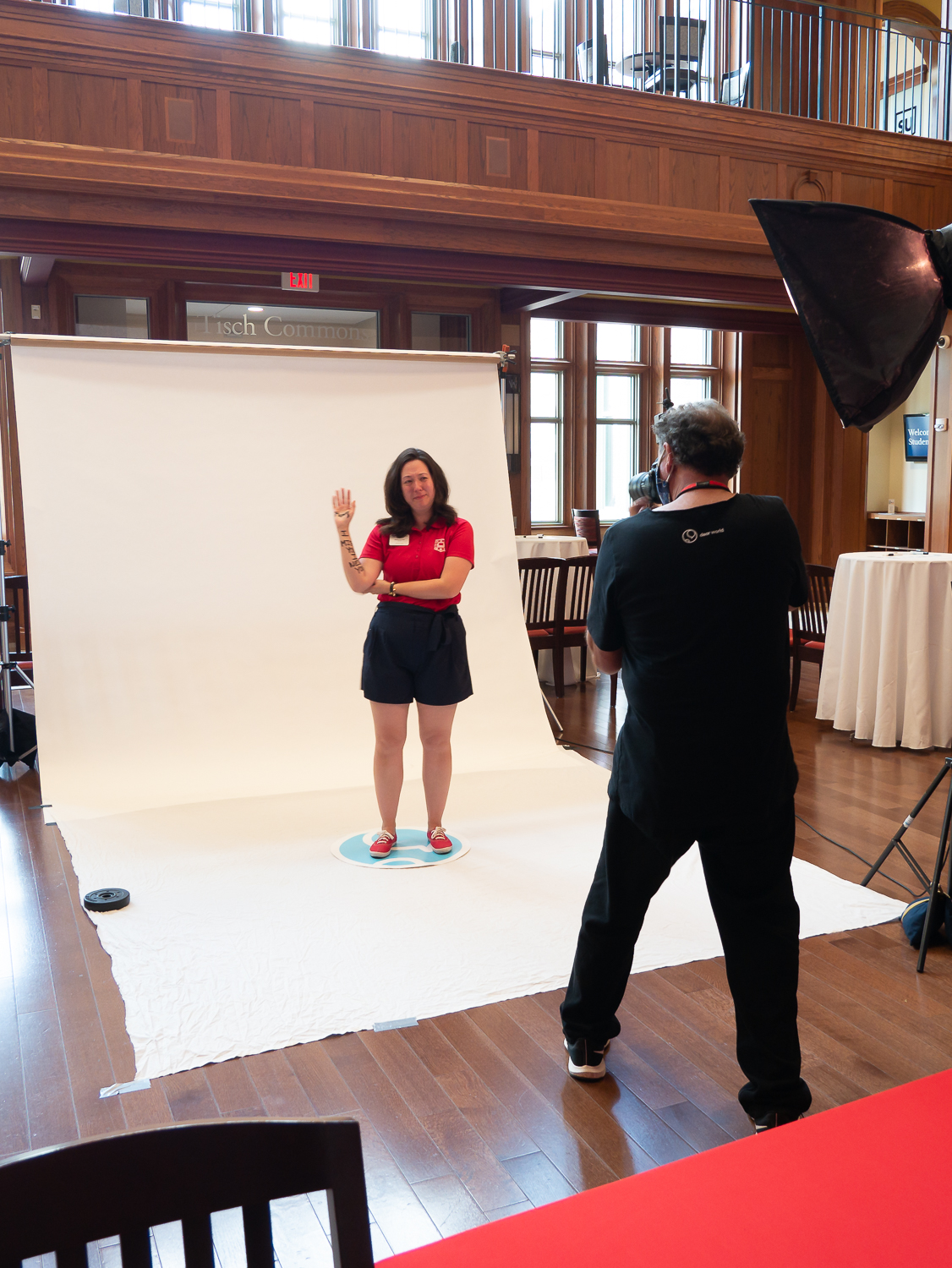
St Louis Corporate Photographers helps businesses plan and produce headshots that fit their industry, message, and audience.

Corporate Portraits for Websites, LinkedIn, Proposals, and Social Media

Headshots and business portraits should be created with multiple uses in mind. A well-planned session can provide photography for:

Website staff pages
LinkedIn profiles
Email signatures
Sales proposals
Speaker biographies
Press releases
Recruiting campaigns
Google Business Profile updates
Social media profiles
Company brochures
Digital ads
Trade show materials
Internal directories
Business presentations
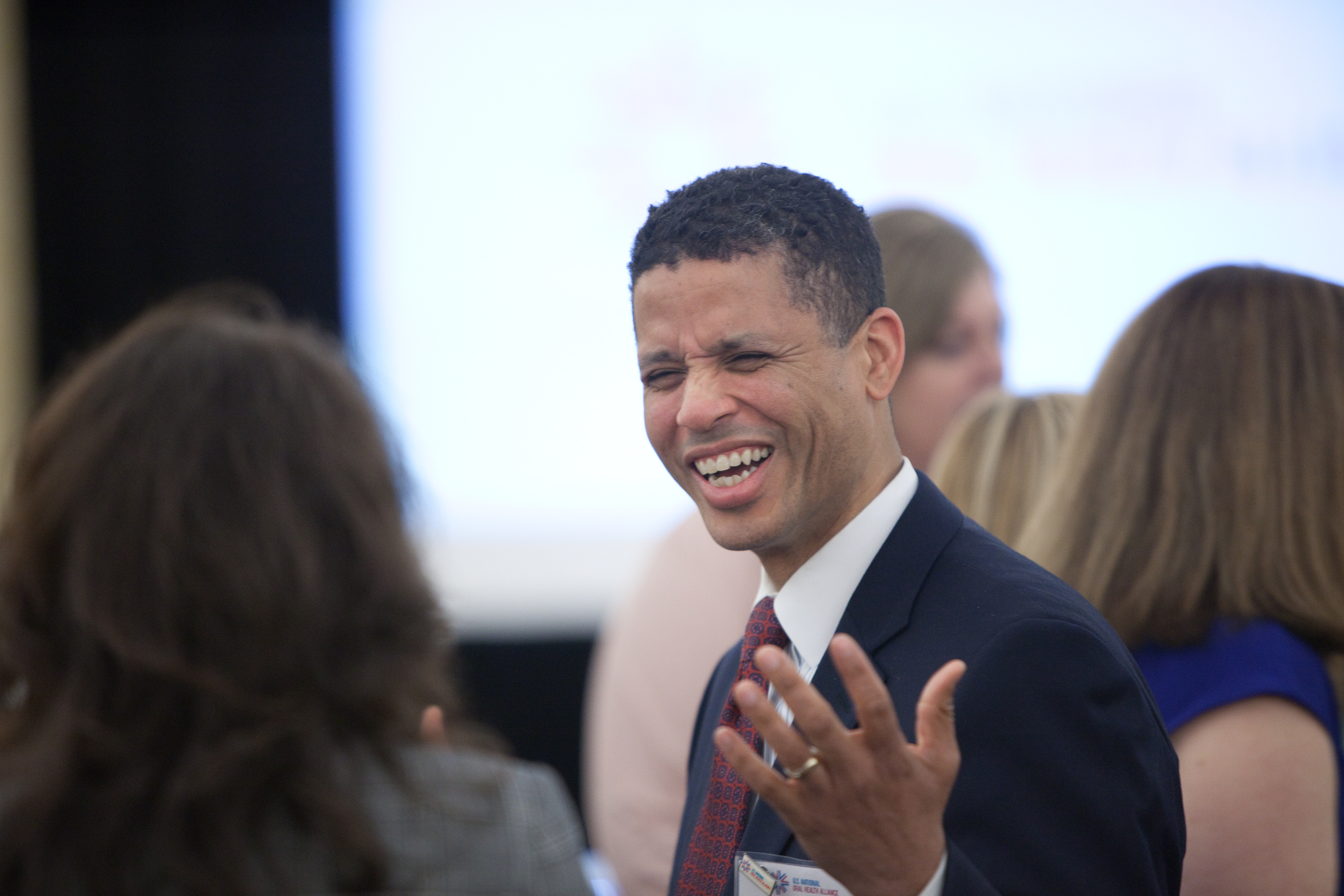
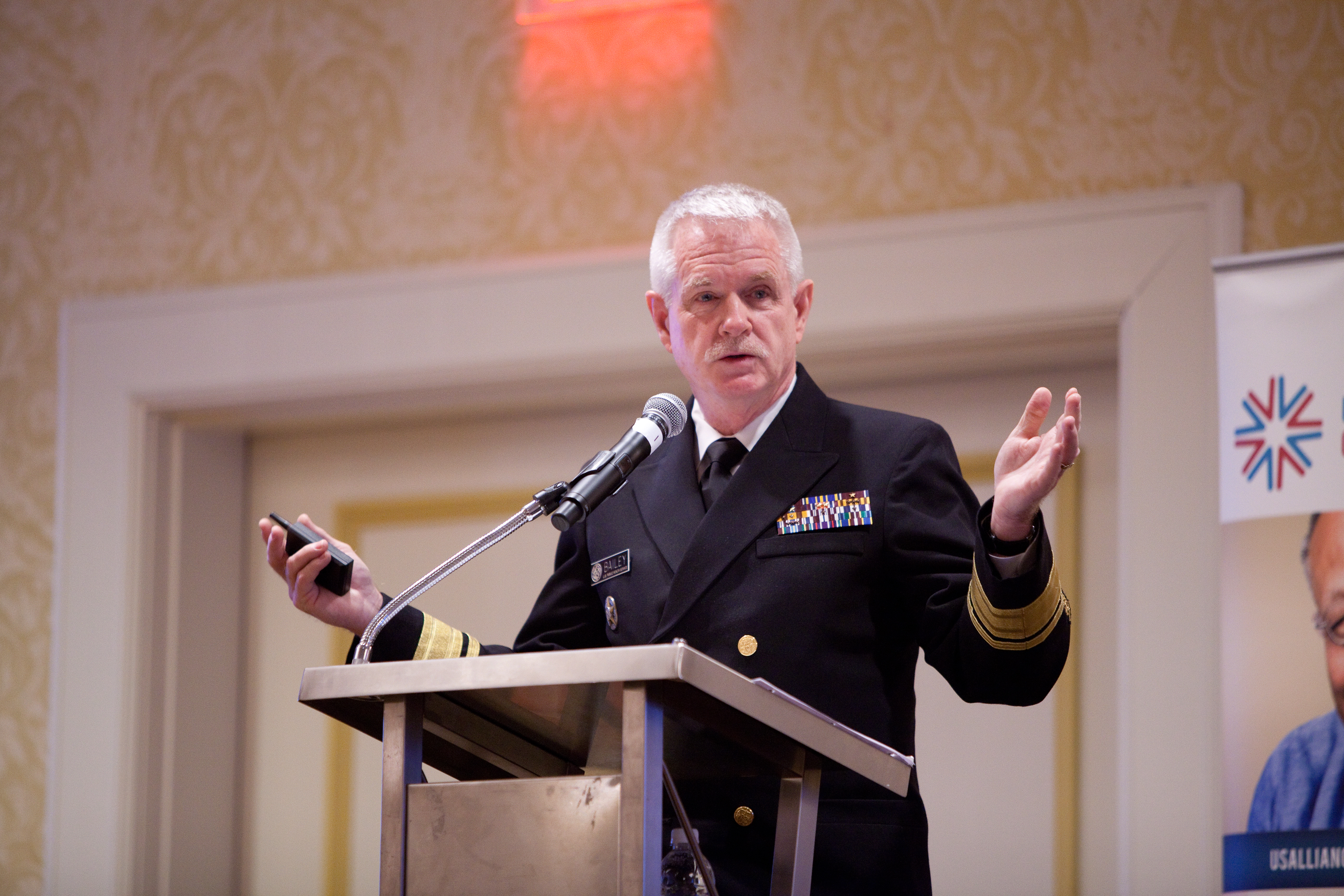
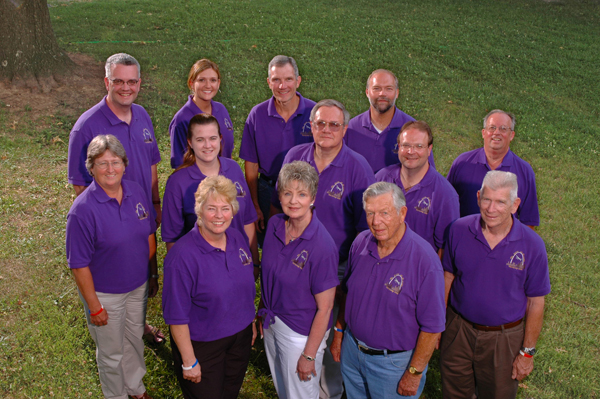
The best corporate headshot sessions are organized around how the final images will be used. A company may need close-up portraits, horizontal crops, vertical crops, team photos, leadership portraits, office lifestyle images, or environmental portraits that show the business setting.

St Louis Corporate Photographers can provide studio portraits, location-based headshots, team photography, and branded business images that help small companies maintain a consistent and professional visual identity.

Short Video Clips for Social Media

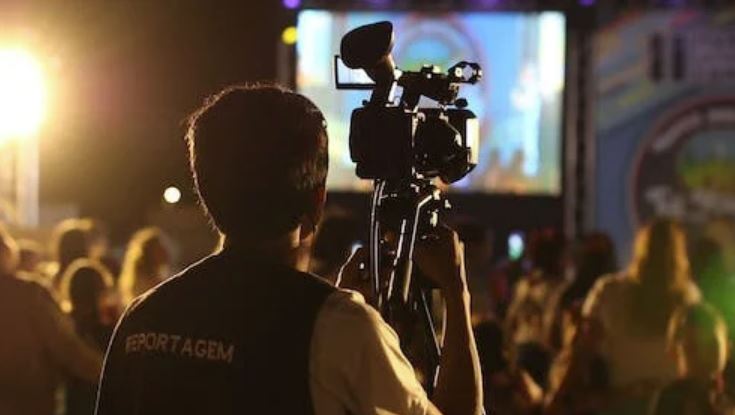
Short-form video is one of the most useful tools for small business marketing. A focused 15-second, 30-second, or 60-second video can introduce a company, explain a service, answer a common question, promote an event, highlight a project, or showcase a customer success story.

Small business video does not always need to be complicated. In many cases, the most effective clips are clear, direct, and professionally produced. The goal is to communicate one message well and create content that can be used repeatedly across multiple platforms.

Examples of social media video clips include:

Owner introduction videos
Executive profile clips
Staff introduction clips
Service explanation videos
Customer testimonial clips
Frequently asked question videos
Recruiting videos
Behind-the-scenes content
Project highlights
Facility tours
Product or process demonstrations
Event recap videos
Community involvement clips
Seasonal promotion videos

These clips can be edited for LinkedIn, Facebook, Instagram, YouTube, websites, email campaigns, landing pages, digital ads, and sales follow-ups.
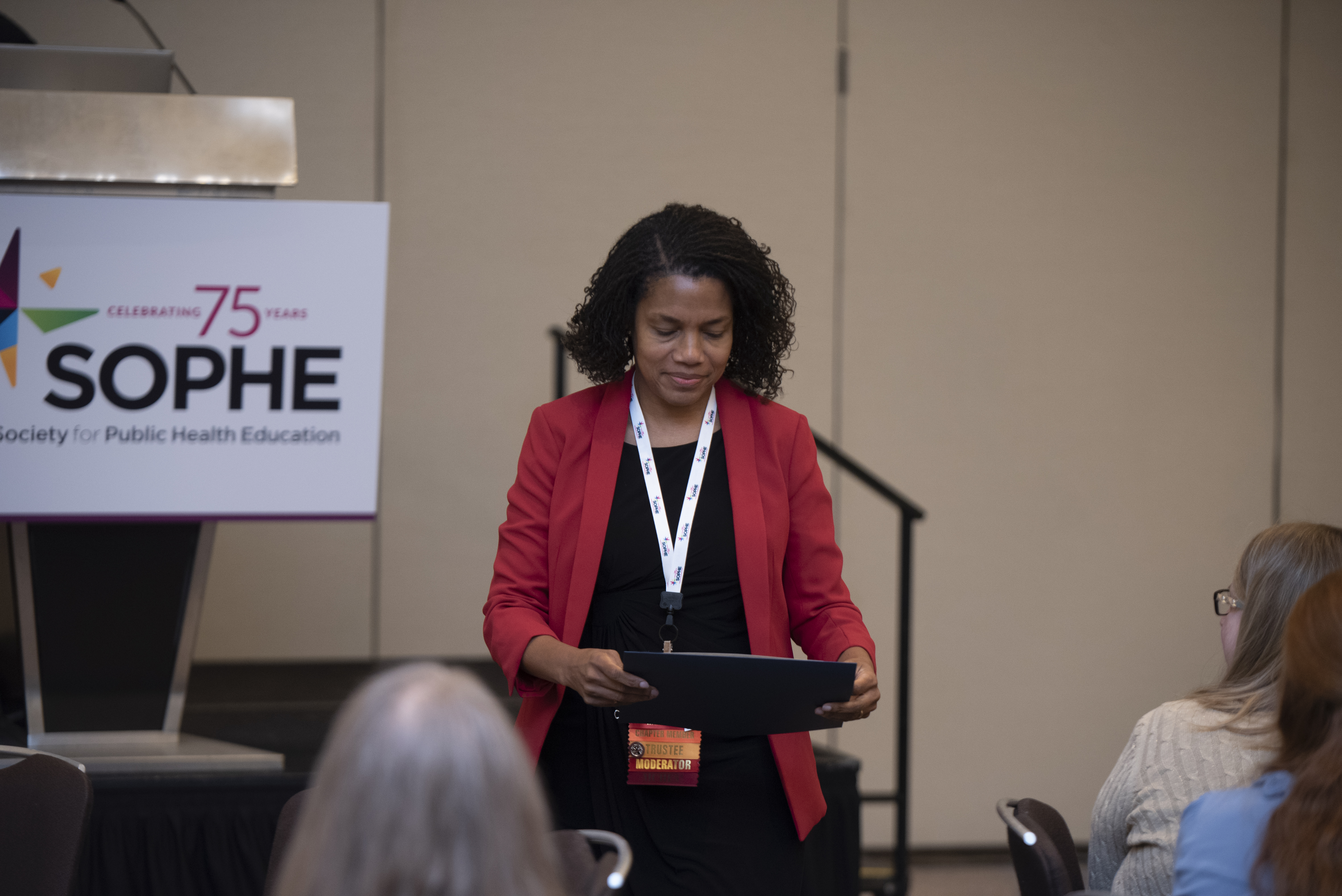
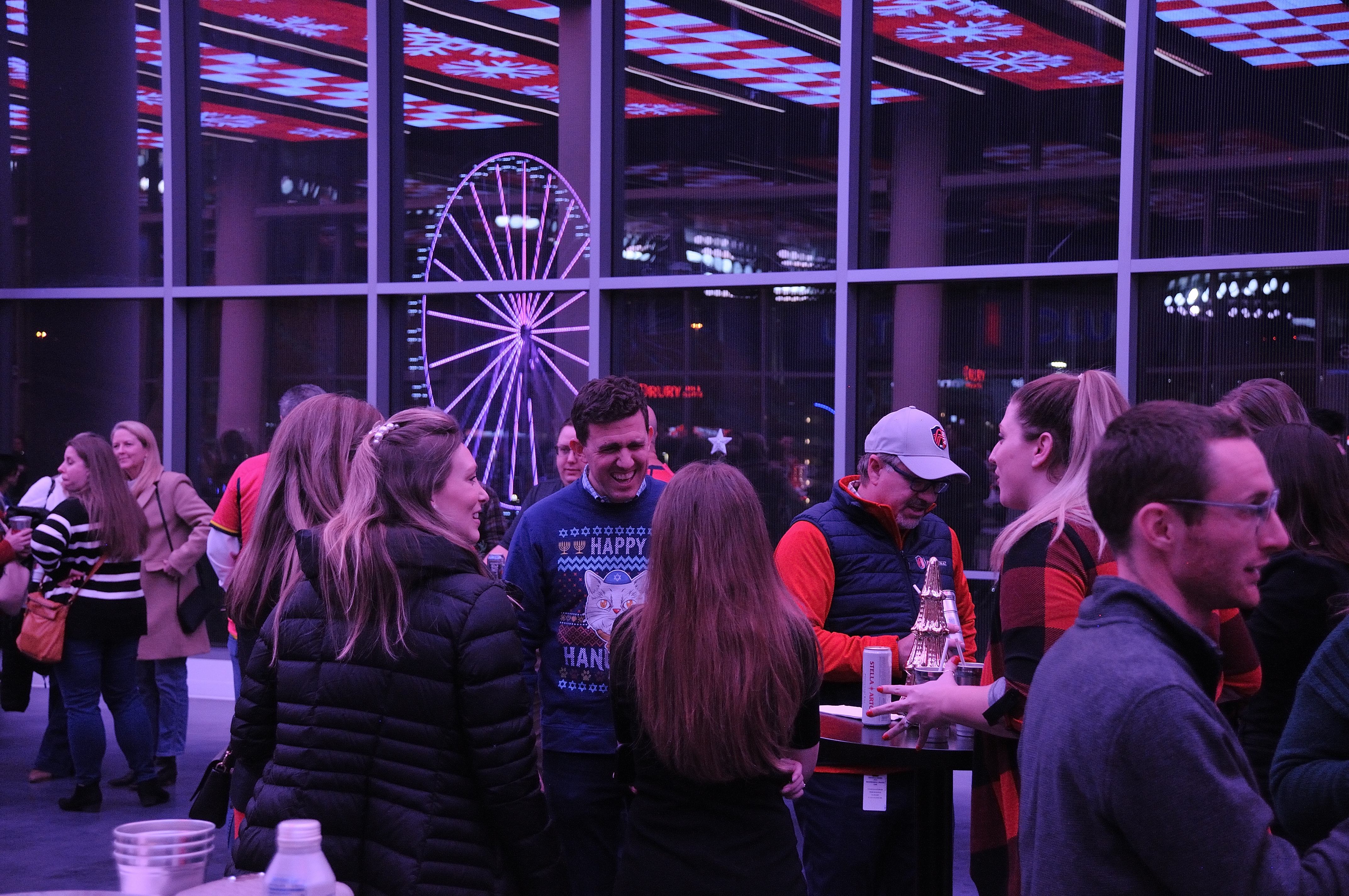
Combining Headshots and Video in One Production Session

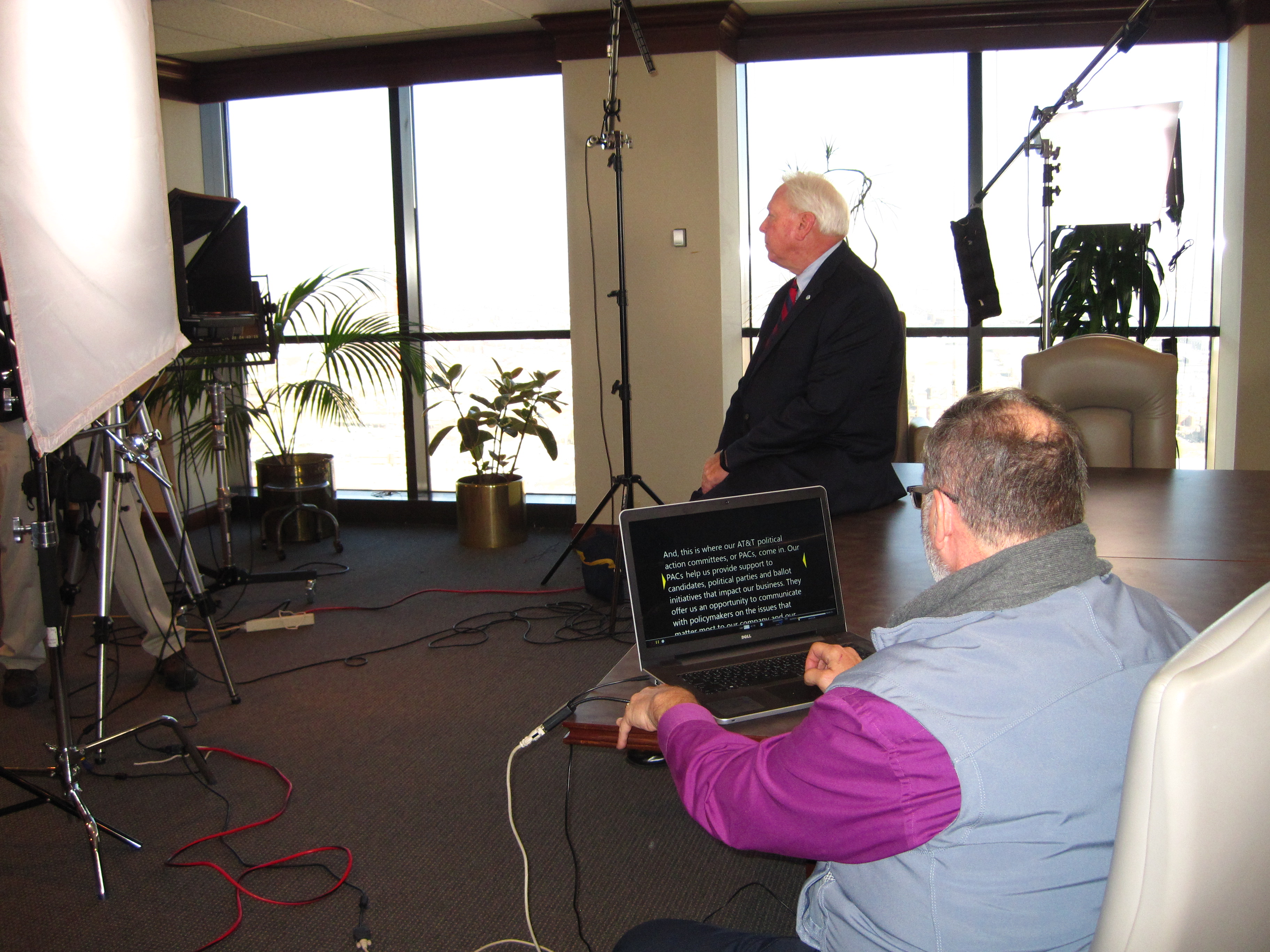
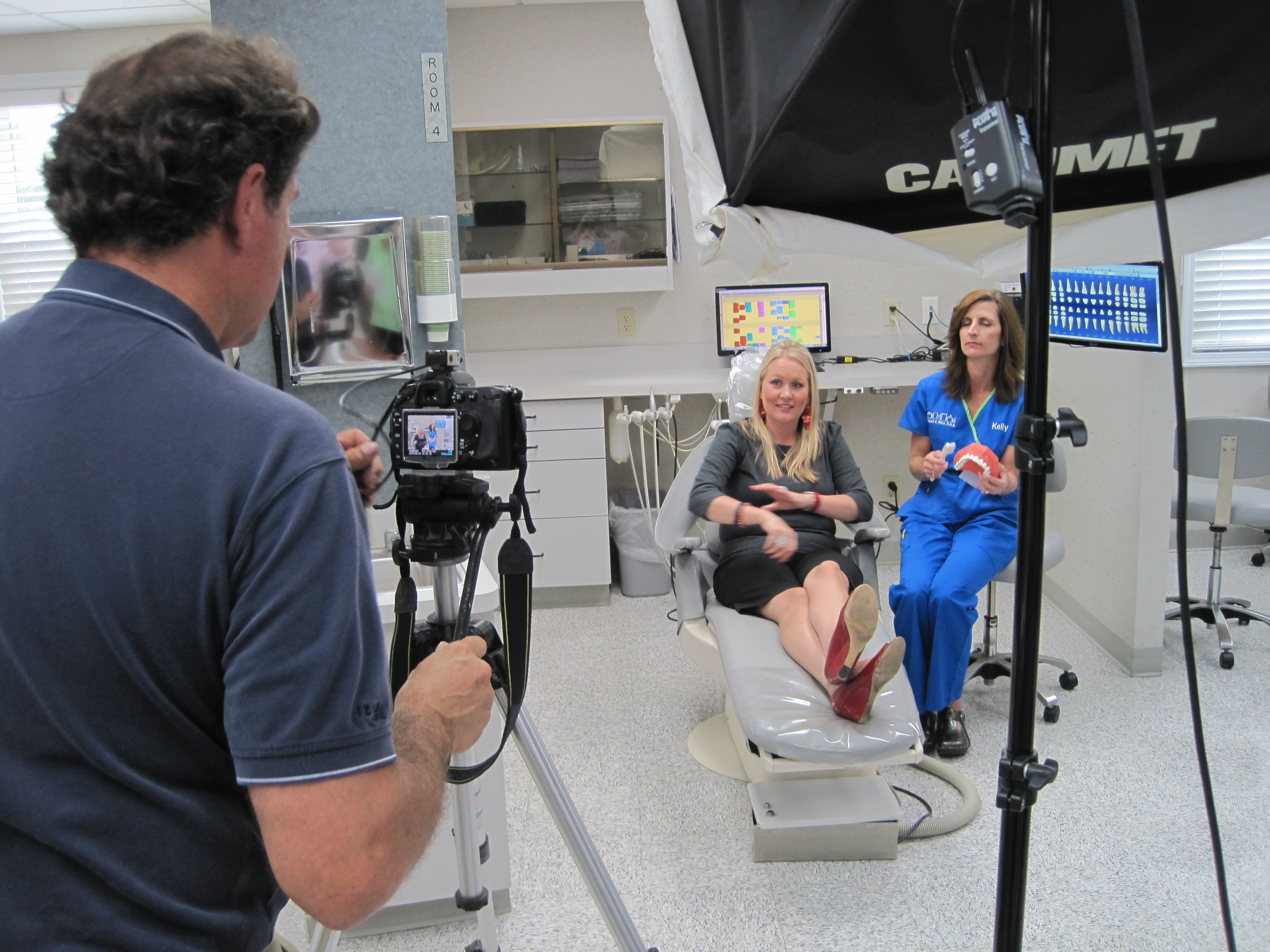
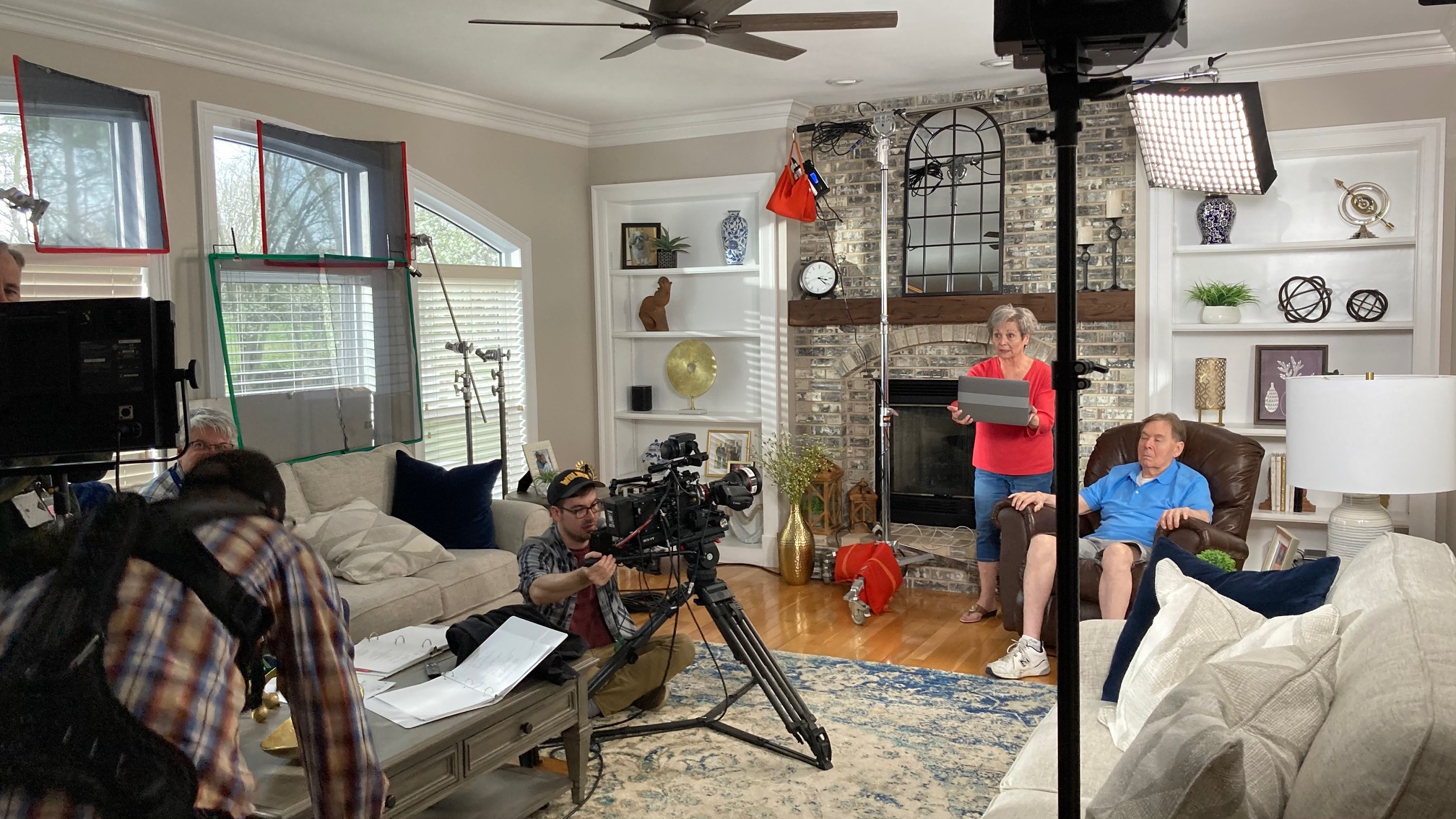
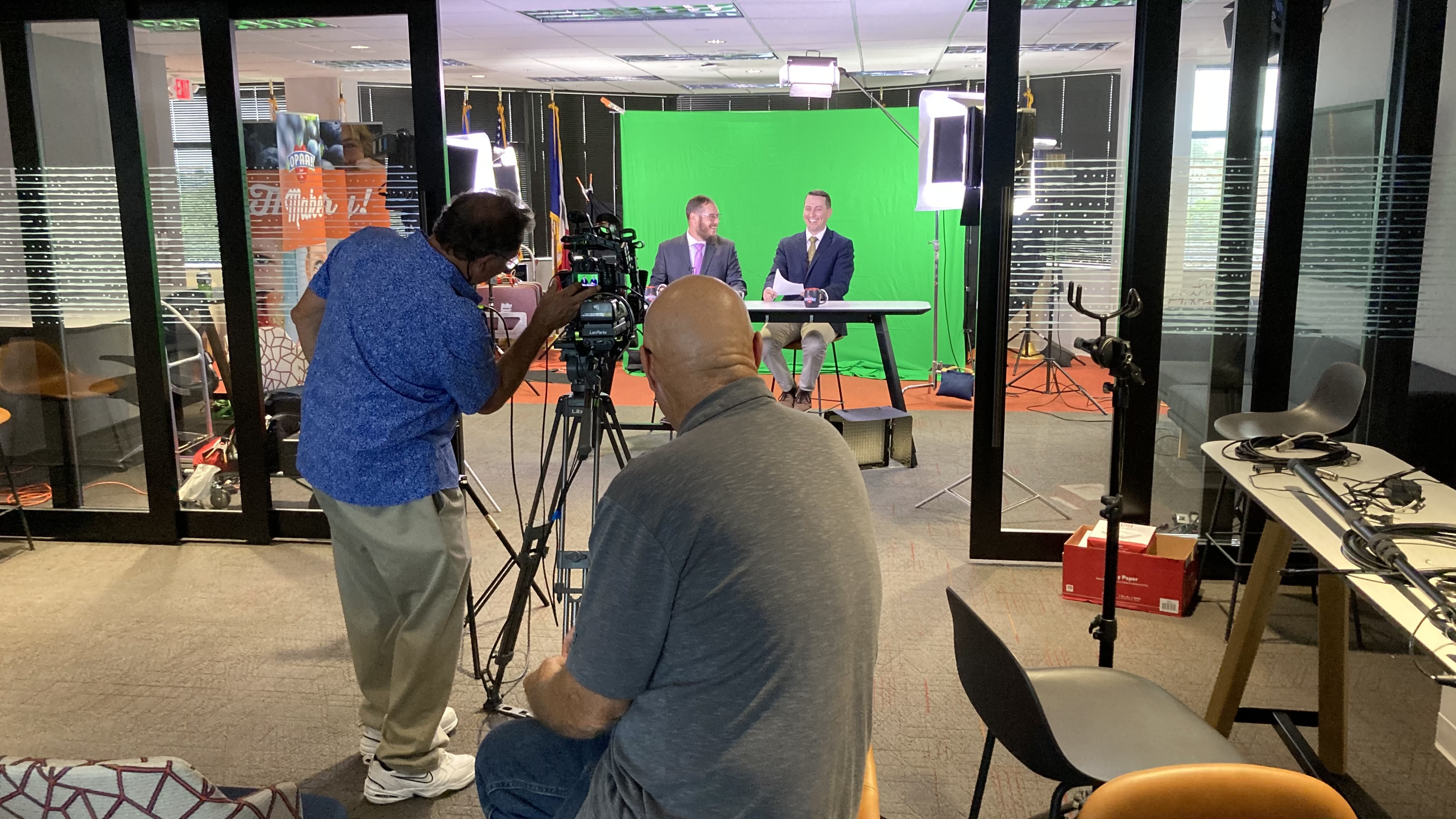
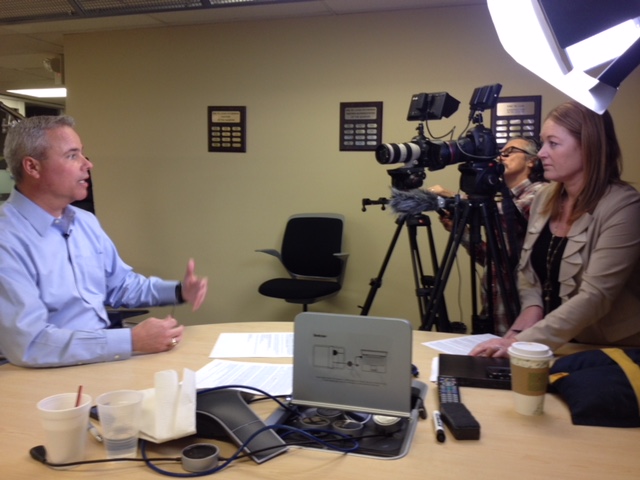
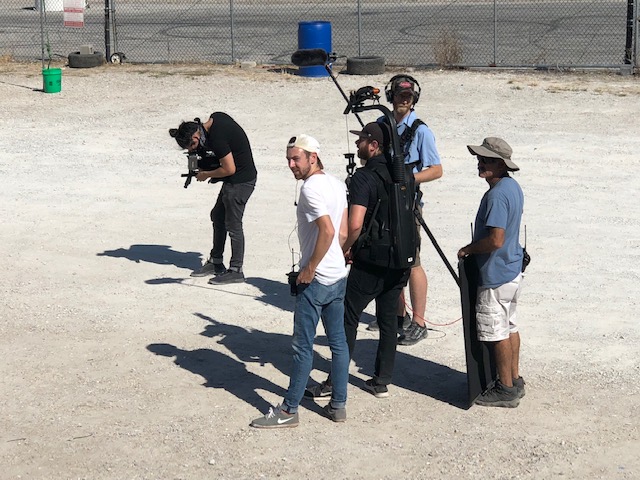
One of the most efficient ways for a small business to improve its marketing content is to combine headshots and video clips into one organized production session. This allows the company to update portraits, record short interviews, capture service explanations, gather b-roll, and create a practical media library from the same production day.

A single session can produce:

Professional headshots
Executive portraits
Team photography
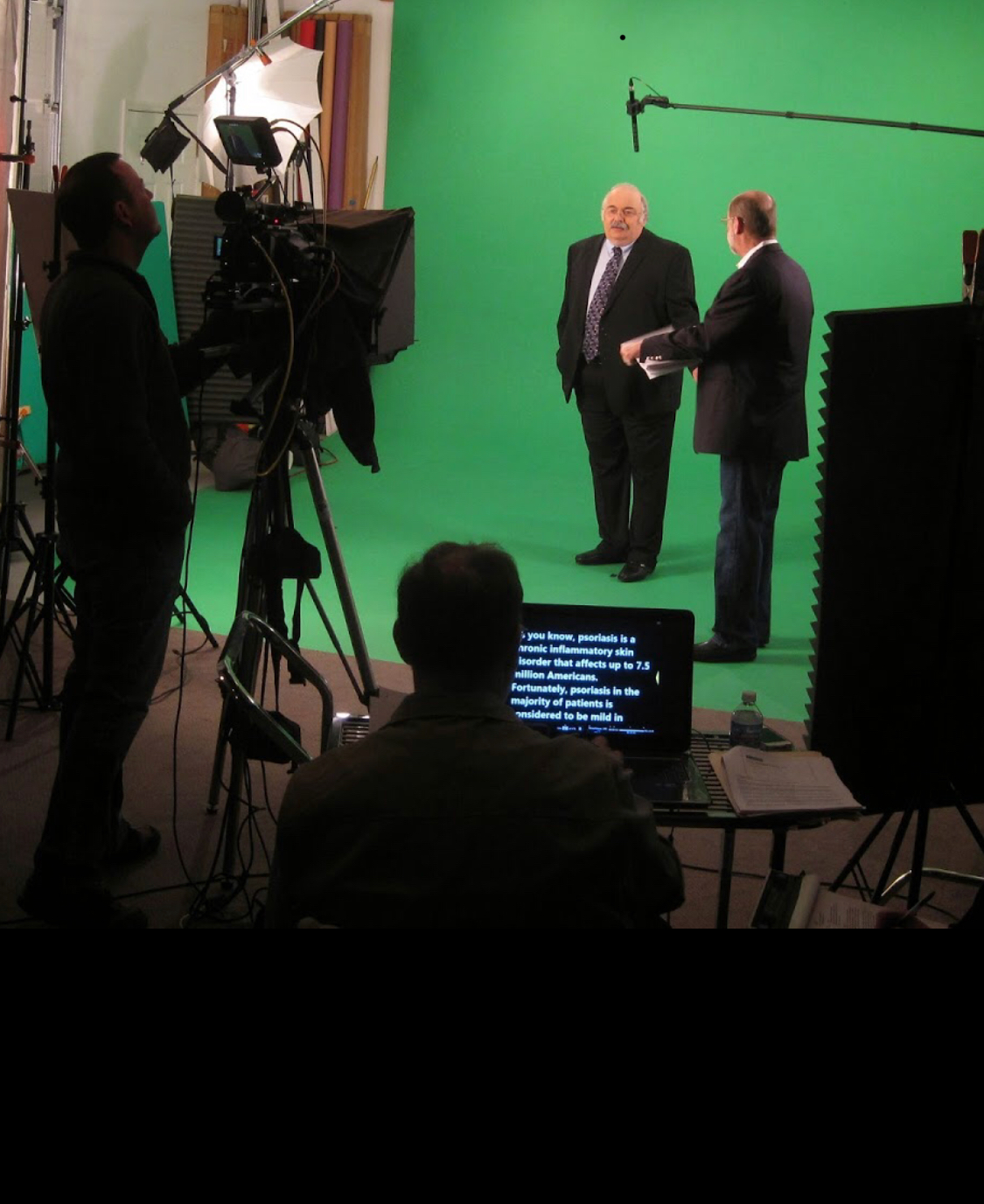
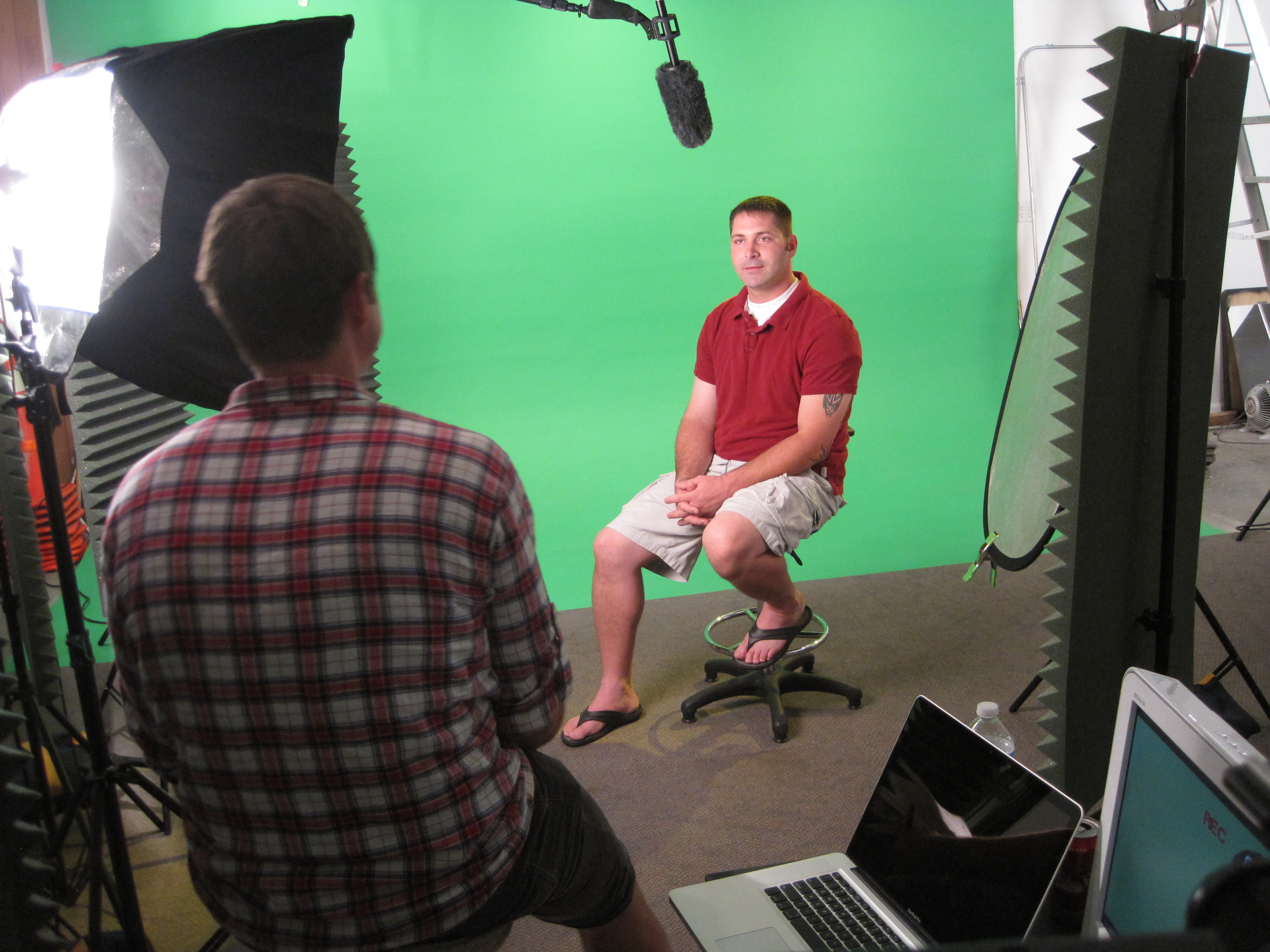
Short interview clips
Social media videos
Website video segments
Customer testimonial clips
B-roll footage
Behind-the-scenes content
Recruiting media
Still images for thumbnails and posts

This approach saves time, keeps the visual style consistent, and gives the business more useful content to work with after the shoot. Instead of scheduling separate productions for every marketing need, a small business can build a library of photography and video assets that support weeks or months of communication.

Planning the Message Before Production

Professional photography and video should be planned around a business objective. Before production begins, it is important to consider the audience, message, platforms, visual style, location, wardrobe, background, talking points, and final deliverables.

For corporate headshots, planning may include background selection, lighting style, posing direction, cropping preferences, retouching needs, and file formats.

For social media video clips, planning should focus on short, useful messages. Small businesses may benefit from answering questions such as:

Who do you serve?
What problem do you solve?
What makes your company different?
What should customers know before hiring you?
What service needs a clearer explanation?
What questions do prospects ask most often?
What parts of your work are best shown visually?

The strongest social media clips are usually focused on one clear idea. Rather than trying to say everything in one video, businesses often get better results by creating a series of short clips, each with a specific purpose.
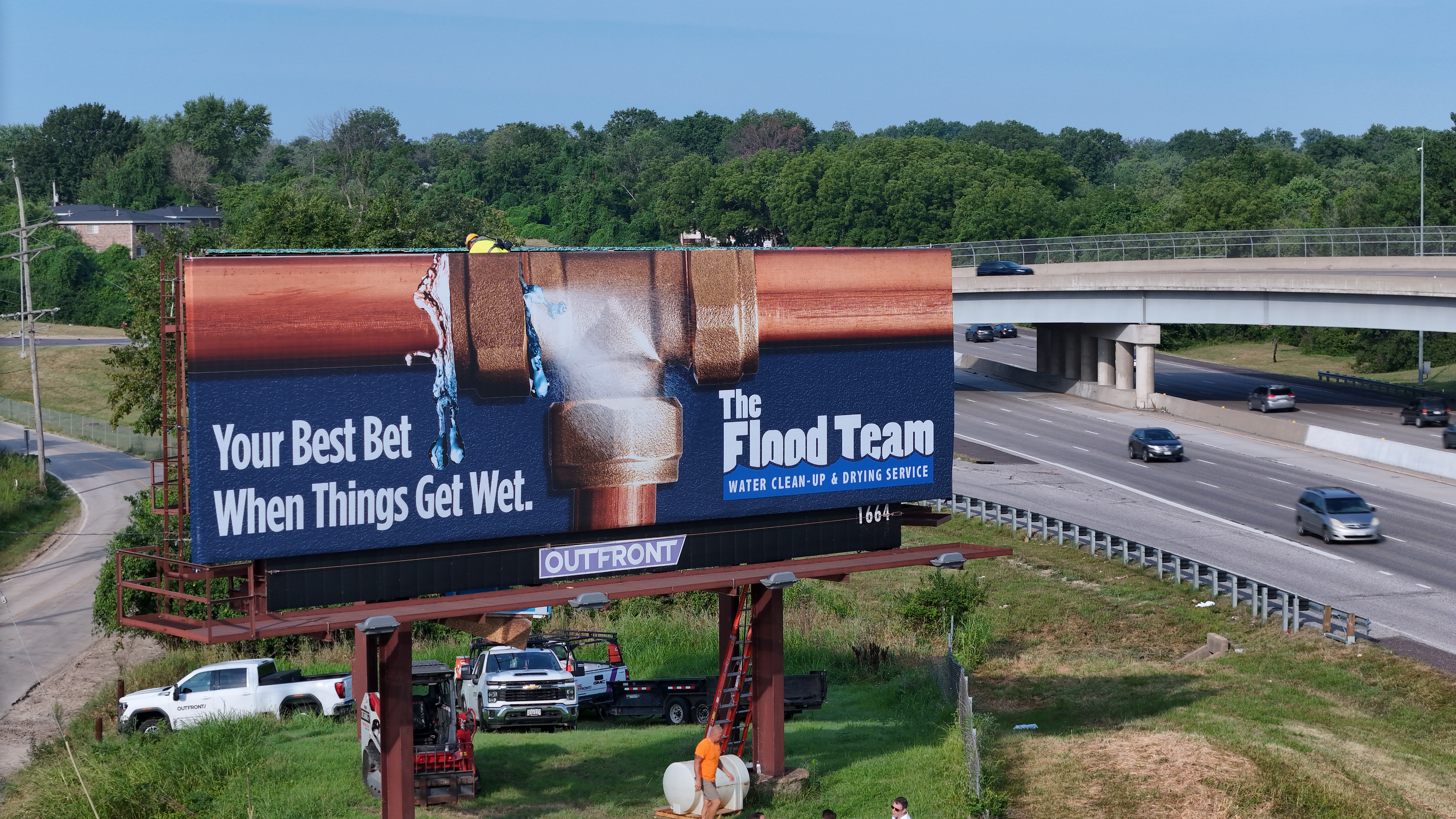
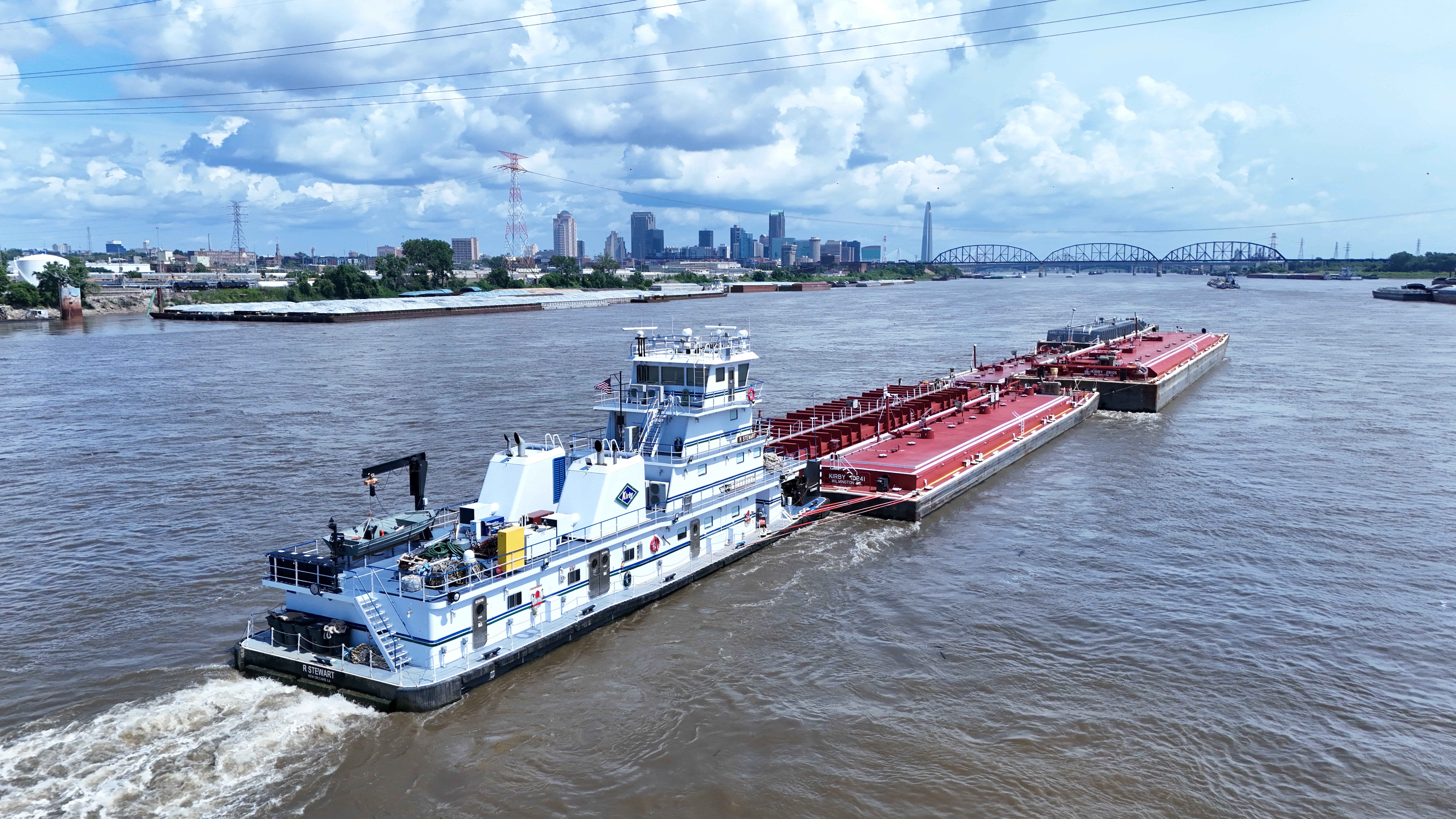
Professional Lighting, Audio, and Direction

The quality of a headshot or video clip depends on more than the camera. Lighting, audio, composition, background control, direction, lens choice, editing, and file preparation all affect the finished product.

For headshots, professional lighting helps shape the face, control shadows, improve skin tone, and create separation from the background. Direction helps subjects look natural, confident, and approachable.

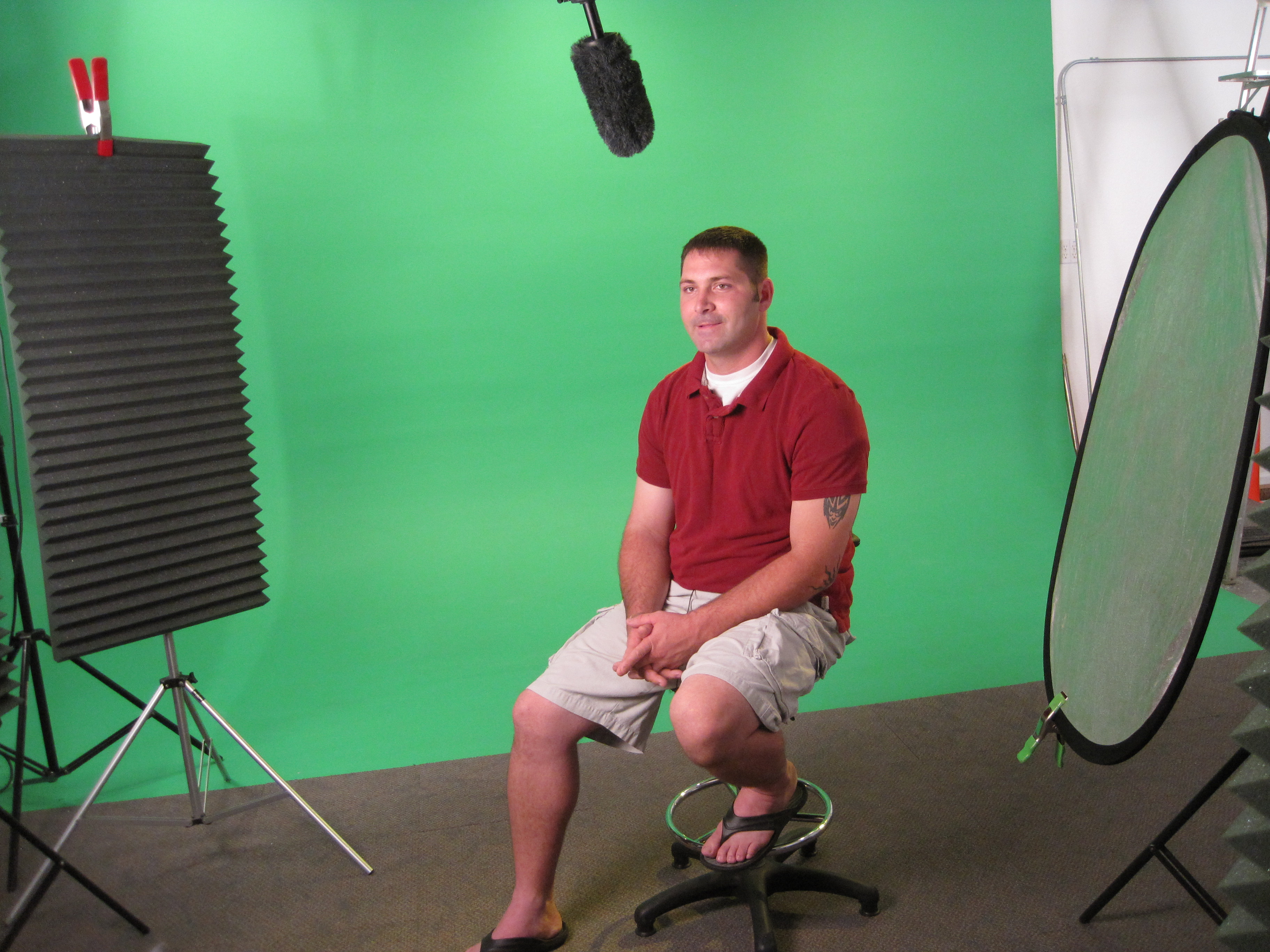
For video, clean audio is essential. Viewers may accept a simple visual style, but poor sound can quickly weaken the message. Professional microphones, lighting, camera support, and thoughtful framing help business video clips feel credible and watchable.

St Louis Corporate Photographers understands how to create professional visual content while helping business owners, executives, employees, and clients feel comfortable in front of the camera.

B-Roll Adds Value to Business Videos

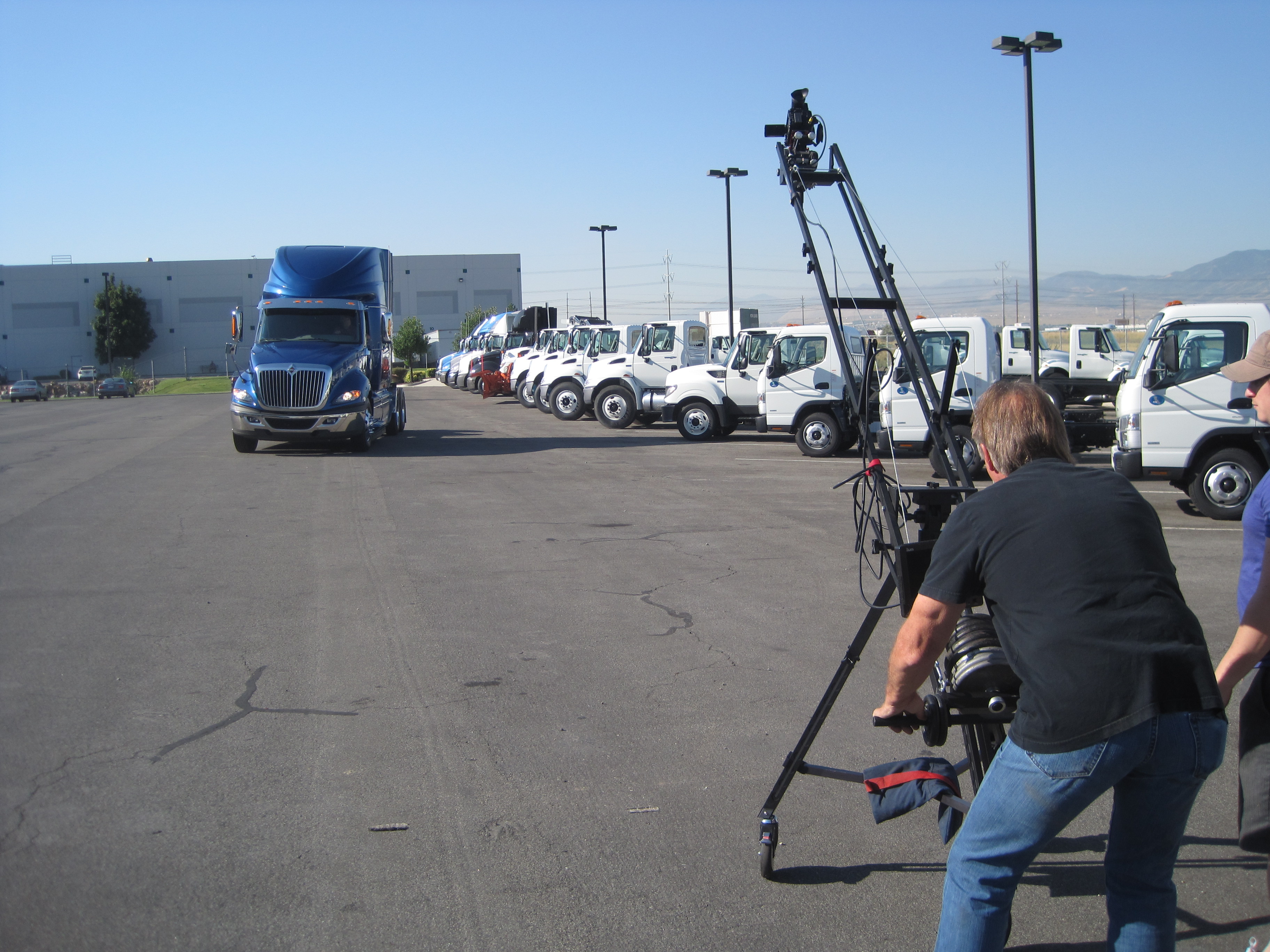
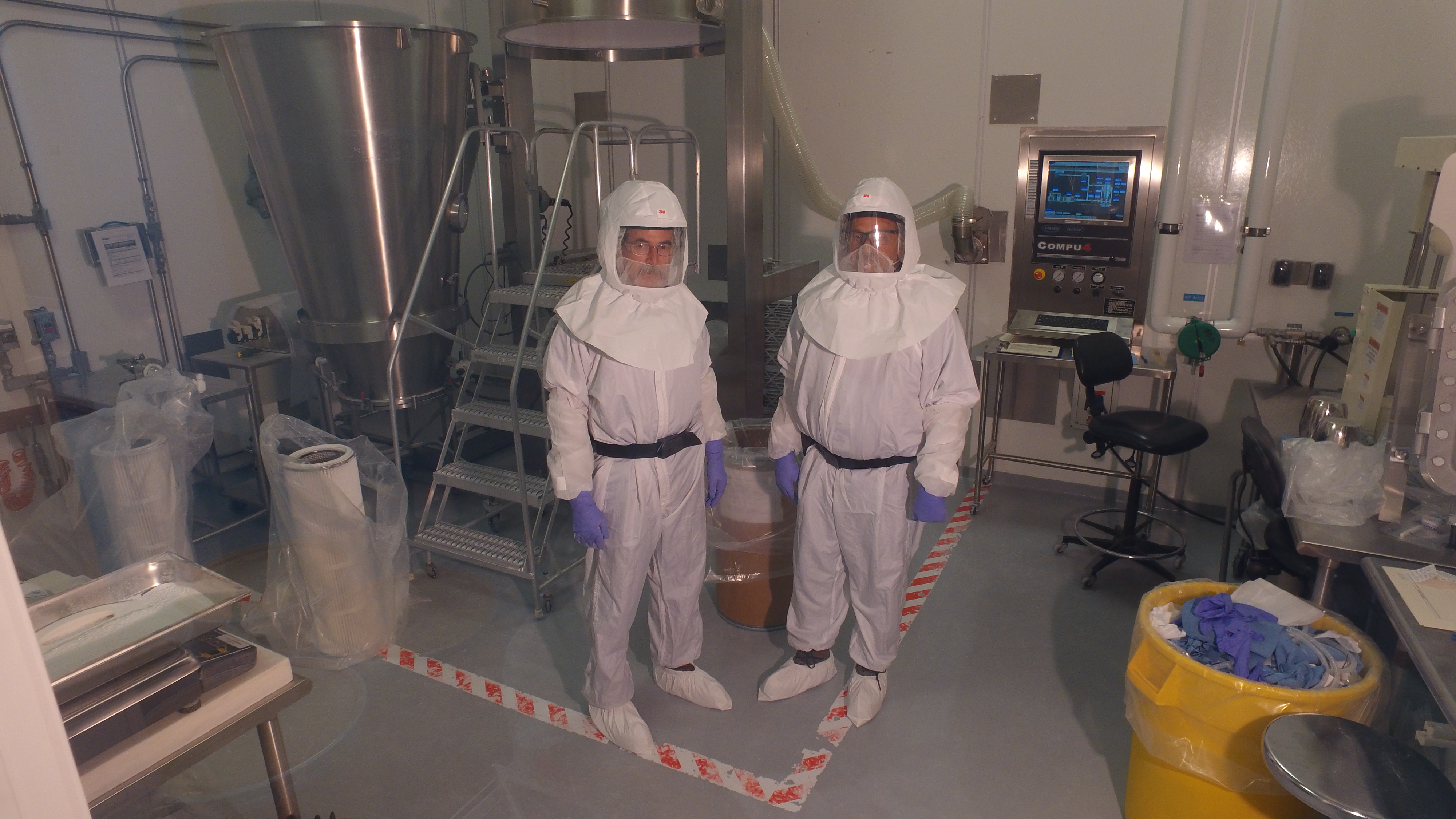
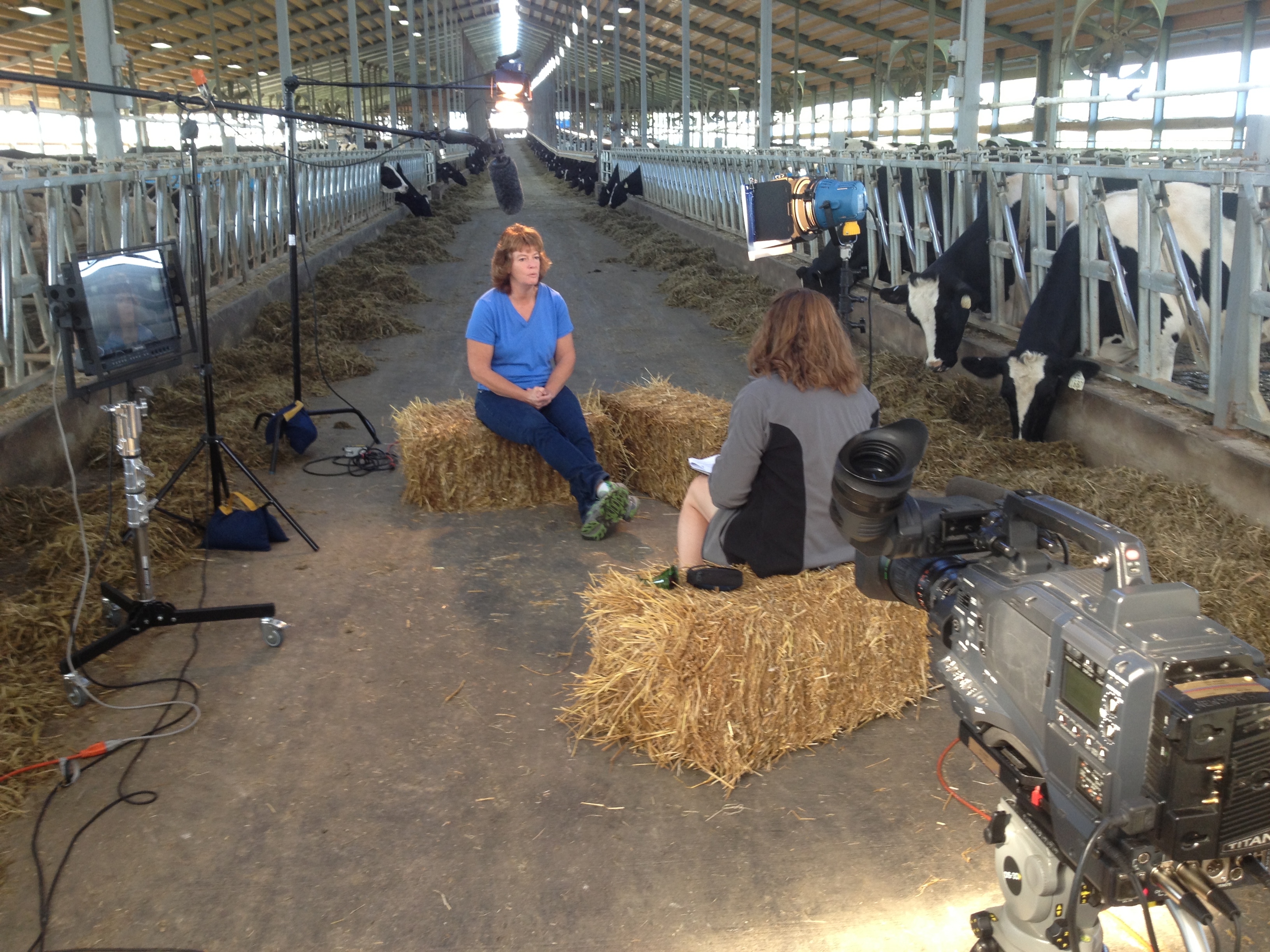
B-roll is the supporting footage that helps tell the story visually. It may show employees working, customers being served, products being prepared, equipment in use, meetings, office activity, facility details, signage, vehicles, tools, processes, or completed projects.

For social media clips, b-roll makes the video more engaging and easier to edit. Instead of relying only on a talking head, the viewer can see the business in action.

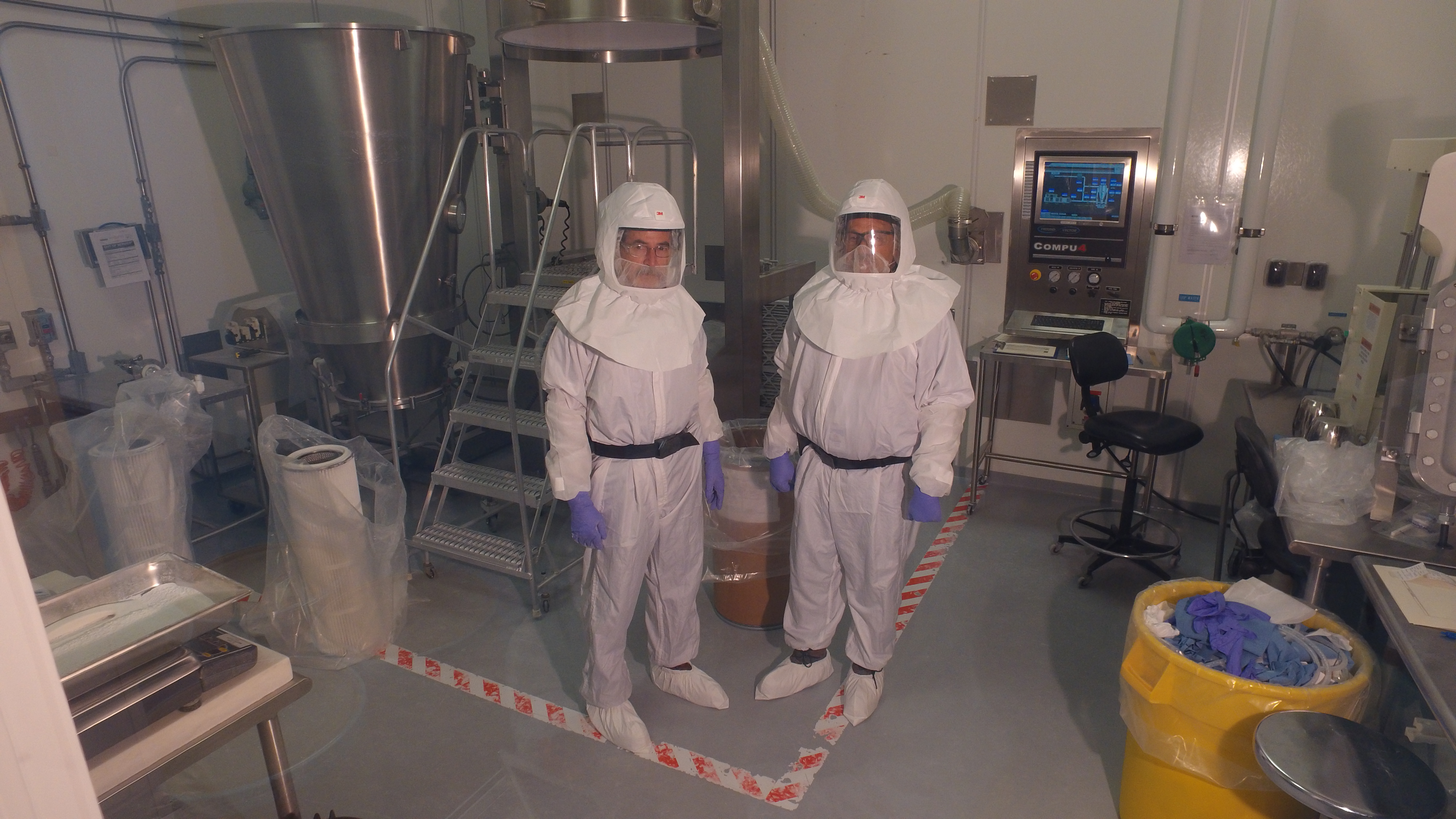
For professional service firms, b-roll may include consultations, meetings, team collaboration, client interaction, technology, documents, and branded materials. For contractors, manufacturers, healthcare practices, retailers, and service companies, b-roll may include facilities, tools, equipment, procedures, jobsites, products, and finished results.

Strong b-roll gives every business video more flexibility, polish, and marketing value.
Repurposing Content for Better Marketing Results

Small businesses should get as much value as possible from every production. A well-planned photography and video session can create content that supports websites, LinkedIn, social media, digital ads, sales presentations, recruiting, email marketing, and internal communications.

One interview can become several short clips. One headshot session can provide portraits for LinkedIn, staff pages, proposals, and email signatures. One location shoot can generate website banners, social media posts, thumbnail images, recruiting visuals, and b-roll for future edits.

Repurposing photography and video branding helps small businesses stay visible without constantly starting from scratch. It also helps maintain a consistent visual identity across platforms.

St Louis Corporate Photographers helps businesses think beyond a single finished image or video. The goal is to create practical, flexible media assets that can support long-term marketing and communication needs.

Studio and Location Production Options

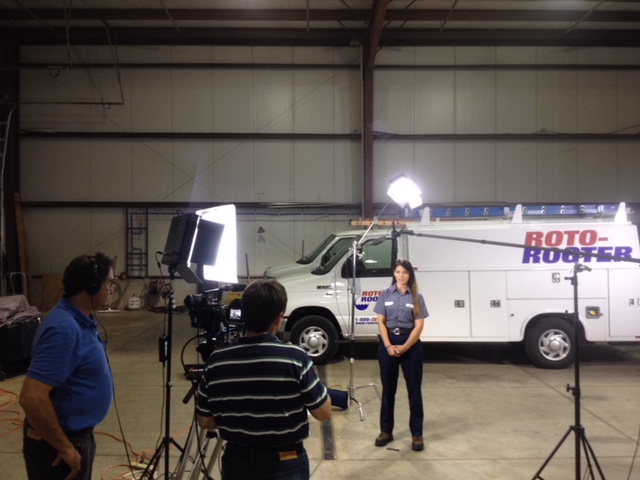
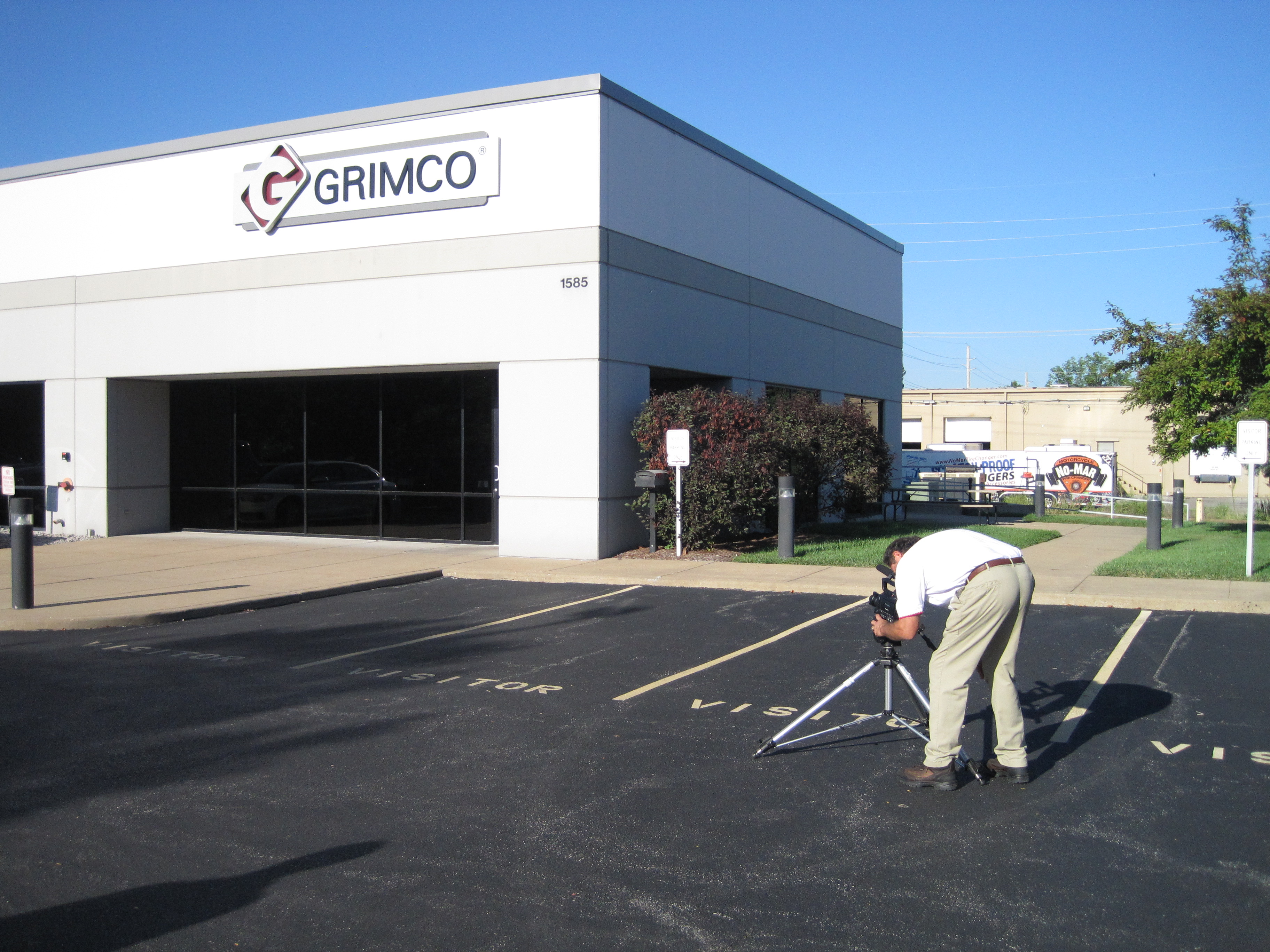
Some business projects are best produced in a controlled studio environment. Others need to be captured on location at an office, showroom, warehouse, clinic, jobsite, restaurant, retail space, manufacturing facility, event venue, or customer location.

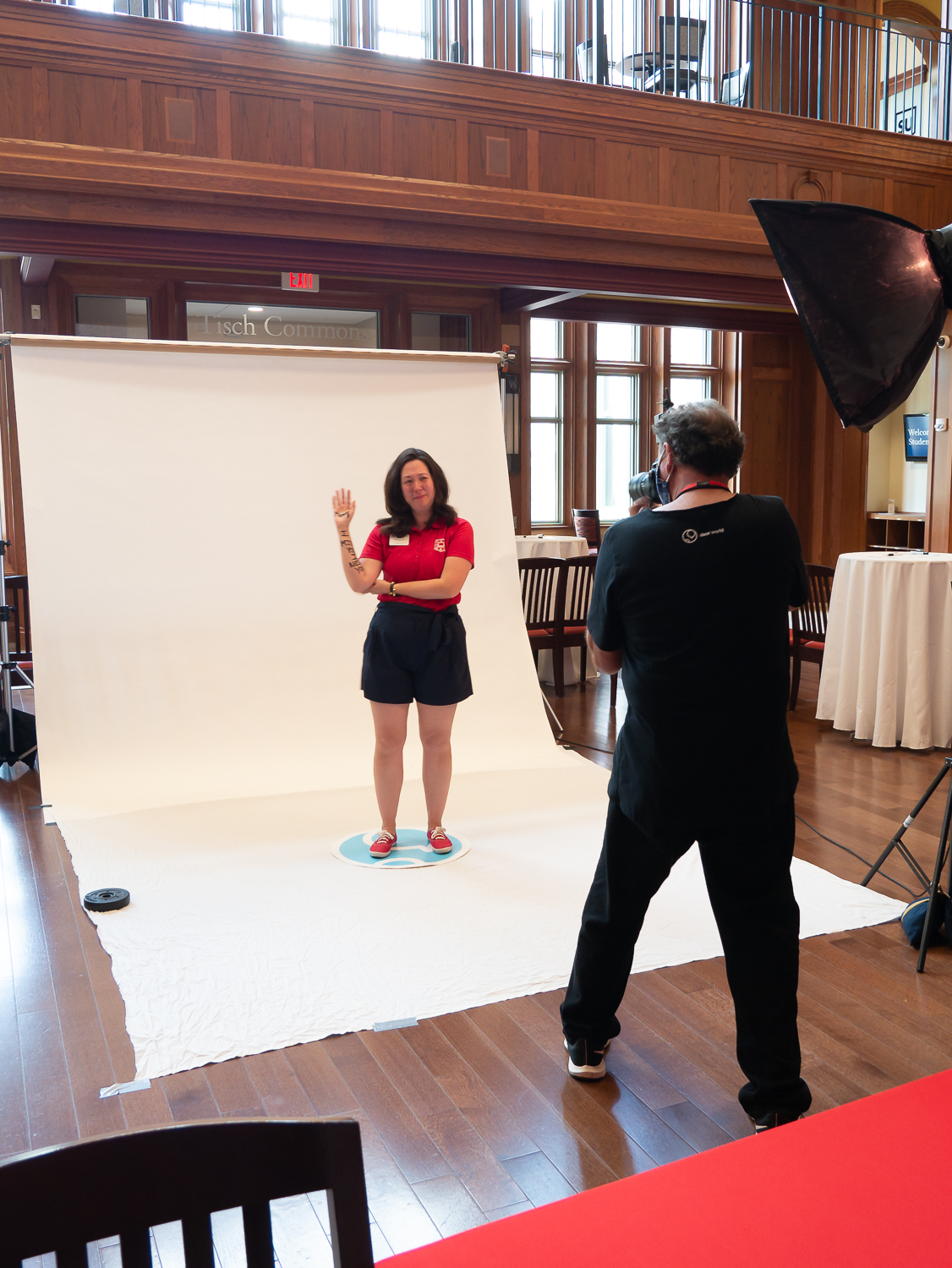
Studio production is ideal for corporate headshots, executive portraits, interviews, product photography, controlled lighting setups, small productions, and clean branded visuals. Location production is valuable when the business wants to show its people, environment, process, equipment, service experience, or completed work.

St Louis Corporate Photographers provides both studio and location photography and video production, allowing each project to be designed around the company’s message, audience, and intended use.

Corporate Photography and Video for Professional Service Firms

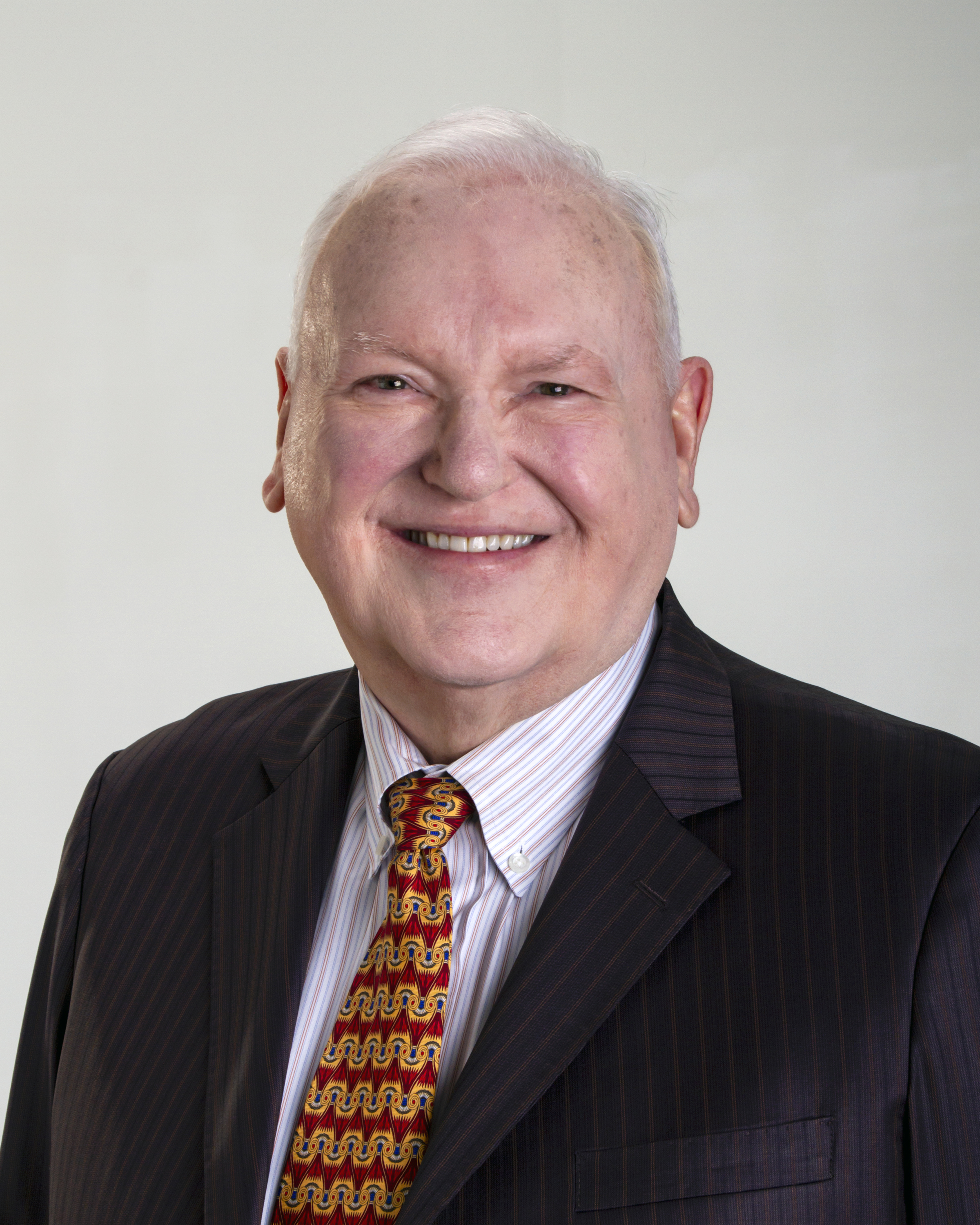
Professional service businesses depend heavily on reputation. Law firms, financial advisors, consultants, healthcare providers, real estate professionals, architects, engineers, agencies, and business-to-business service providers need visuals that communicate competence, trust, and experience.

For these organizations, headshots and short videos can introduce leadership, explain services, answer common client questions, support recruitment, and make the business feel more accessible.

A professional services media package may include:

Executive headshots
Staff portraits
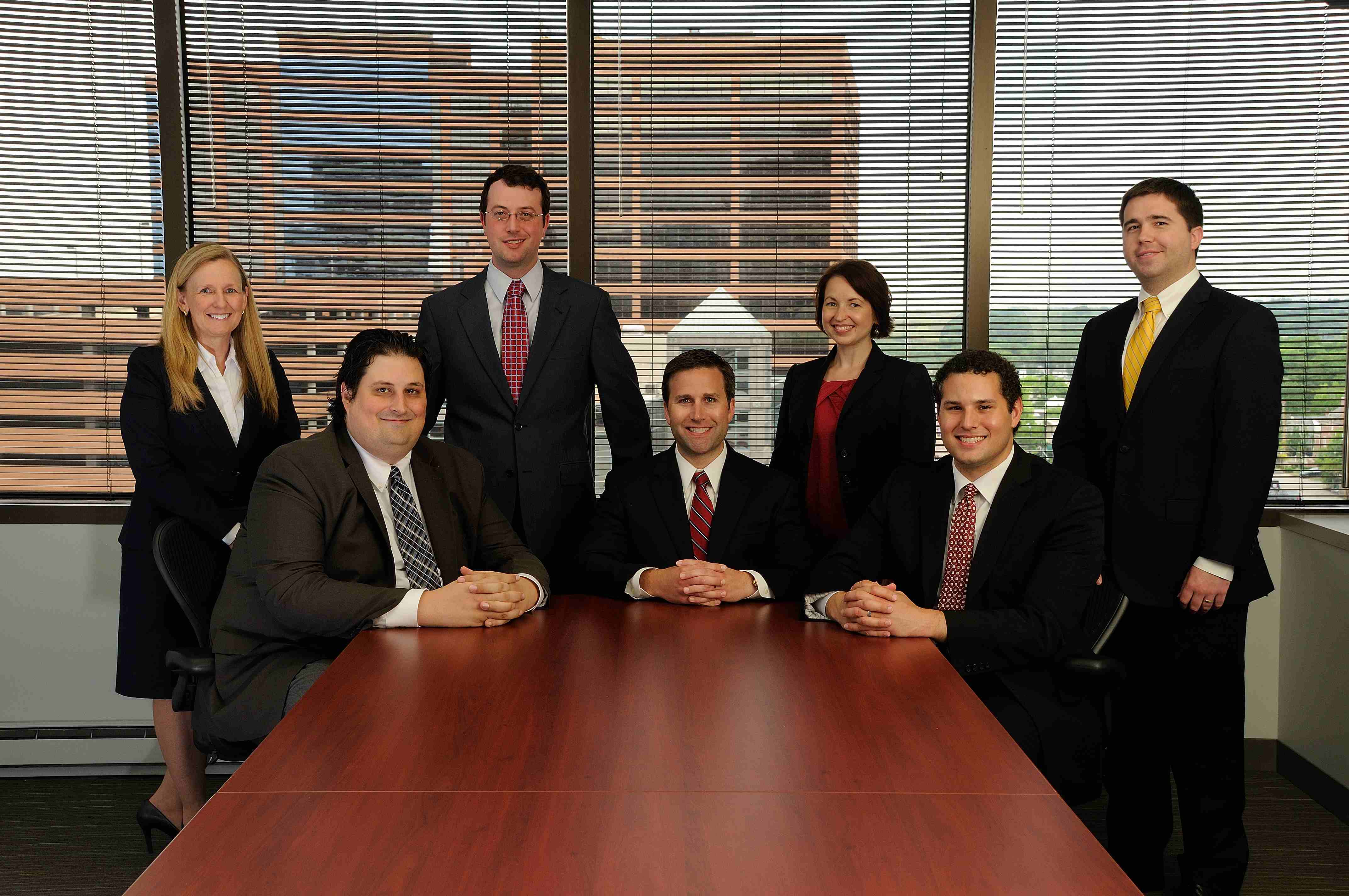
Team photography
Office lifestyle images
Interview clips
Consultant or advisor profile videos
Service explanation clips
Client testimonial videos
Website banner images
LinkedIn content
Recruiting videos
Meeting and collaboration b-roll

This type of content helps prospects understand who they may be working with before the first conversation begins.
Drone and Specialized Imaging Services

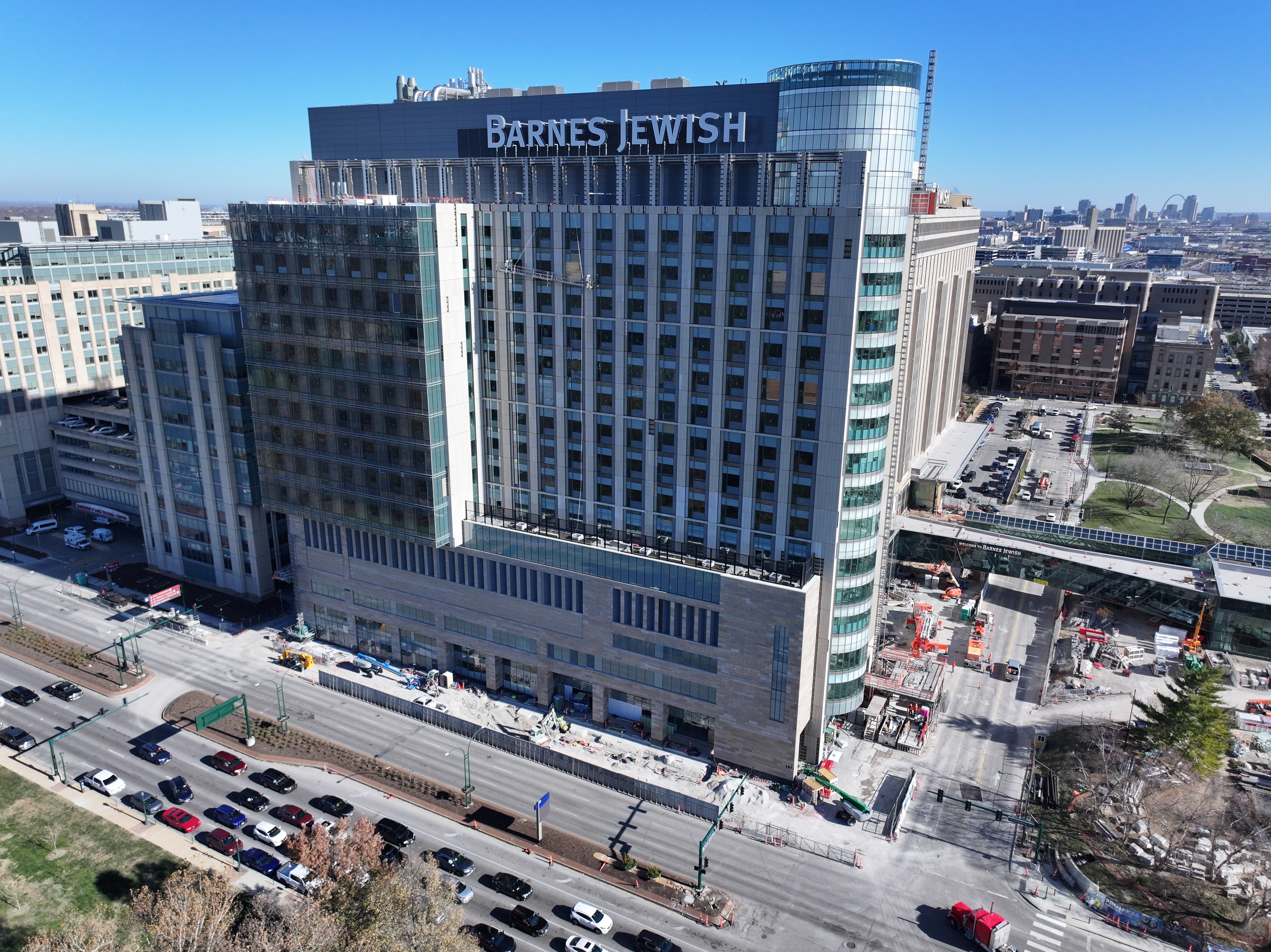
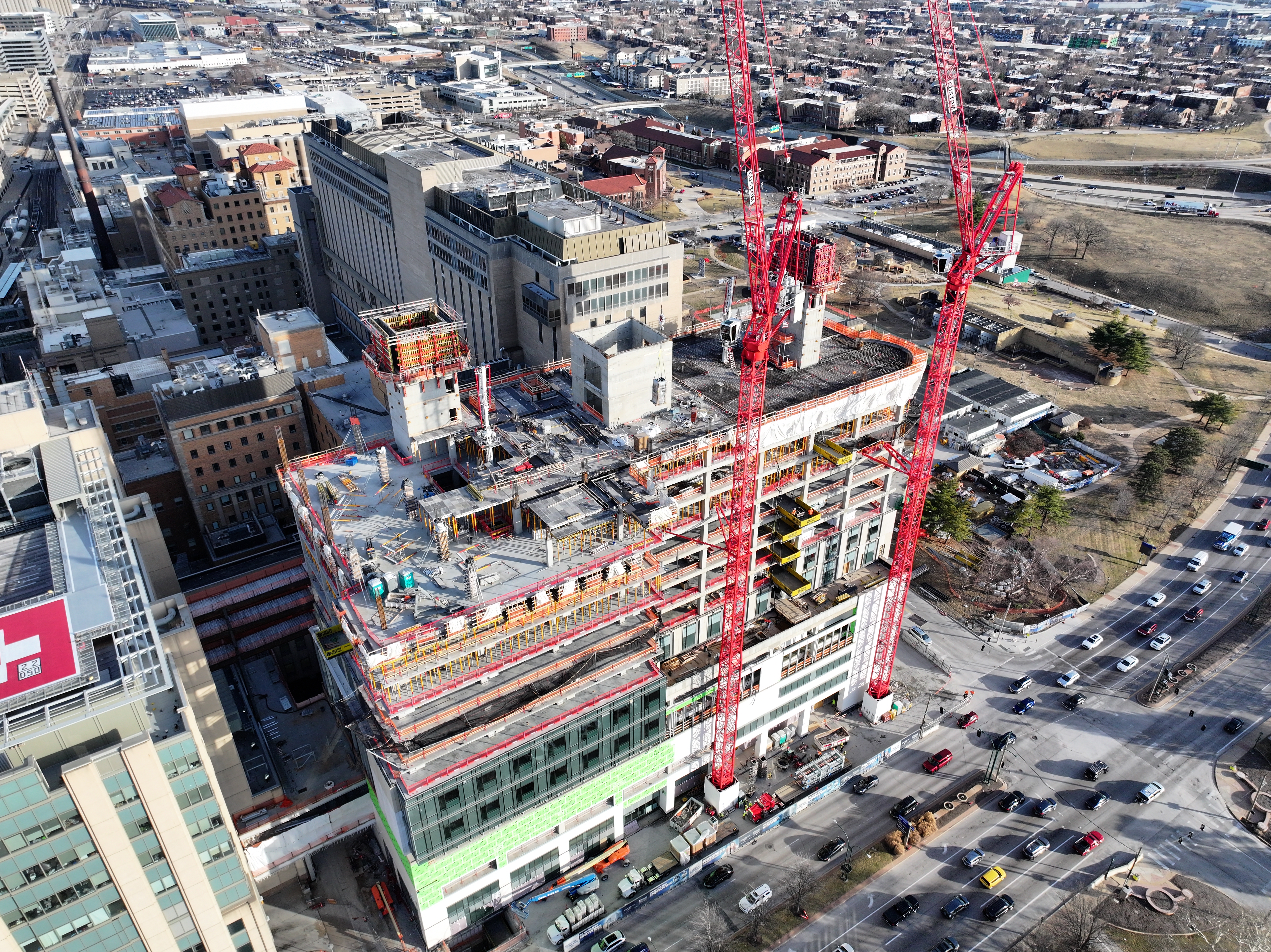
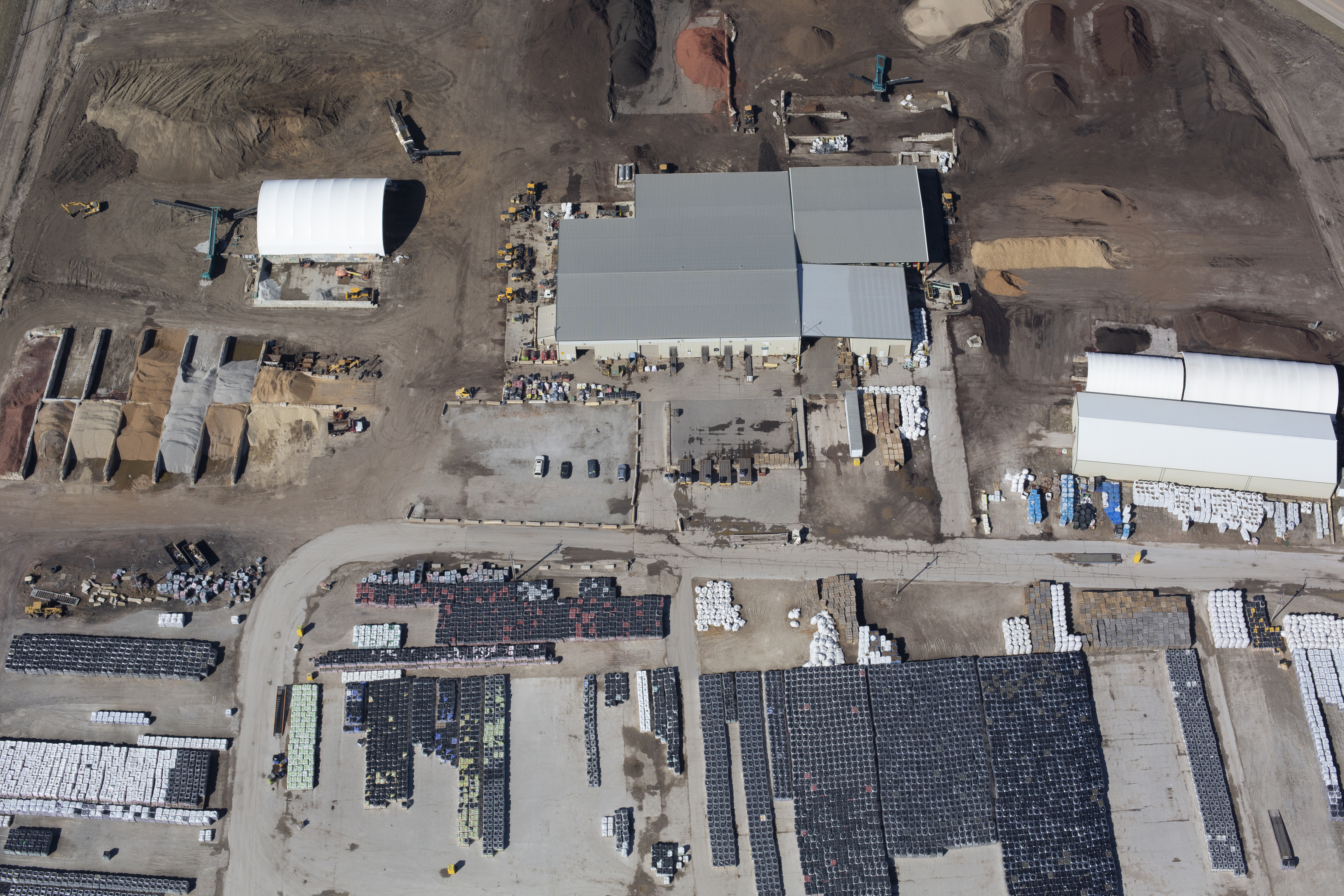
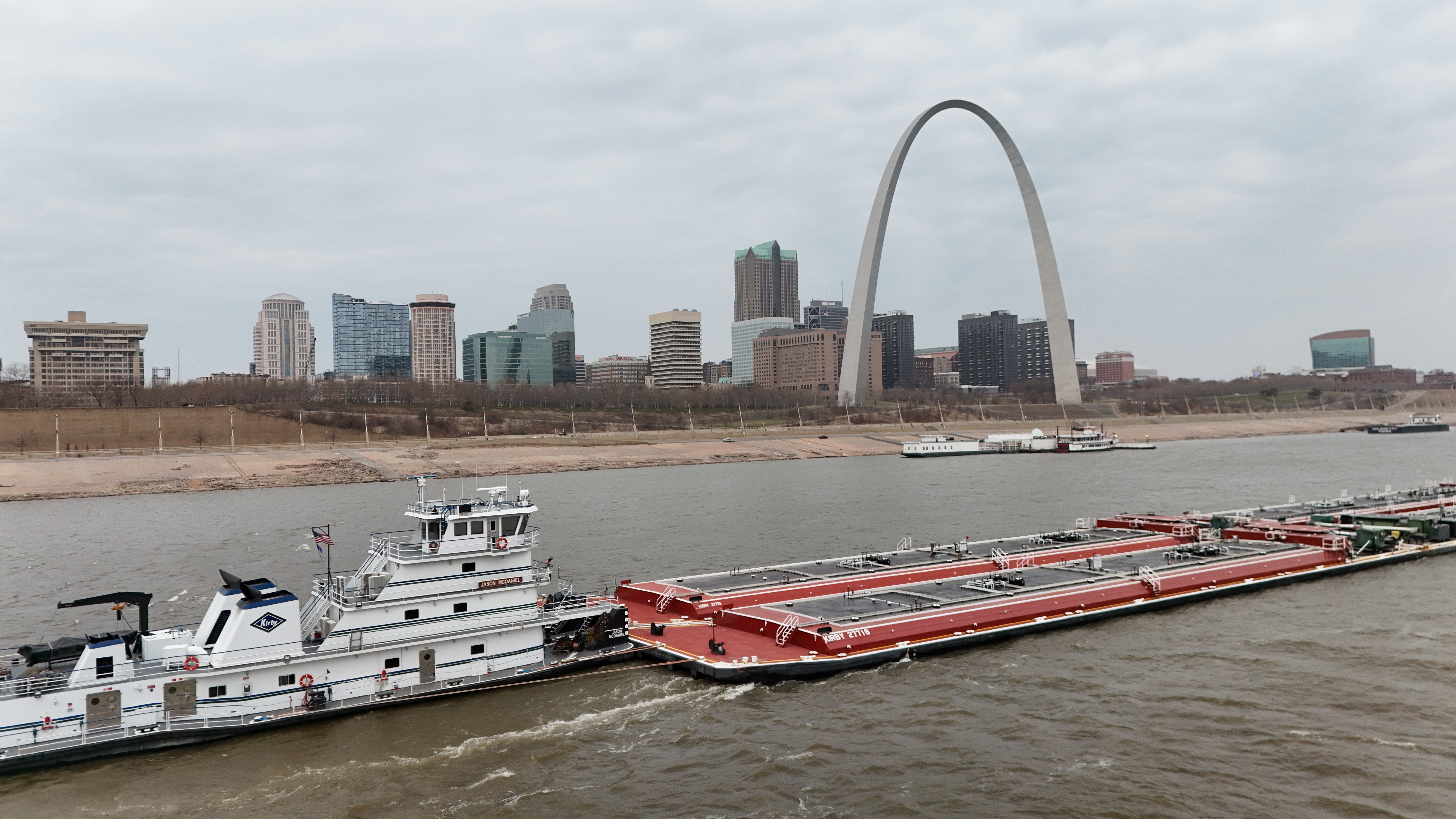
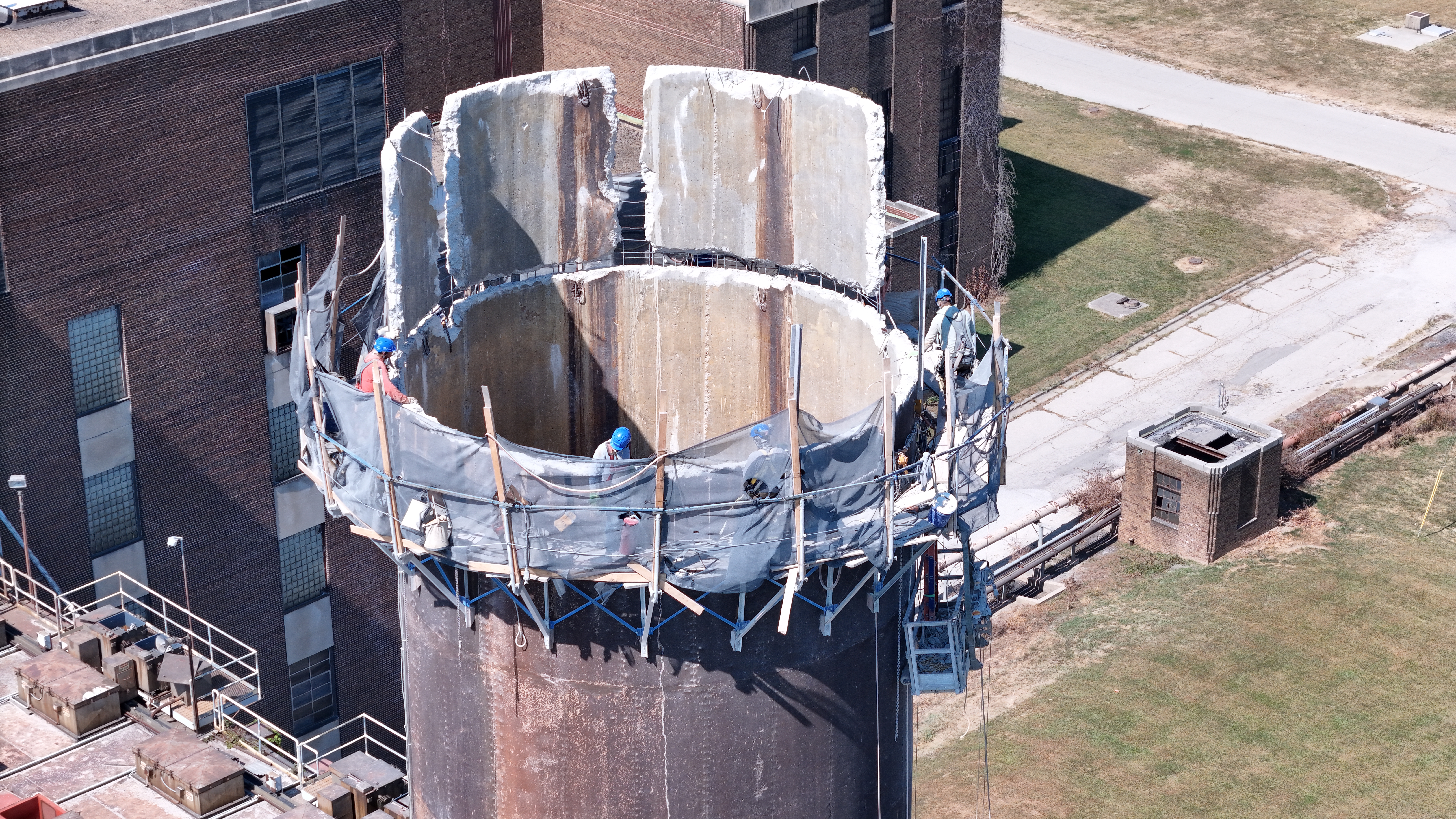
Some commercial projects require more than standard photography and video. Exterior locations, large properties, construction sites, campuses, industrial facilities, commercial buildings, and event spaces may benefit from aerial imagery or advanced drone services.

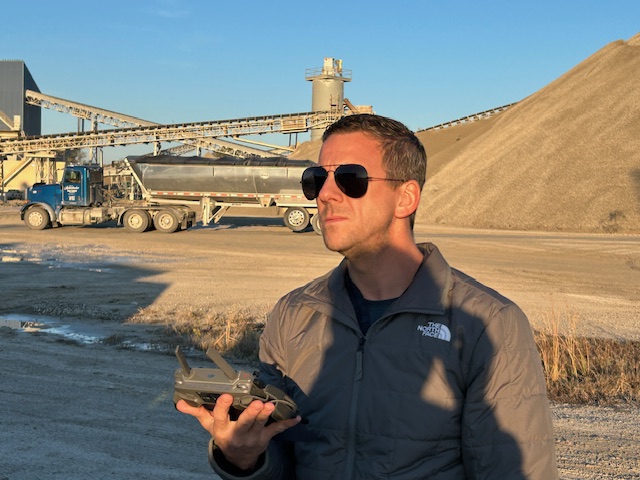
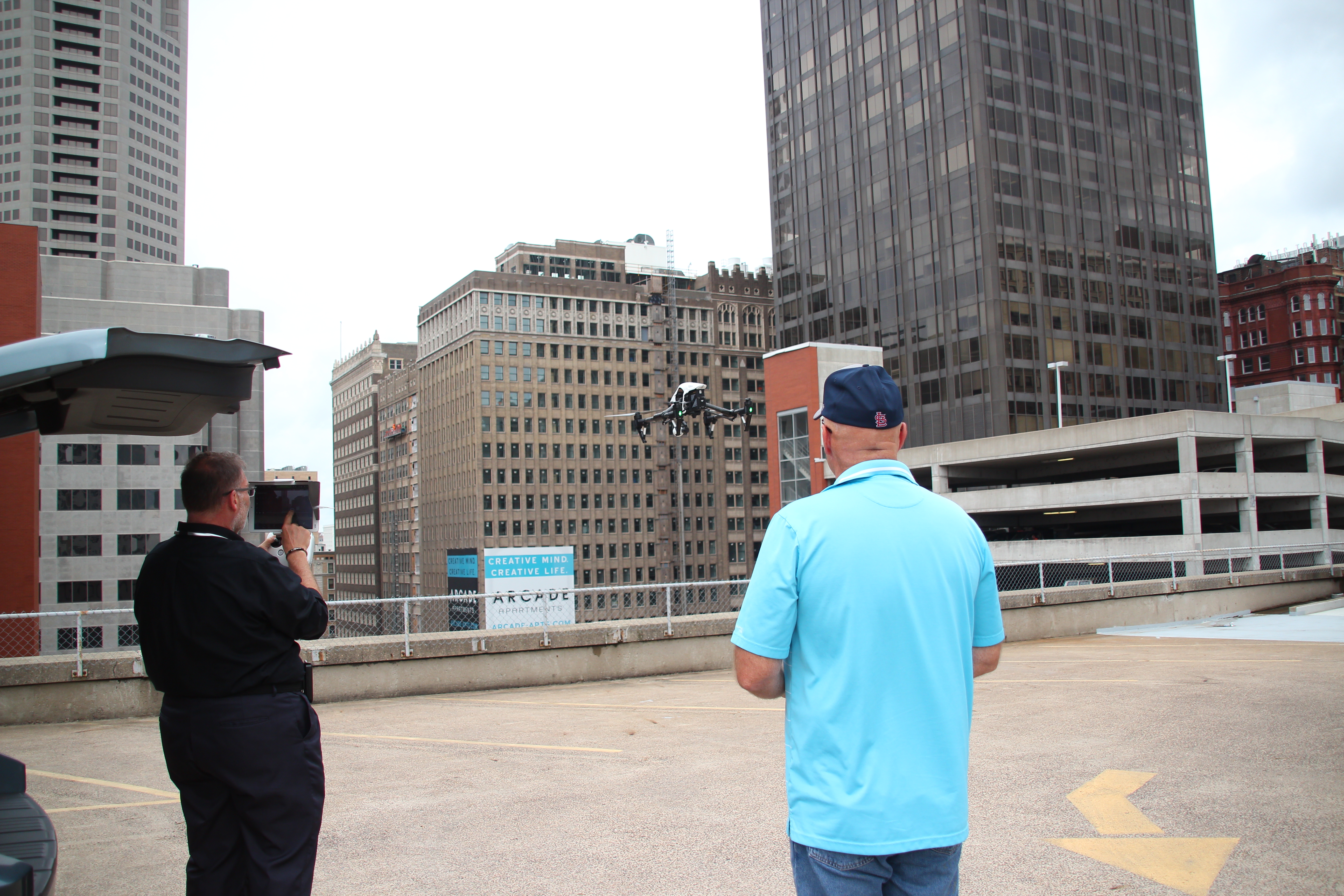
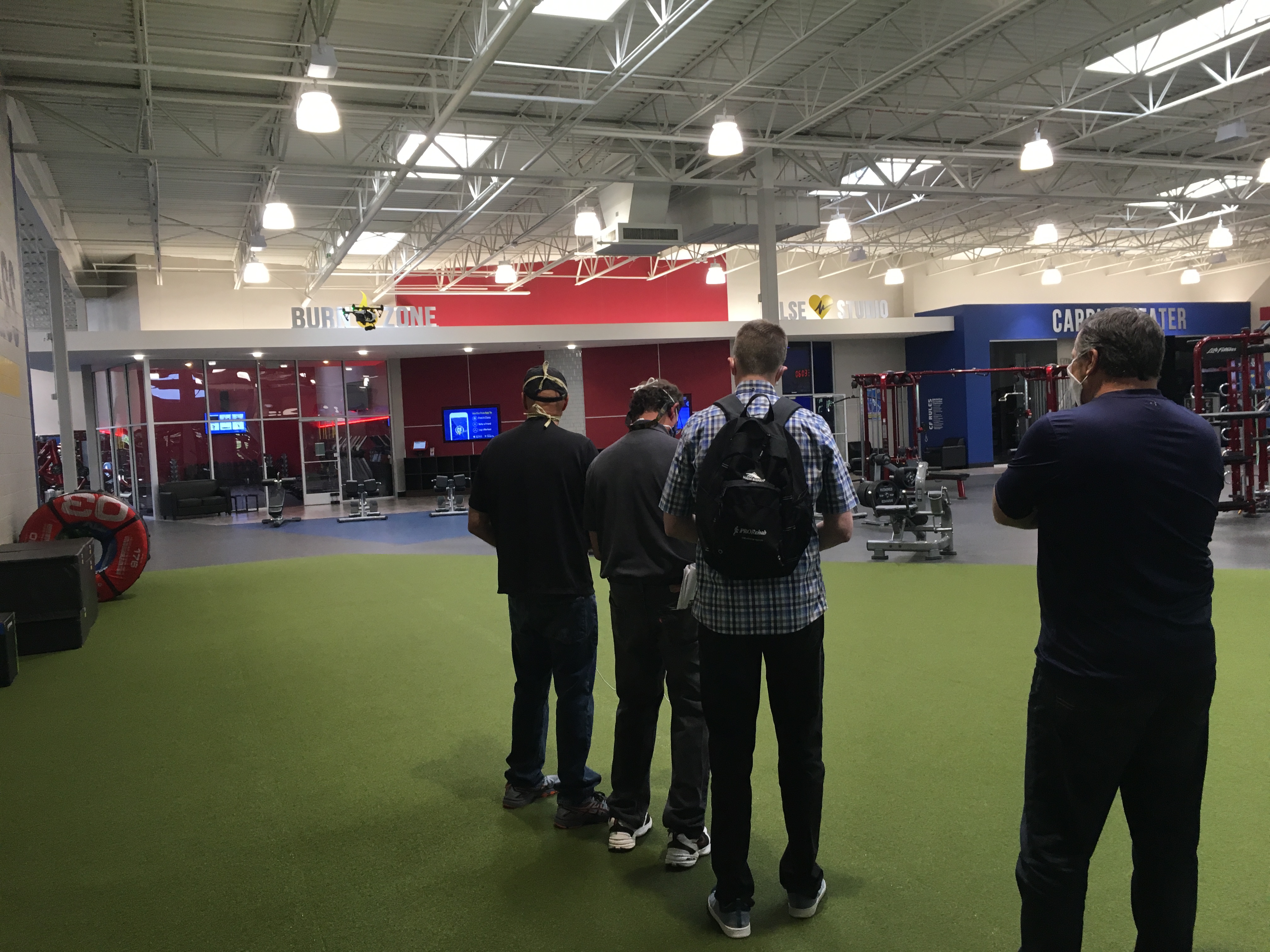
St Louis Corporate Photographers provides licensed drone services when aerial photography or video can add value to the project. The company can also fly specialized FPV drones indoors, creating dynamic movement through offices, warehouses, showrooms, event venues, facilities, and commercial interiors.

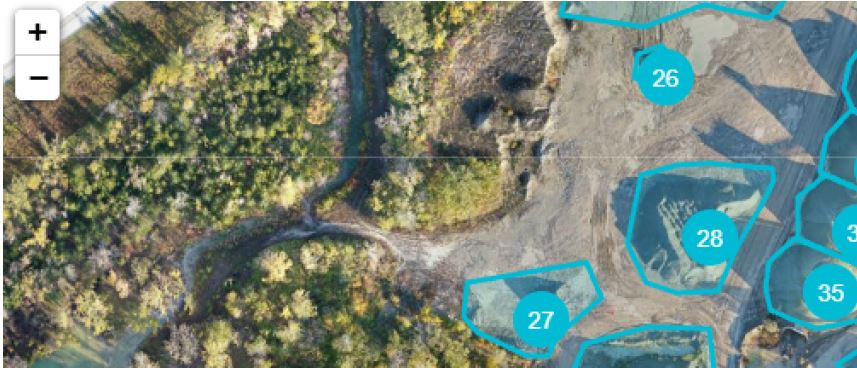
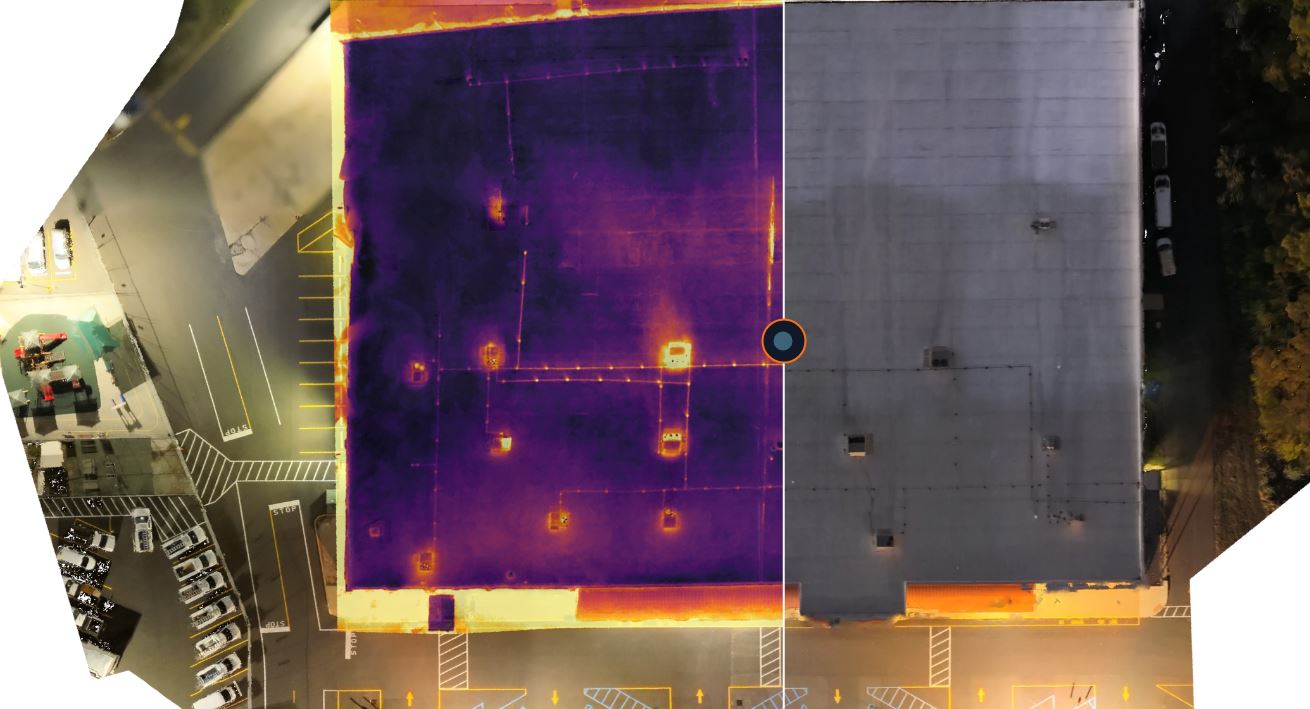
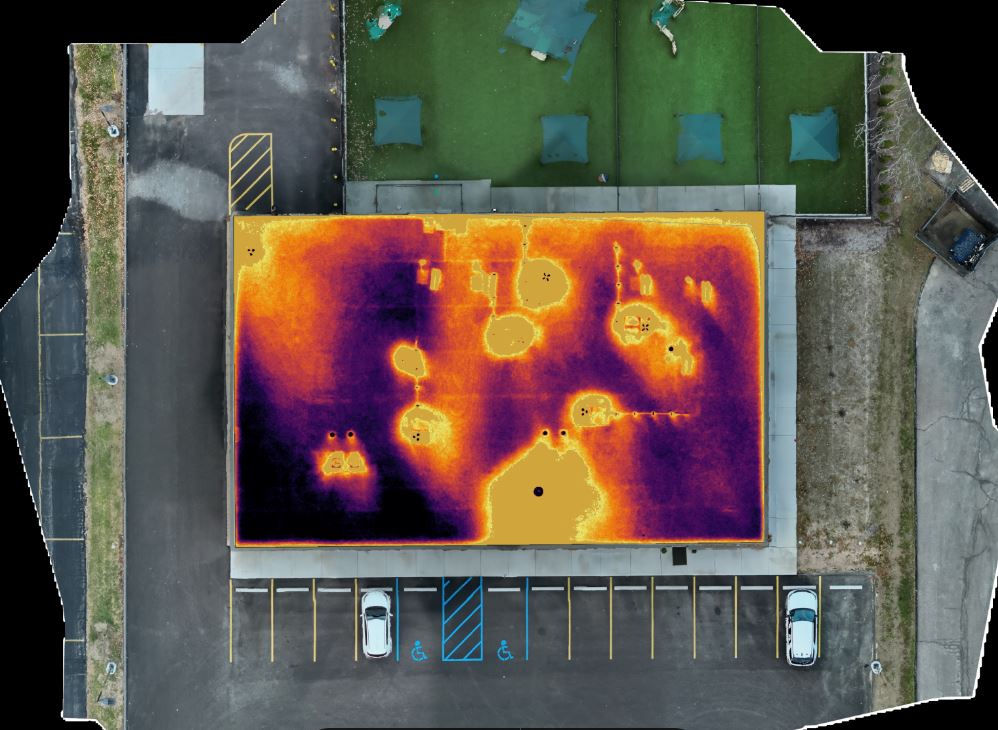
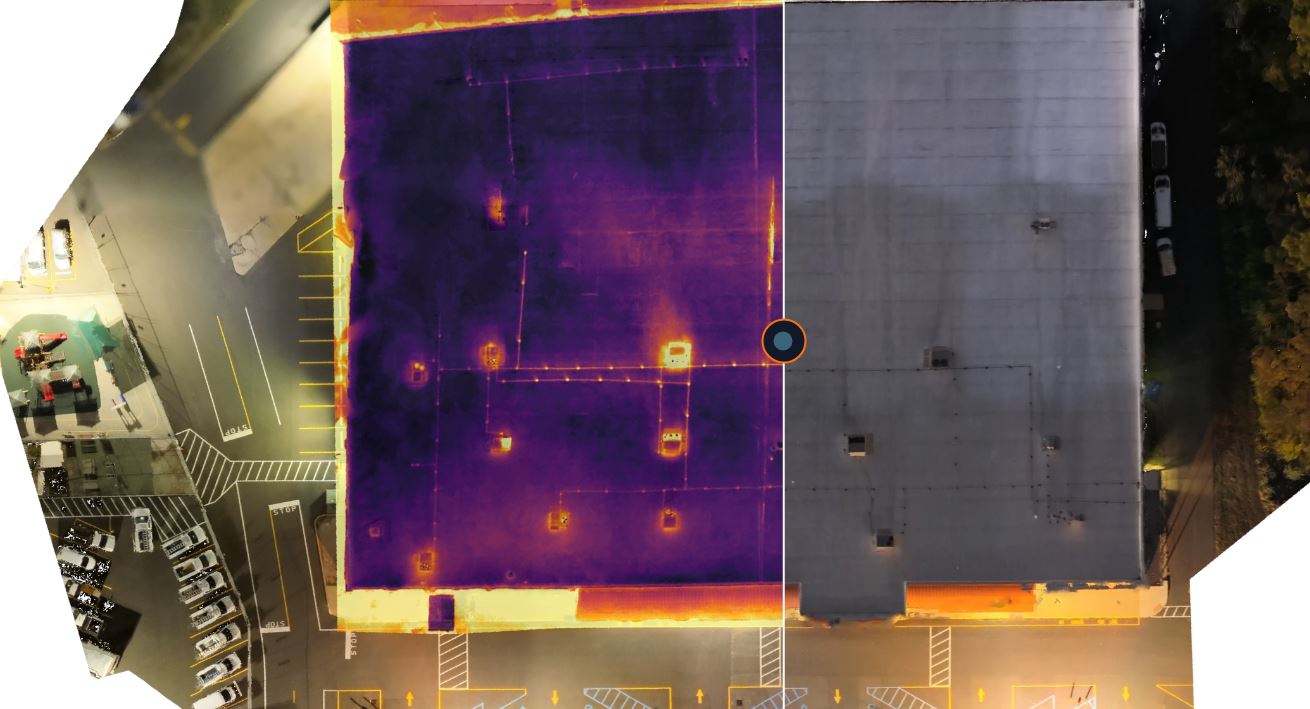
Additional specialized drone services include infrared thermal imaging, orthomosaics, and LiDAR. These services can support inspection, documentation, mapping, construction, industrial, technical, and analytical projects where advanced visual information is needed.
Deliverables for Small Business Marketing

A professional corporate photography and video production can provide a wide range of deliverables, including:

Retouched headshots
Executive portraits
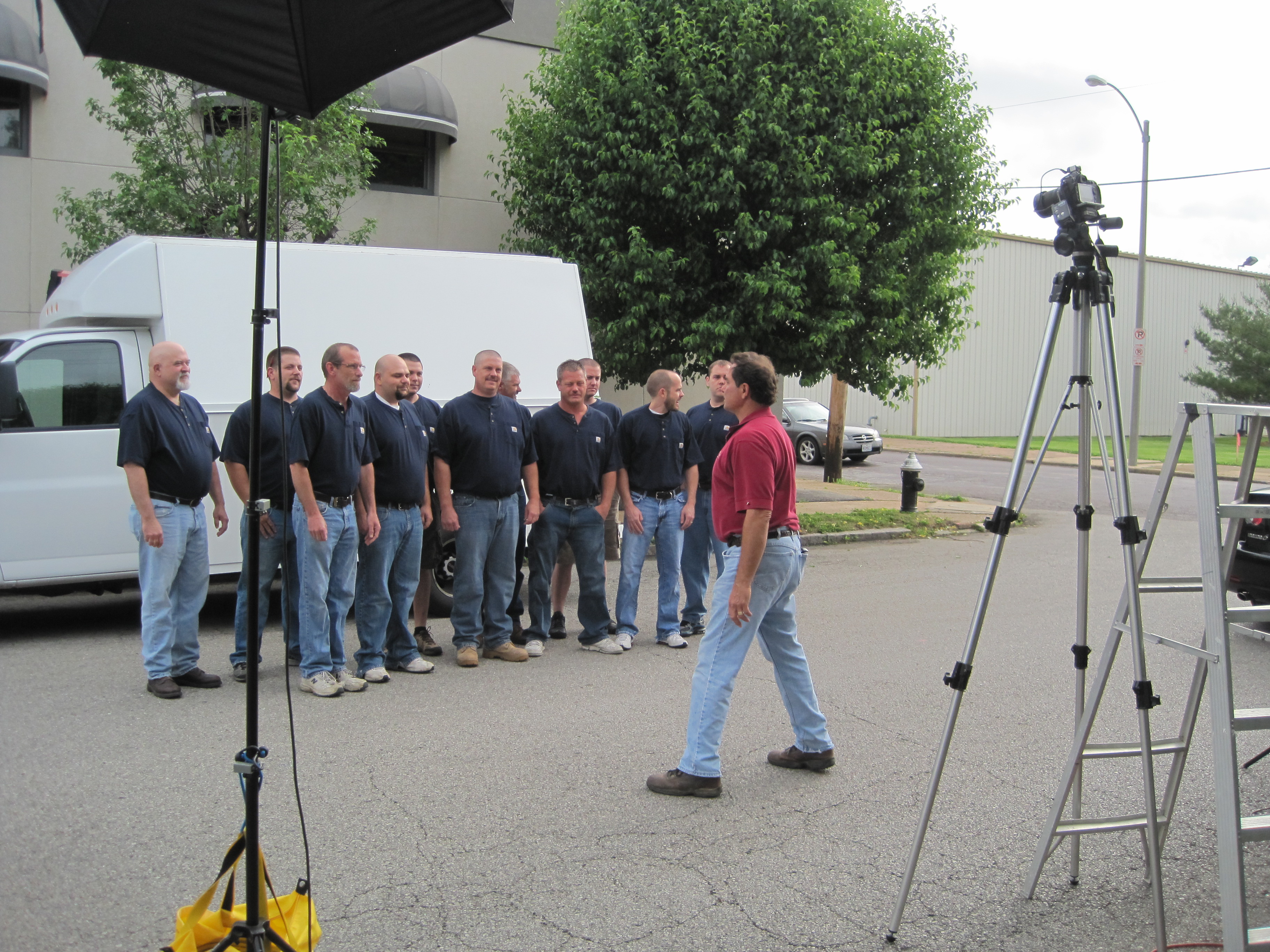
Team photos
Website-ready image files
LinkedIn-ready portraits
Social media image files
Short vertical video clips
Horizontal website videos
Interview clips
Customer testimonial videos
B-roll footage
Captioned video versions
Branded title graphics
Thumbnail images
Drone photography
Drone video
FPV interior footage
Edited clips for digital advertising
Selected raw footage when requested

Deliverables should be planned before the shoot so the right formats, aspect ratios, resolutions, usage needs, and file types are considered from the beginning.

Professional Media Helps Small Businesses Compete

Small businesses often compete against larger organizations with bigger marketing departments and larger advertising budgets. Professional photography and video can help narrow that gap by making the company look more established, more trustworthy, and more prepared.

A polished headshot builds credibility. A short video clip explains expertise. A testimonial supports confidence. B-roll shows the company in action. Drone footage adds scale and perspective. Together, these assets help a small business improve visibility and communicate more effectively.

Professional visual content is not just decorative. It supports sales, recruiting, customer education, public relations, internal communication, digital advertising, and brand recognition.

Work With St Louis Corporate Photographers

St Louis Corporate Photographers is an experienced full-service professional commercial photography and video production company with the right equipment, creative crew service experience, and production knowledge needed for successful image acquisition. We provide full-service studio and location video and photography, along with editing, post-production, and licensed drone services.

St Louis Corporate Photographers can customize productions for diverse media requirements, including small business headshots, corporate portraits, executive profiles, social media video clips, interviews, testimonials, b-roll, website content, recruiting media, marketing campaigns, drone footage, and branded visual assets. Repurposing photography and video branding to gain more traction is another specialty.

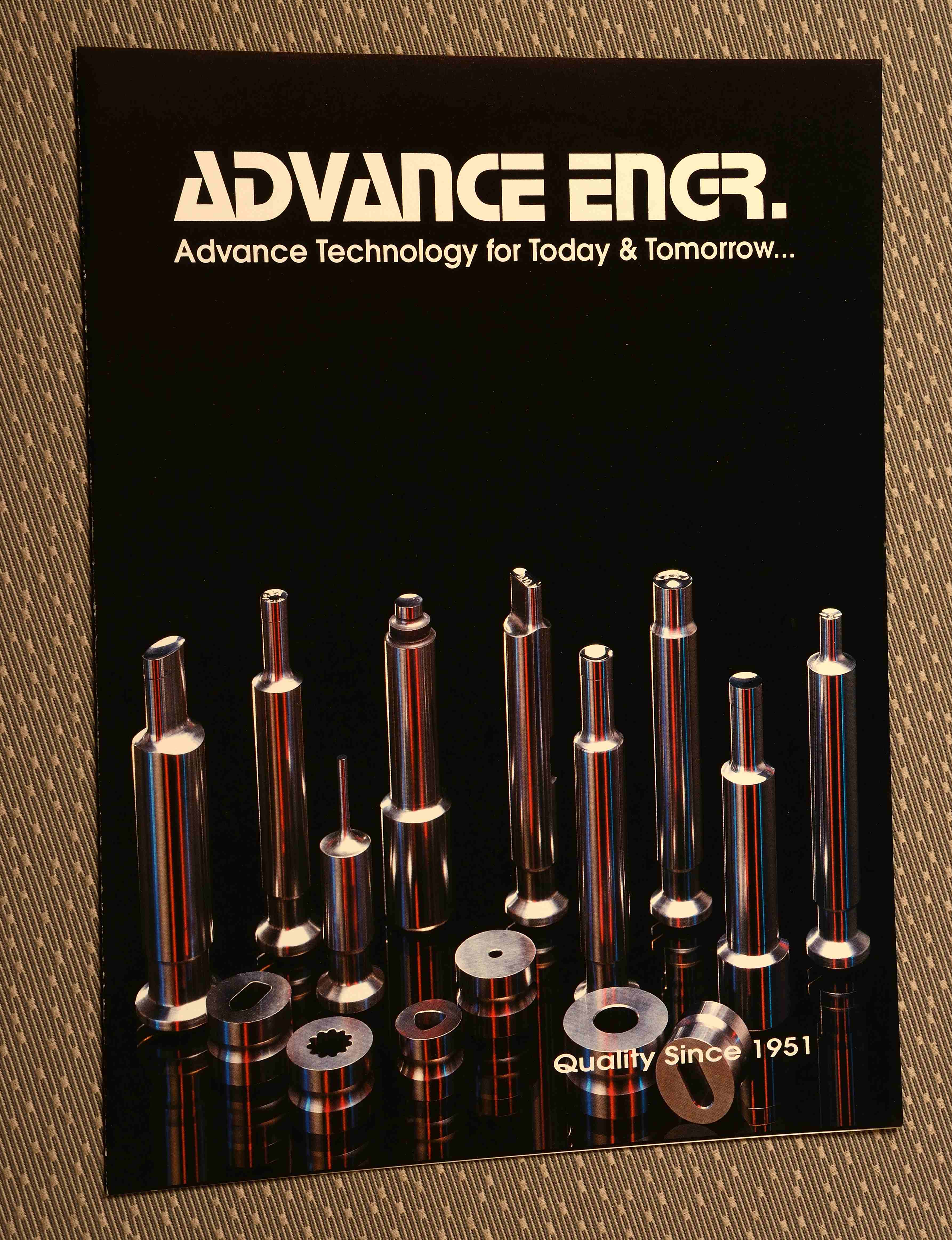
We are well-versed in all file types, media styles, and accompanying software needed to prepare professional deliverables for websites, social platforms, digital advertising, presentations, internal communications, and long-term marketing use. We also use the latest in Artificial Intelligence for our media services, supporting efficient workflows, creative development, and modern post-production options.

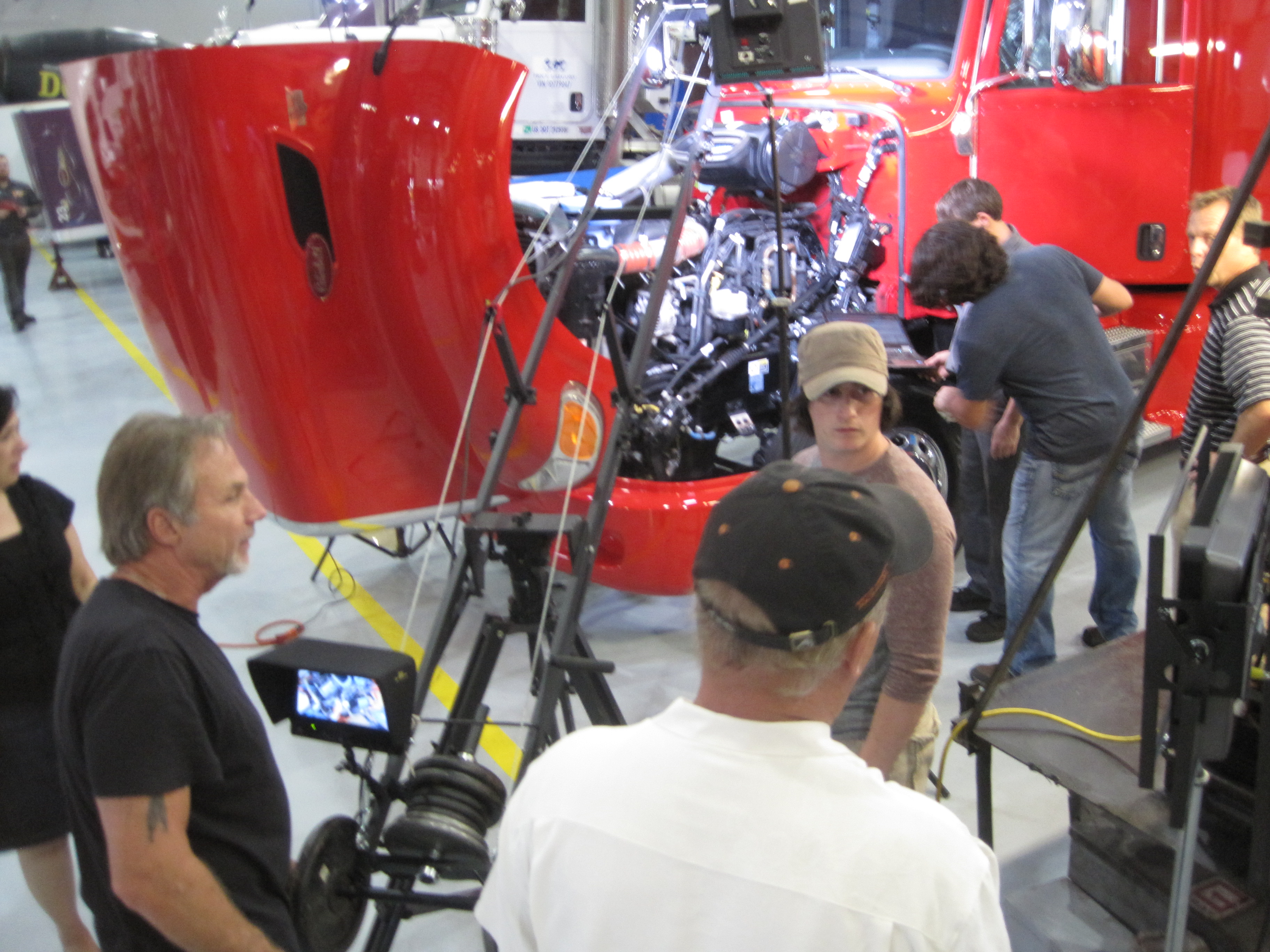
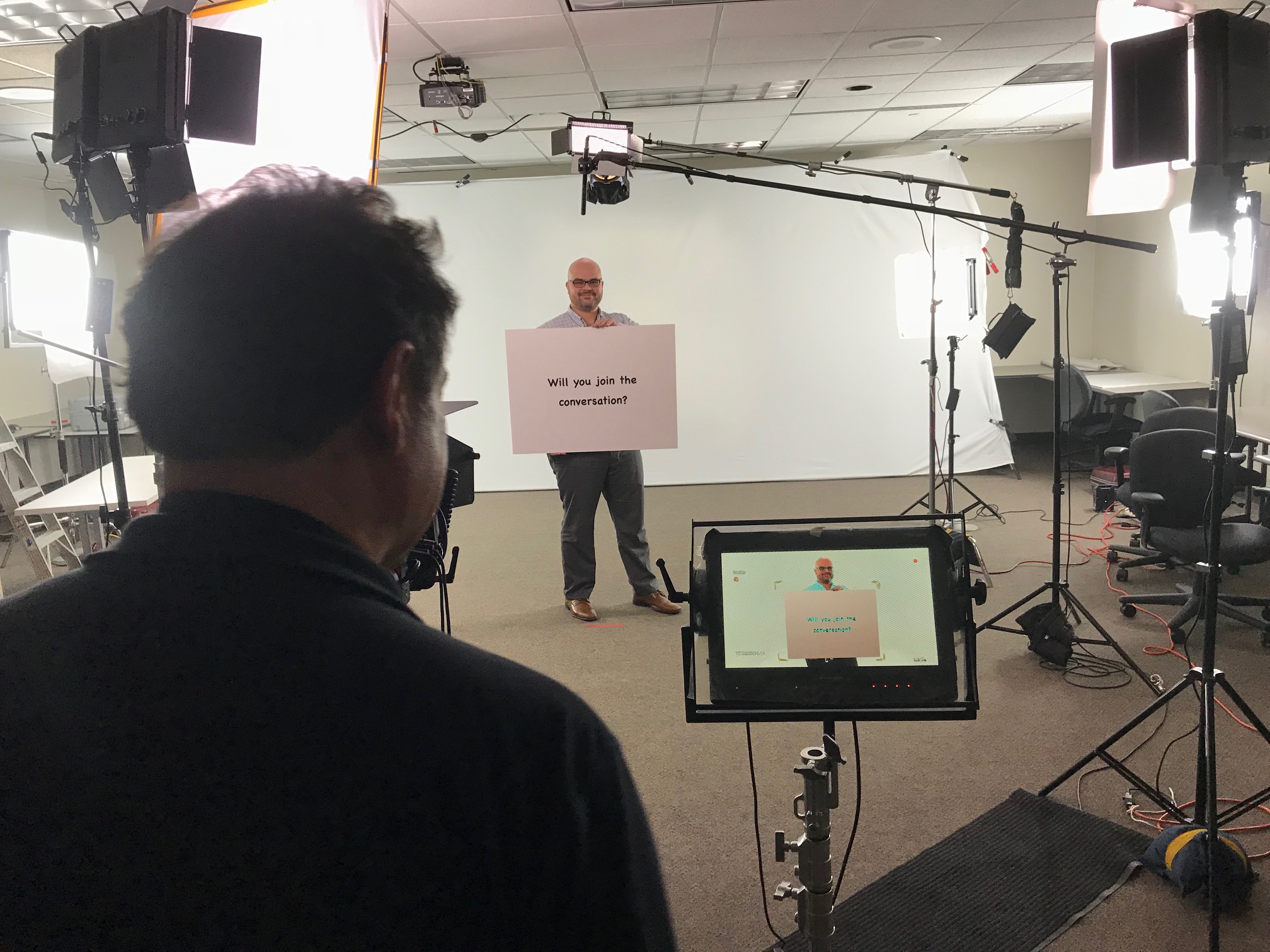
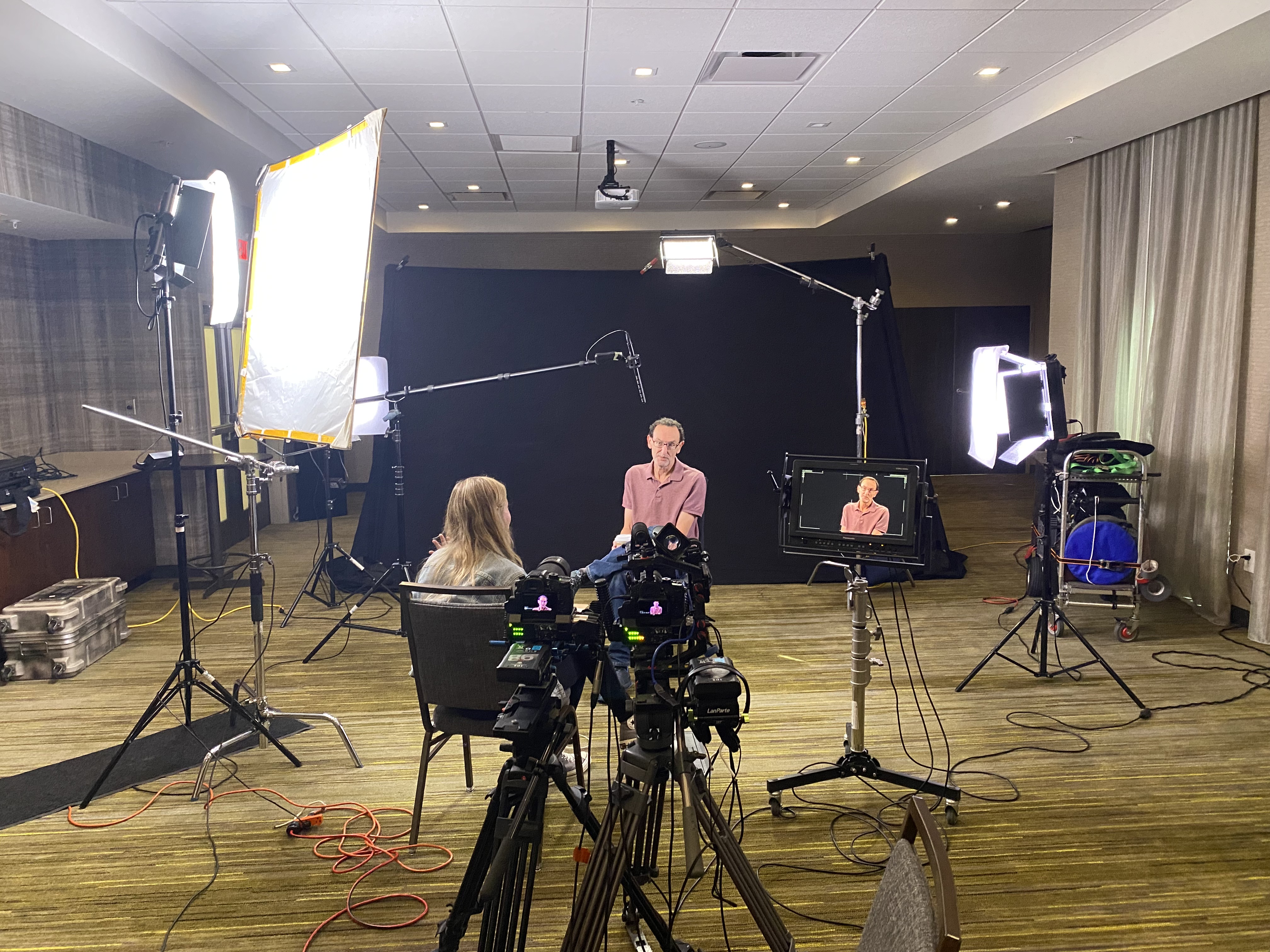
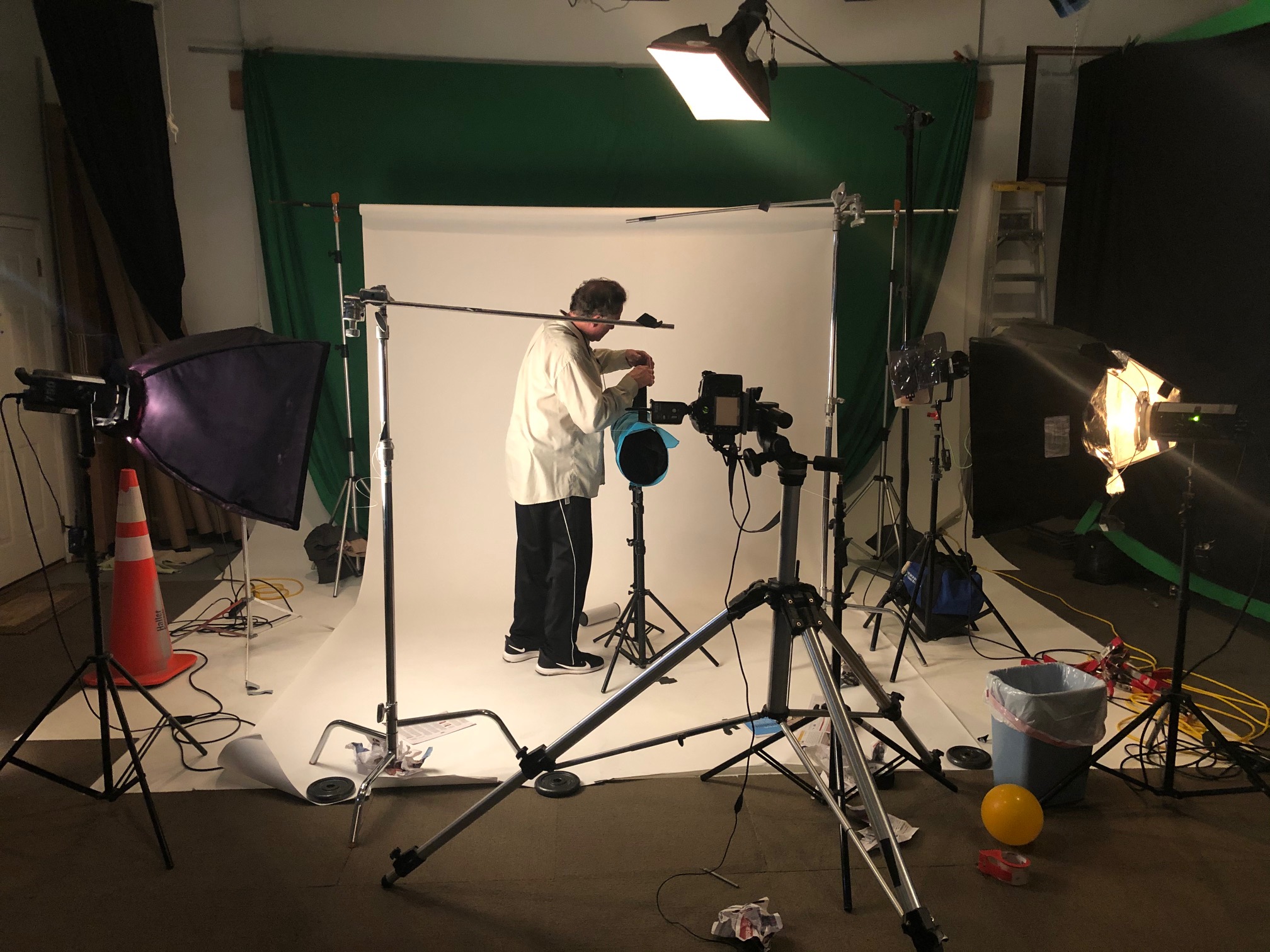
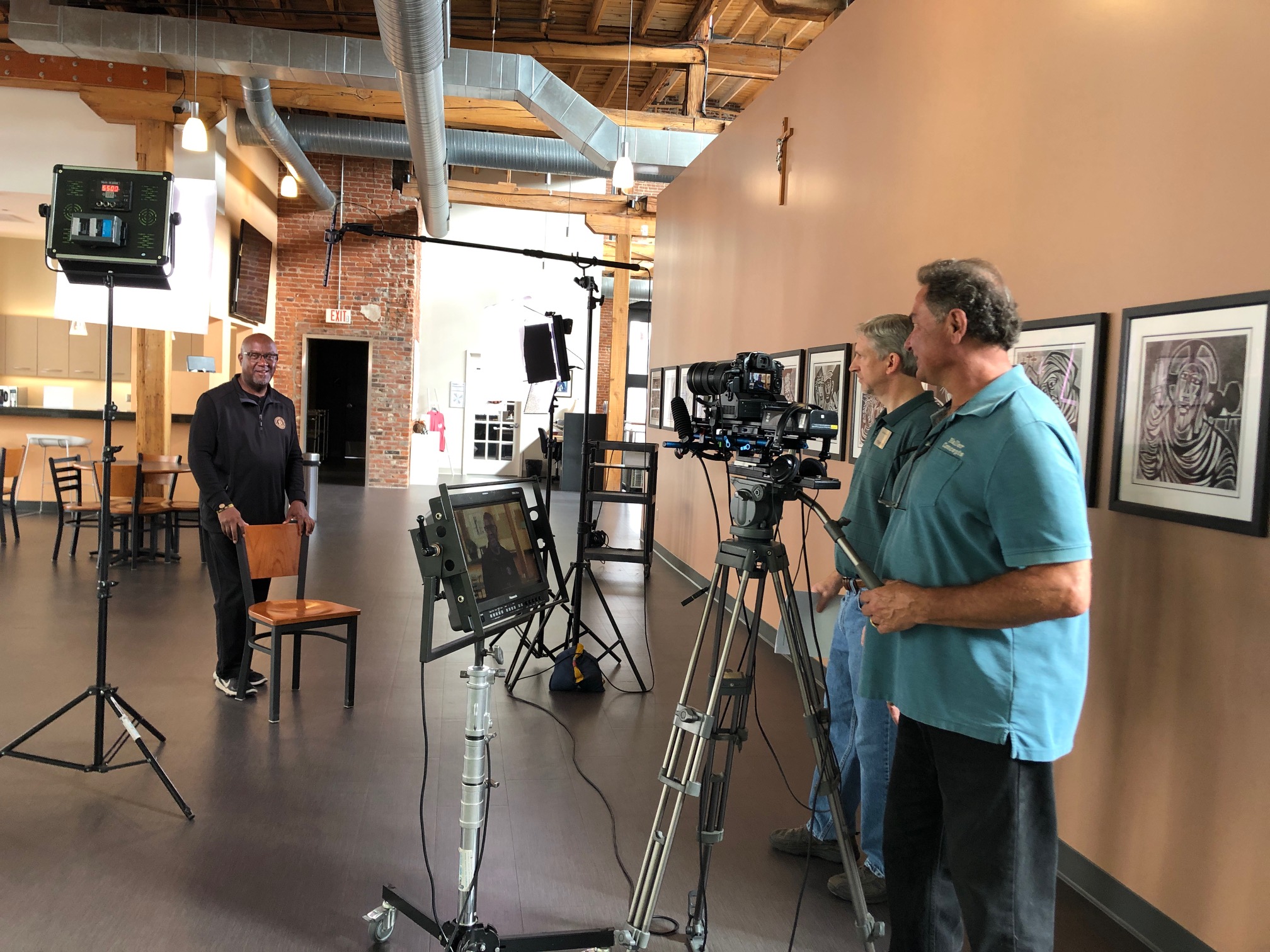
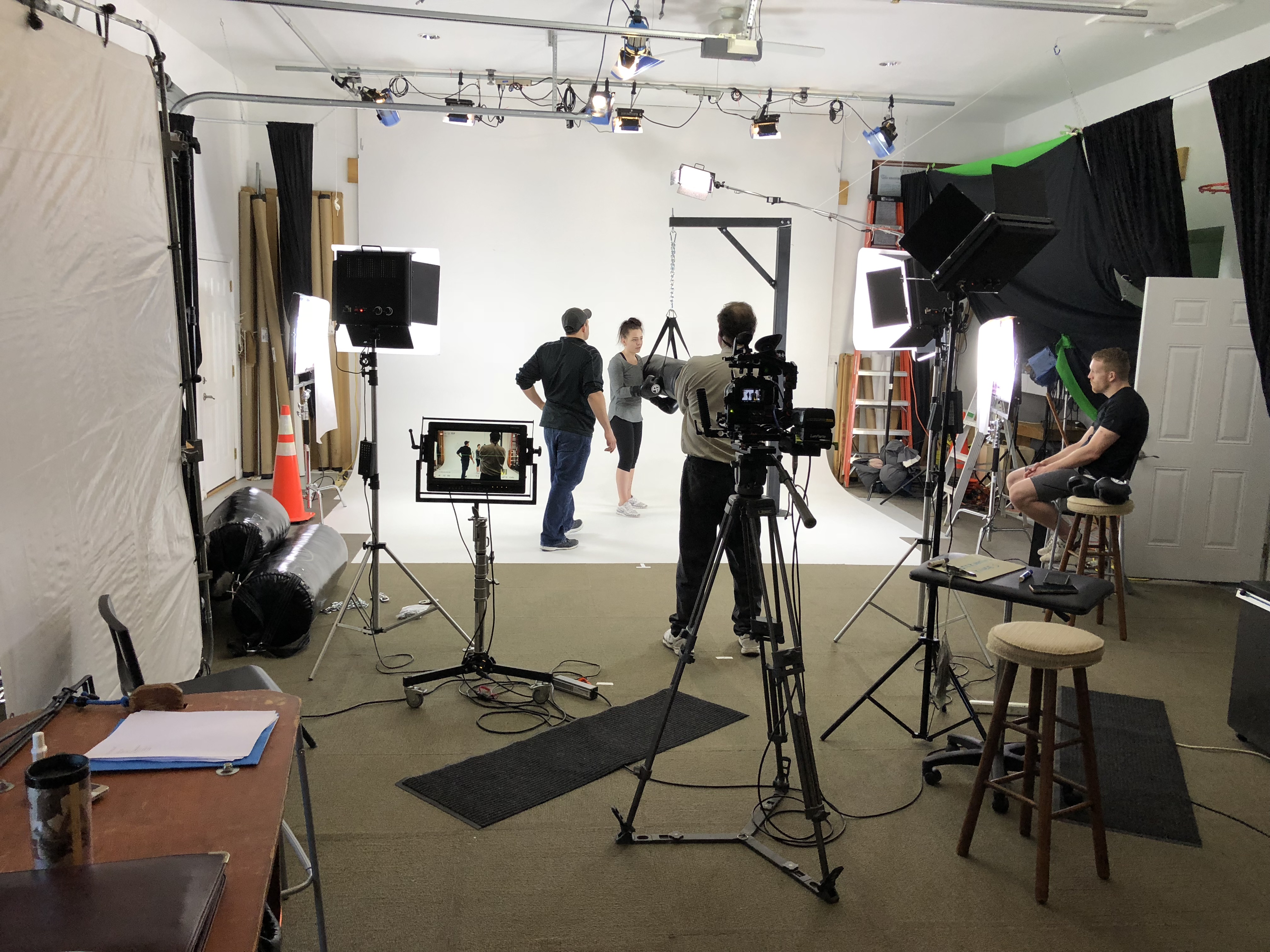
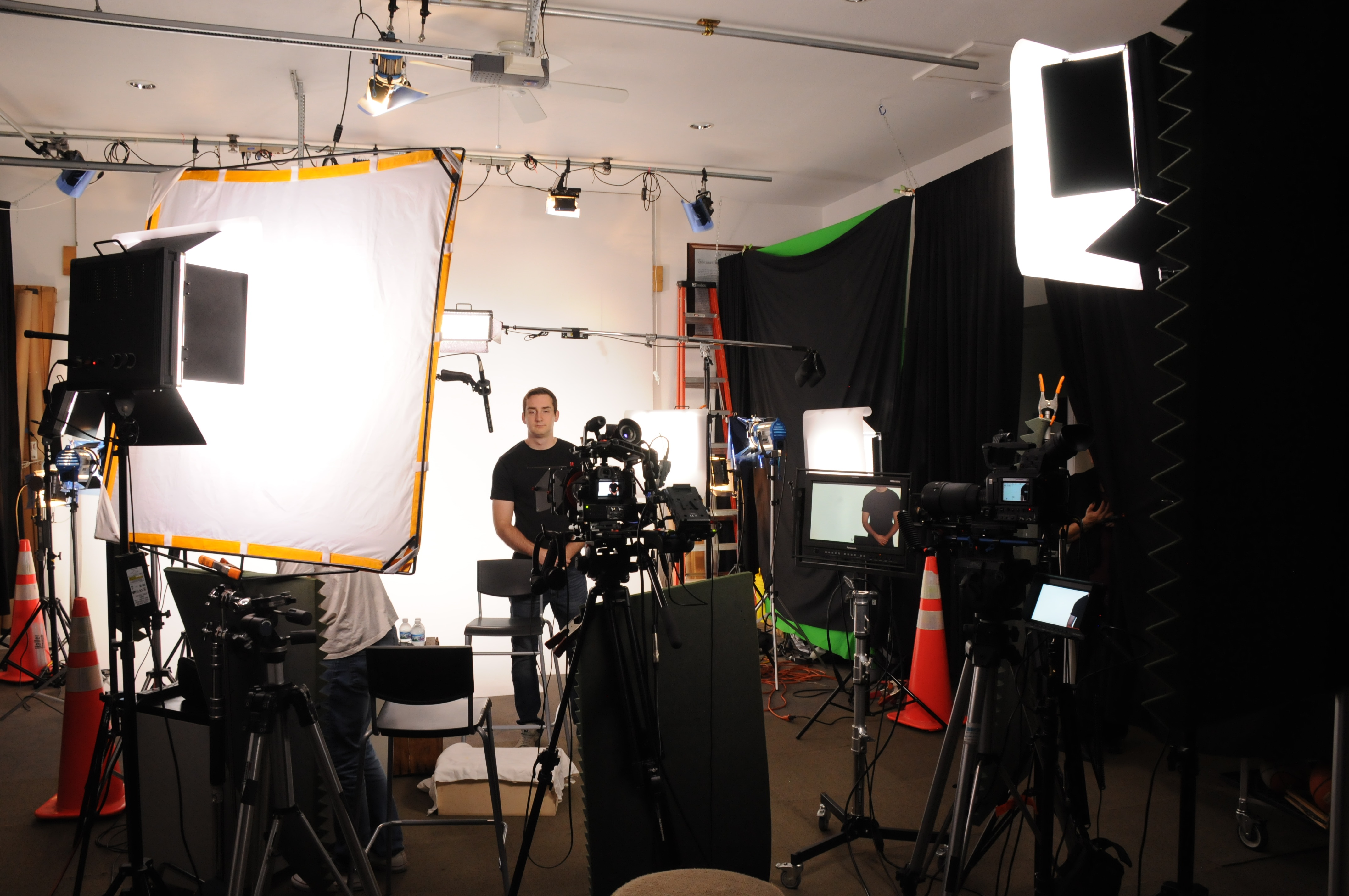
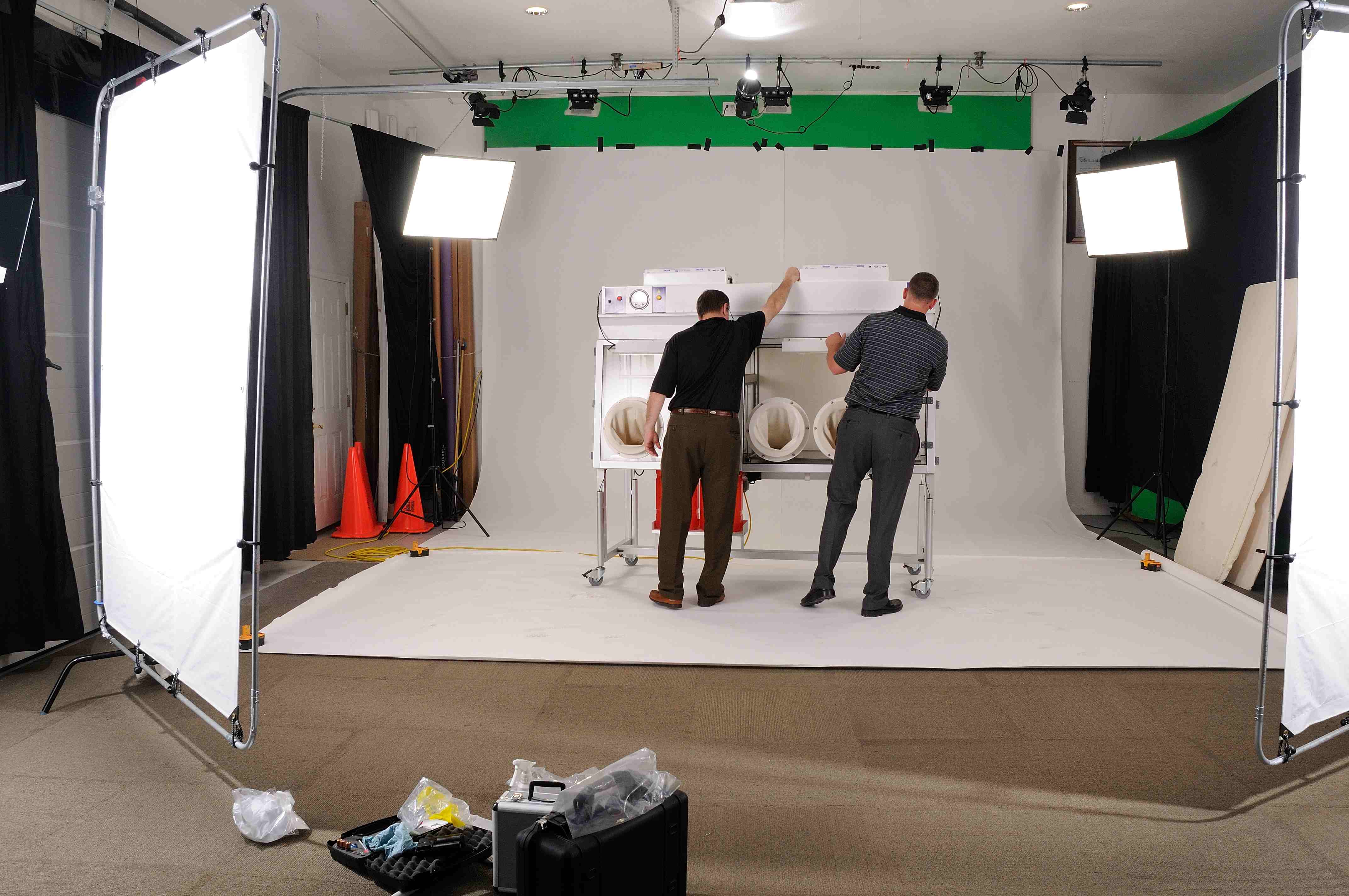
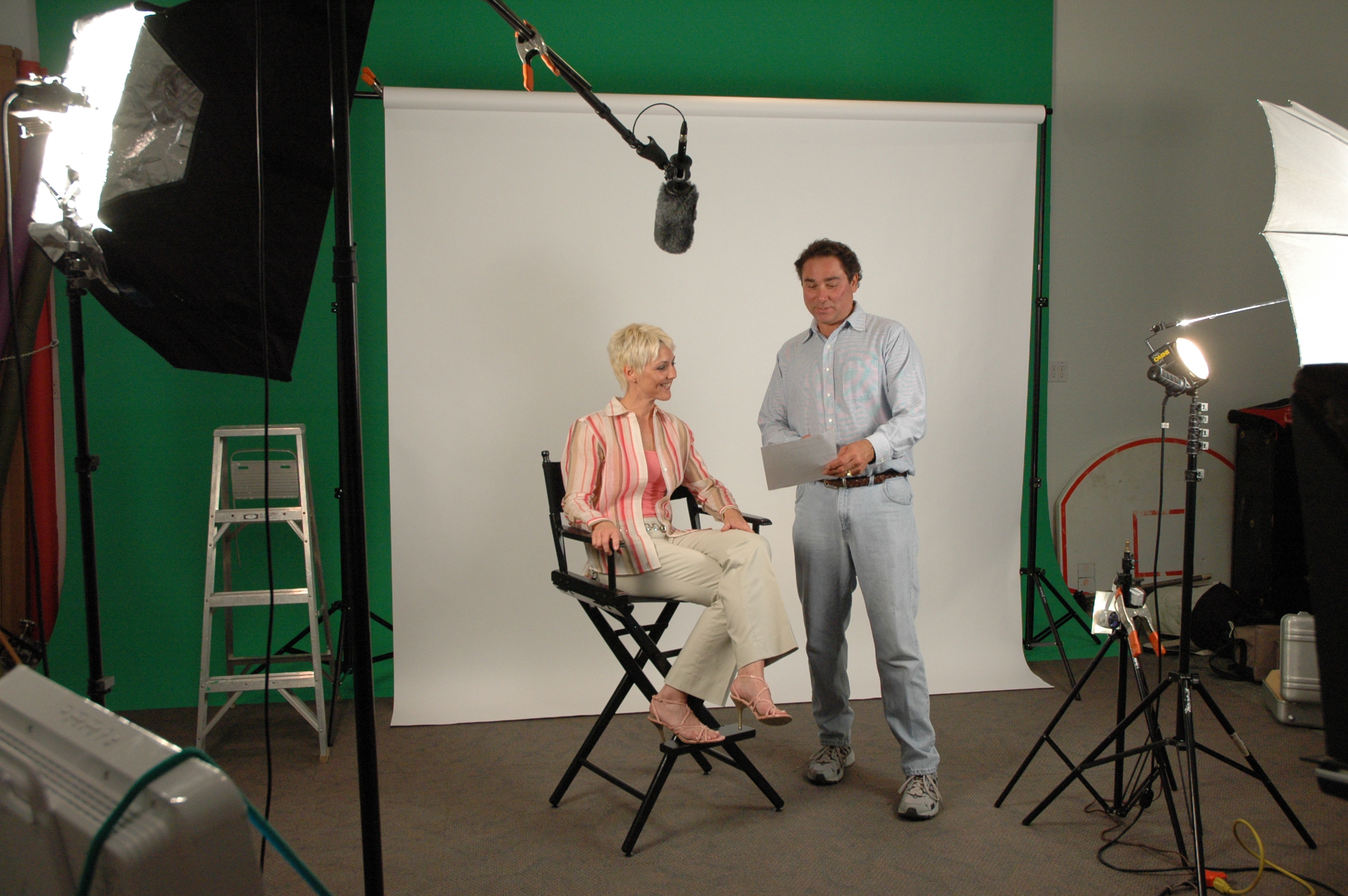
Our private studio lighting and visual setup is ideal for small productions, corporate headshots, business portraits, interview scenes, and social media video clips. Our studio is large enough to incorporate props and create a more complete set when needed. We support every aspect of production, from setting up a private custom interview studio to supplying professional sound and camera operators, providing the right equipment, scouting locations, and capturing b-roll.

St Louis Corporate Photographers also provides licensed drone services, specialized indoor FPV drone flight, infrared thermal imaging, orthomosaics, and LiDAR services for projects requiring advanced visual documentation.

As a full-service video and photography production corporation since 1982, St Louis Corporate Photographers has worked with many businesses, marketing firms, and creative agencies throughout the St. Louis area for marketing photography, corporate video production, professional headshots, social media clips, branded content, and business visual communications.

314-913-5626

stlouiscorporatephotographer@gmail.com

Studio and Location Photographers in St. Louis

When businesses need photography that does more than simply document a subject, the conversation usually turns to control, flexibility, consistency, and purpose. That is where the distinction between studio photography and location photography becomes important. For marketing teams, business owners, and creative decision makers, choosing the right setting is not just a logistical issue. It directly affects the look of the images, the efficiency of the production, the comfort of the subjects, and the long-term value of the final assets.

At St Louis Corporate Photographer, we regularly help clients determine whether a studio environment, an on-location setting, or a hybrid approach will best support their brand goals. In many cases, the strongest visual strategy uses both. Understanding how each approach works can help organizations make better creative decisions and get more value from their photography investment.

Why the Setting Matters in Professional Photography

The setting of a photo shoot influences everything. It affects lighting, composition, mood, scheduling, wardrobe choices, sound conditions for video, equipment needs, and the way a brand is perceived. A studio offers precision and control. A location offers authenticity and context. Neither is automatically better. The right answer depends on what the images need to accomplish.

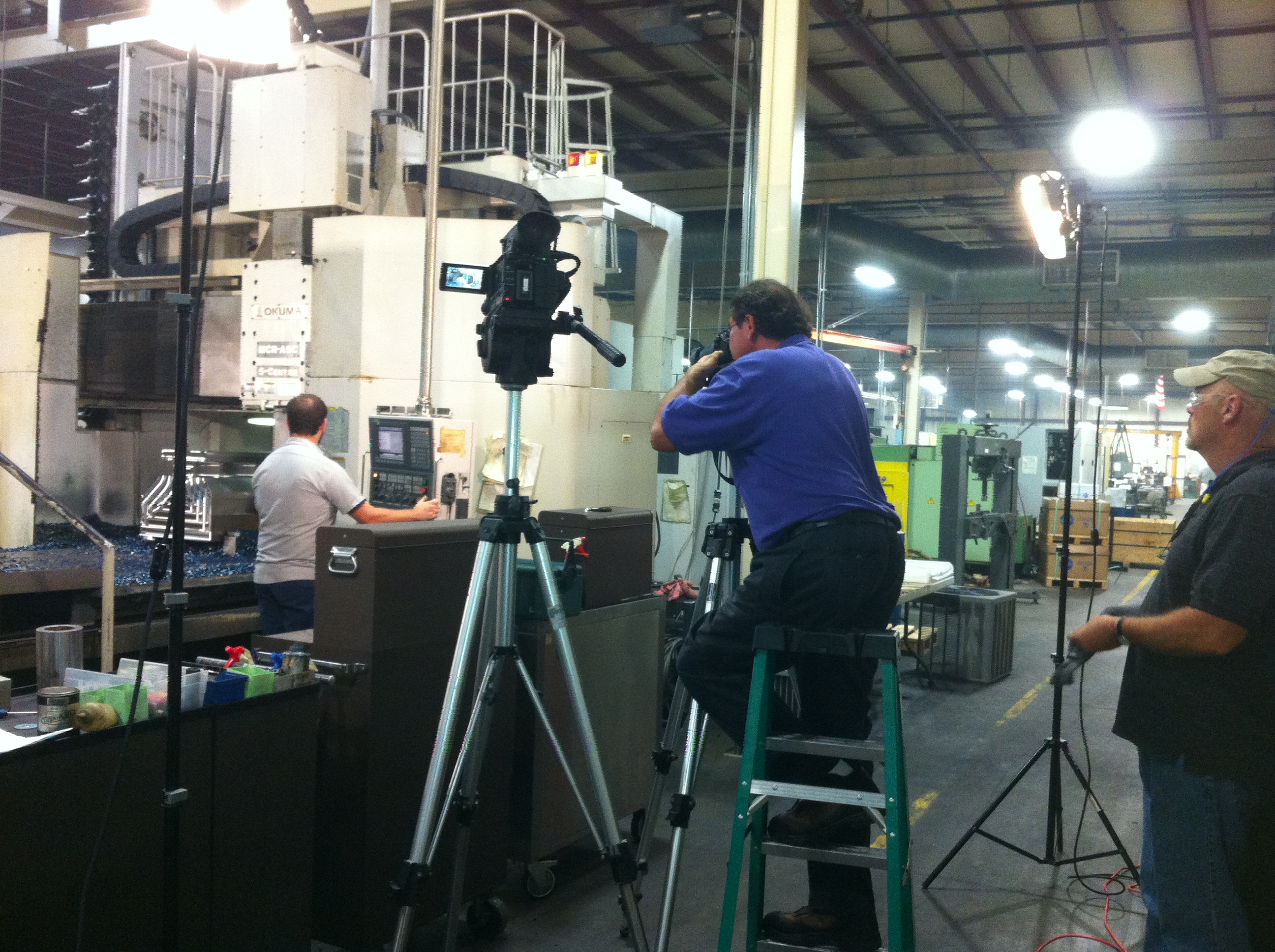
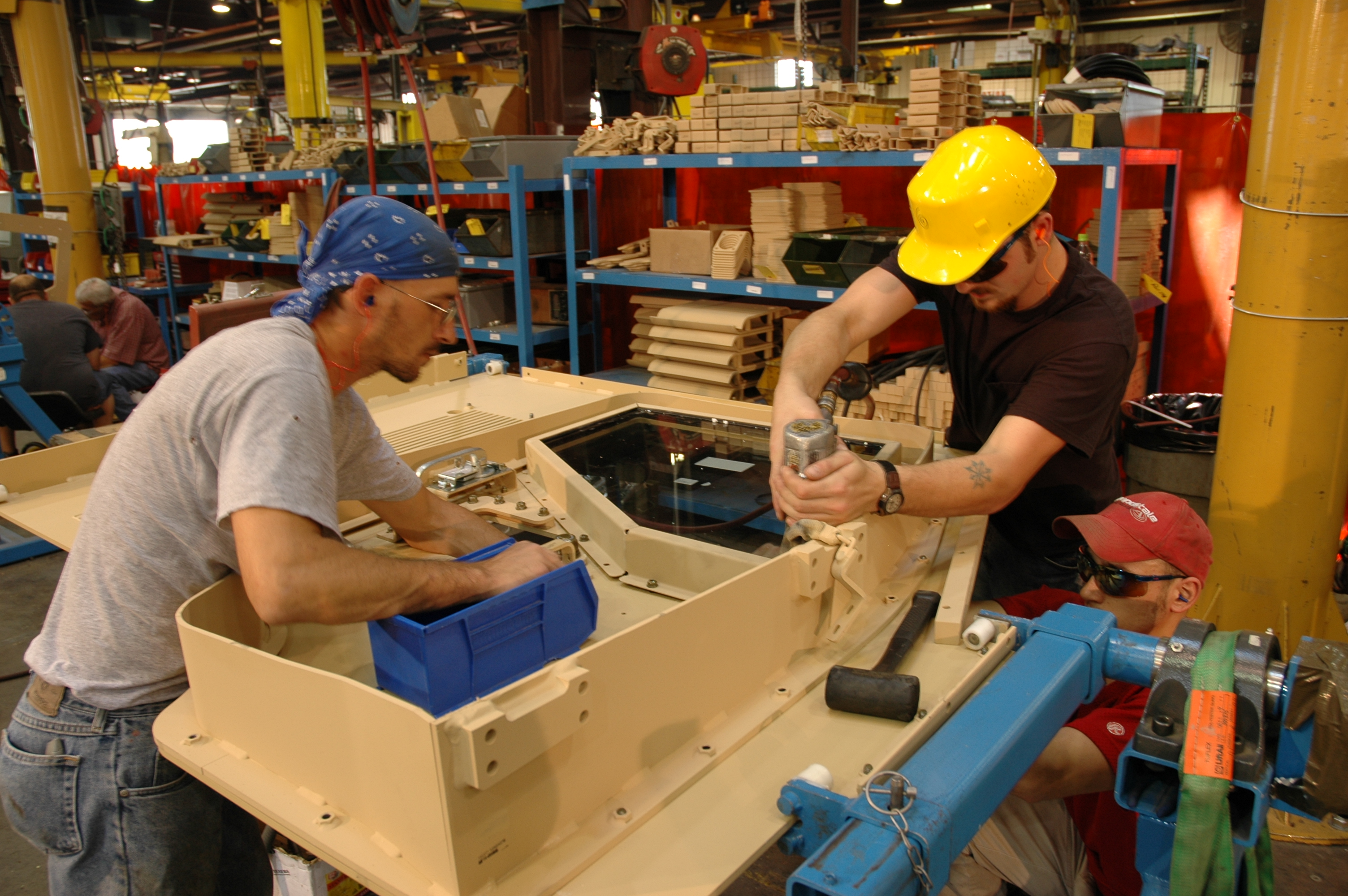
For example, a law firm updating attorney portraits may benefit from a studio setup that delivers clean, polished, highly consistent headshots. A manufacturing company may need on-site photography that shows real people, real machinery, and actual production spaces. A healthcare organization may need both: studio portraits for leadership profiles and location imagery that shows patient care environments, staff interaction, and facility detail.

This is why experienced commercial photographers do not begin with gear. They begin with purpose.

What Studio Photography Does Best

Studio photography remains one of the most valuable tools for businesses because it gives the creative team the highest degree of control. That control is often what leads to polished, repeatable, brand-consistent results.

Consistency Across Multiple Subjects

When photographing executives, staff members, product lines, or recurring campaigns, consistency matters. In a studio, lighting, background, camera angle, and composition can remain uniform from one subject to the next. This is especially useful for:

  • Executive and staff headshots
  • Corporate portraits
  • Product photography
  • Branding campaigns
  • Advertising imagery
  • Catalog and e-commerce photography

If your company plans to photograph multiple people over time, a studio setup makes it much easier to keep the visual style aligned.

Better Control of Lighting

Studio lighting is one of the biggest reasons businesses choose an indoor production environment. Natural light can be beautiful, but it changes constantly. In a studio, light is shaped intentionally for flattering portraits, precise product highlights, dramatic branding imagery, or clean commercial looks.

That control helps reduce surprises and allows a production team to create a specific style instead of chasing changing conditions.

Reduced Distractions

A studio environment removes many of the complications that come with shooting on location. There are fewer interruptions, less background clutter, fewer scheduling conflicts, and more privacy. This can be especially important when photographing executives, filming interviews, or working on confidential campaigns.

Subjects also tend to relax when the environment is calm, controlled, and built around the production itself.

Ideal for Smaller Controlled Productions

Studios are excellent for headshots, interview videos, tabletop product work, training content, and carefully built branded scenes. Props, backgrounds, furniture, and lighting can all be arranged to support the message without the unpredictability of a live business environment.

For brands that need a clean and intentional look, studio photography often delivers the strongest return.

What Location Photography Does Best

While studios provide control, location photography brings context. Businesses often need imagery that shows where work happens, how teams interact, and what the real environment feels like. That is where on-location production becomes especially powerful.

Authenticity and Real-World Context

Location photography places subjects in meaningful environments. Instead of isolating a person or product against a neutral backdrop, it shows them in context. This can make the imagery feel more believable, more relatable, and more grounded in the actual identity of the company.

For example, location photography is especially effective for:

  • Corporate lifestyle photography
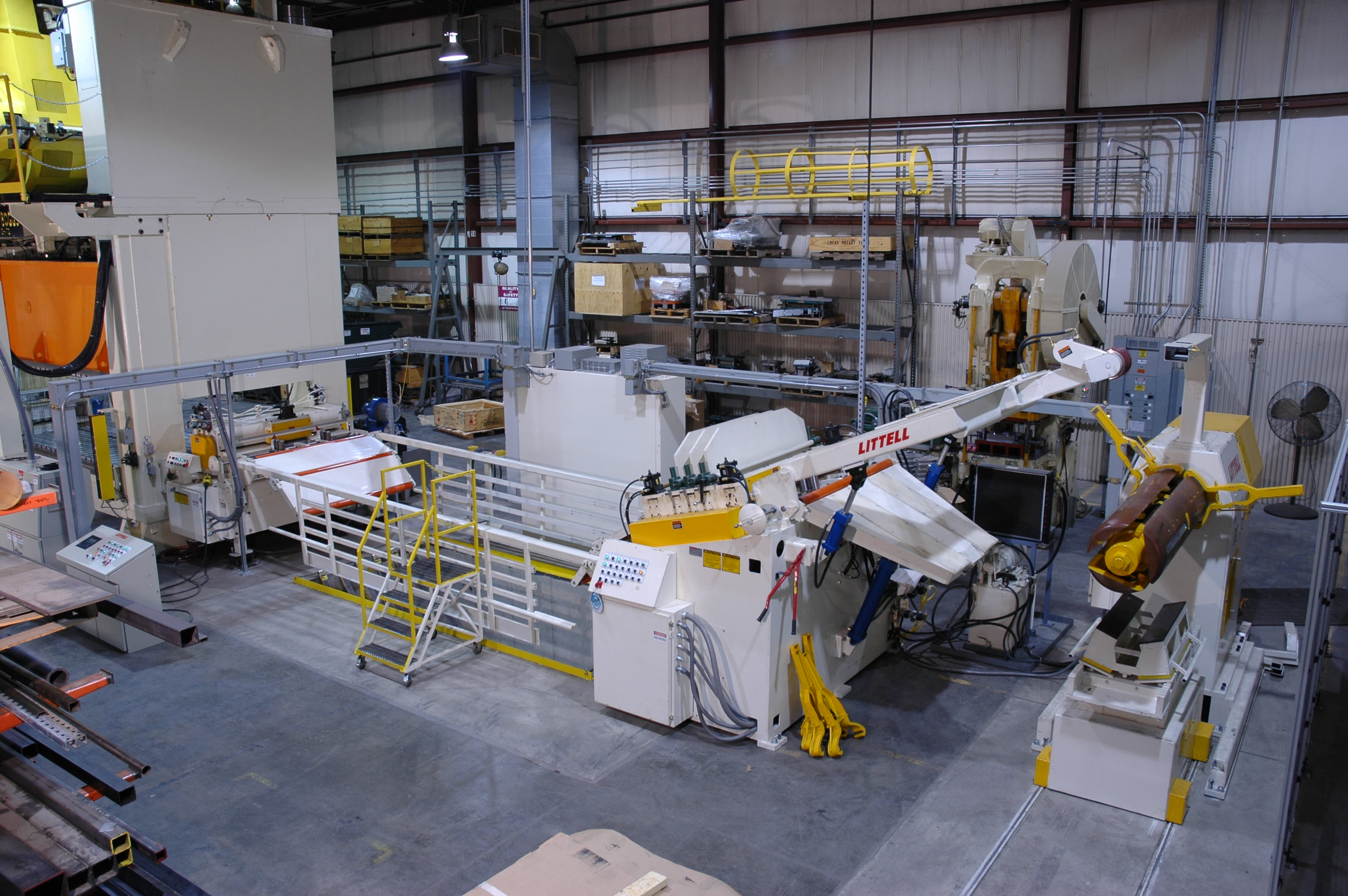
  • Manufacturing and industrial photography
  • Medical and healthcare photography
  • Office and workplace branding images
  • Architecture and interiors
  • Team collaboration imagery
  • Event photography
  • Environmental portraits

When used well, location images tell viewers not just who a company is, but how it operates.

Stronger Storytelling

Marketing photography is not only about appearance. It is about communication. Shooting at a business location can reveal scale, workflow, craftsmanship, culture, and customer experience in ways a studio cannot.

A well-produced location shoot can capture:

  • Employees interacting naturally
  • Operations in progress
  • Workspaces and facilities
  • Customer-facing environments
  • Equipment, machinery, or technical processes
  • Leadership in context

These visual details help tell a richer brand story and give marketing teams more content variety.

More Visual Variety

Location work can provide multiple looks in a single production day. Hallways, conference rooms, production floors, exteriors, lobbies, labs, warehouses, rooftops, and public-facing areas can all serve as backgrounds. That variety is valuable for websites, brochures, presentations, recruiting materials, annual reports, ad campaigns, and social media libraries.

When planned correctly, one well-organized location shoot can generate months of usable brand content.

When to Choose Studio Photography

A studio environment is usually the better choice when your priority is polish, consistency, control, privacy, or repeatability. It is especially useful when the final imagery must align tightly across many subjects or when technical lighting quality is central to the result.

Studio photography is often the right solution when you need:

  • Executive headshots with a refined, consistent look
  • Team portraits with matching lighting and composition
  • Product photography with precise highlights and clean backgrounds
  • Controlled interview video setups
  • Branding portraits with designed lighting
  • Confidential or distraction-free production conditions

Studios are also useful when on-site spaces are too dark, visually cluttered, too small, or too unpredictable for efficient image-making.

When to Choose Location Photography

Location photography is usually the stronger choice when context matters more than visual neutrality. If your marketing needs to show real environments, operational credibility, or organizational personality, the location becomes part of the message.

Location work is often the better solution when you need:

  • Environmental portraits
  • Workplace culture imagery
  • Facility and architectural photography
  • Industrial and manufacturing documentation
  • Recruitment photography
  • Client-facing or customer experience visuals
  • Real-world branding imagery

For many organizations, location photography helps move the visual message from generic to credible.

Why a Hybrid Approach Often Works Best

In many commercial projects, the smartest solution is not either-or. It is both.

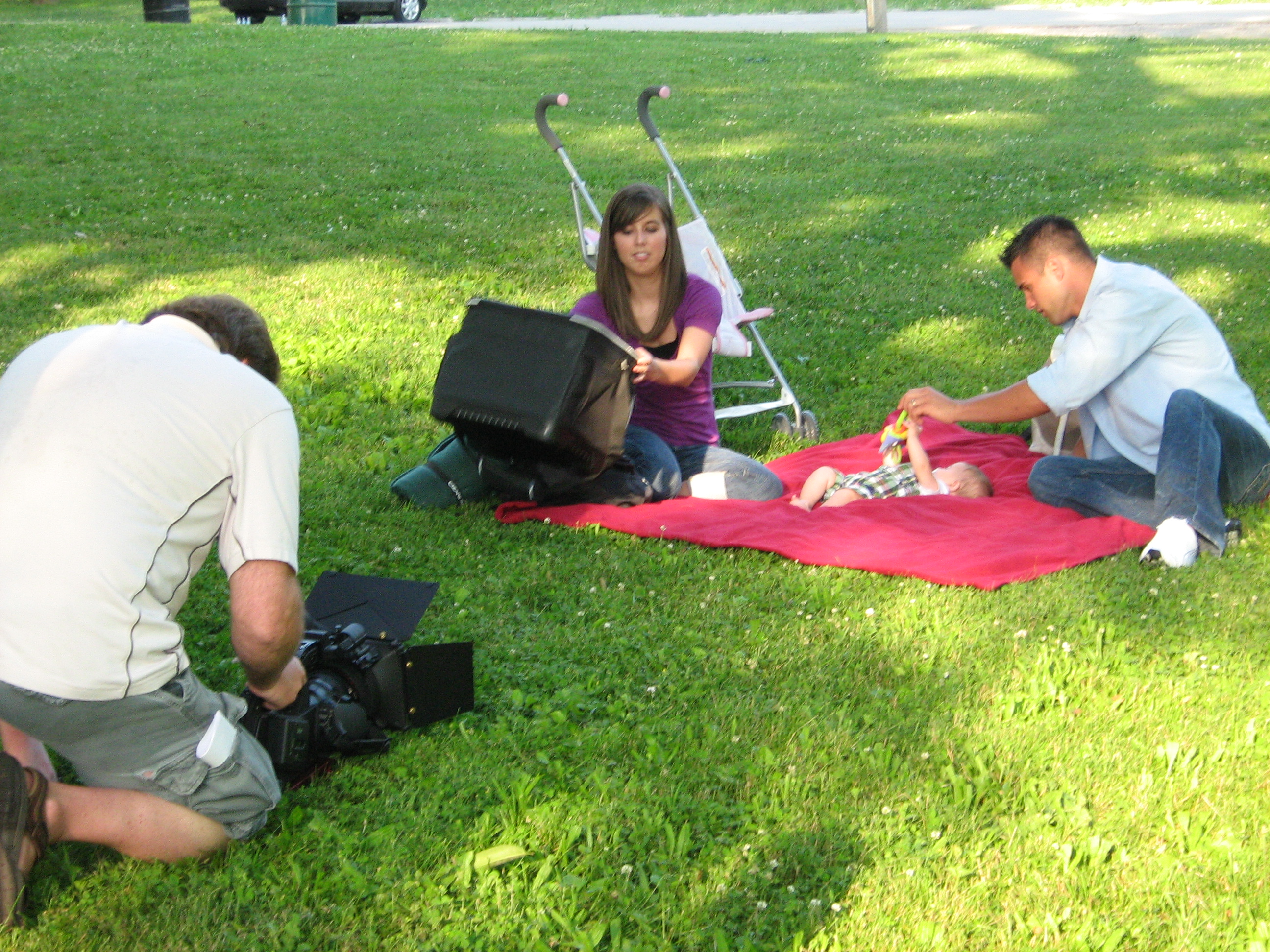
A hybrid shoot might include studio headshots in the morning and on-location environmental portraits in the afternoon. It might combine a clean interview setup with supporting b-roll captured throughout a facility. It might include polished product shots in a controlled studio environment and lifestyle use images created on-site.

This blended strategy gives marketing teams a broader asset library. It also supports multiple uses across platforms, from websites and print collateral to recruiting, public relations, sales decks, social content, and paid media campaigns.

A single production can generate:

  • Formal portraits
  • Candid workplace images
  • Website hero images
  • Social media assets
  • Print-ready marketing photography
  • Interview video footage
  • B-roll for brand storytelling

That kind of planning creates efficiency and extends the value of the shoot long after production day is over.

Planning for Better Results

The strongest photography projects begin with thoughtful pre-production. Whether the images are created in a studio or on location, preparation makes the difference between average coverage and a strategic visual library.

Key planning areas include:

Creative Goals

What should the imagery communicate? Professionalism, innovation, accessibility, scale, warmth, precision, energy, trust? The answer affects lighting, wardrobe, framing, background choices, and location selection.

Intended Use

Where will the images live? Website, trade show displays, ad campaigns, investor presentations, social media, recruiting, internal communications, annual reports? Usage shapes format, composition, and production priorities.

Subject Preparation

People photograph better when they know what to expect. A clear production plan helps executives and employees feel prepared and confident, which improves results on camera.

Scheduling and Logistics

Location work often requires coordination with staff, facilities, operations, and available light. Studio work may require background selection, prop planning, product prep, and shot sequencing. Efficient planning keeps the day productive.

Shot List Development

A strategic shot list helps ensure the production captures not just what looks good, but what the marketing team will actually use.

The Importance of Experience in Commercial Photography

Studio and location photography each demand different skill sets. Studio work requires lighting control, composition discipline, and precision. Location work requires adaptability, problem-solving, environmental awareness, and the ability to work efficiently in real-world conditions.

Commercial clients benefit from crews who understand both.

That experience matters when lighting a CEO in a controlled studio setup, managing reflections on a product, photographing in a busy office without disrupting operations, filming an interview while gathering useful b-roll, or integrating drone footage into a broader visual campaign. The goal is not simply to take pictures. It is to produce the right images, under the right conditions, for the right business purpose.

Studio and Location Photography as a Marketing Asset

The best professional photography does not just fill space on a website. It builds trust. It signals professionalism. It helps businesses look established, capable, and credible. It can improve brand consistency, strengthen recruiting, support public relations, elevate presentations, and make advertising more effective.

That is why organizations increasingly view photography not as a one-time task, but as part of a larger content strategy. With the right production planning, a photography session can become the foundation for months or even years of visual communication.

Work with Experienced St. Louis Corporate Photography Professionals

At St Louis Corporate Photographer, we understand how to create effective imagery both in the studio and on location. Since 1982, we have worked with many businesses, marketing firms, and creative agencies in the St. Louis area on marketing photography and video projects designed to meet real business objectives.

St Louis Corporate Photographer is a full-service professional commercial photography and video production company with the right equipment and creative crew service experience for successful image acquisition. We offer full-service studio and location video and photography, as well as editing, post-production and licensed drone services. St Louis Corporate Photographer can customize your productions for diverse types of media requirements. Repurposing your photography and video branding to gain more traction is another specialty.
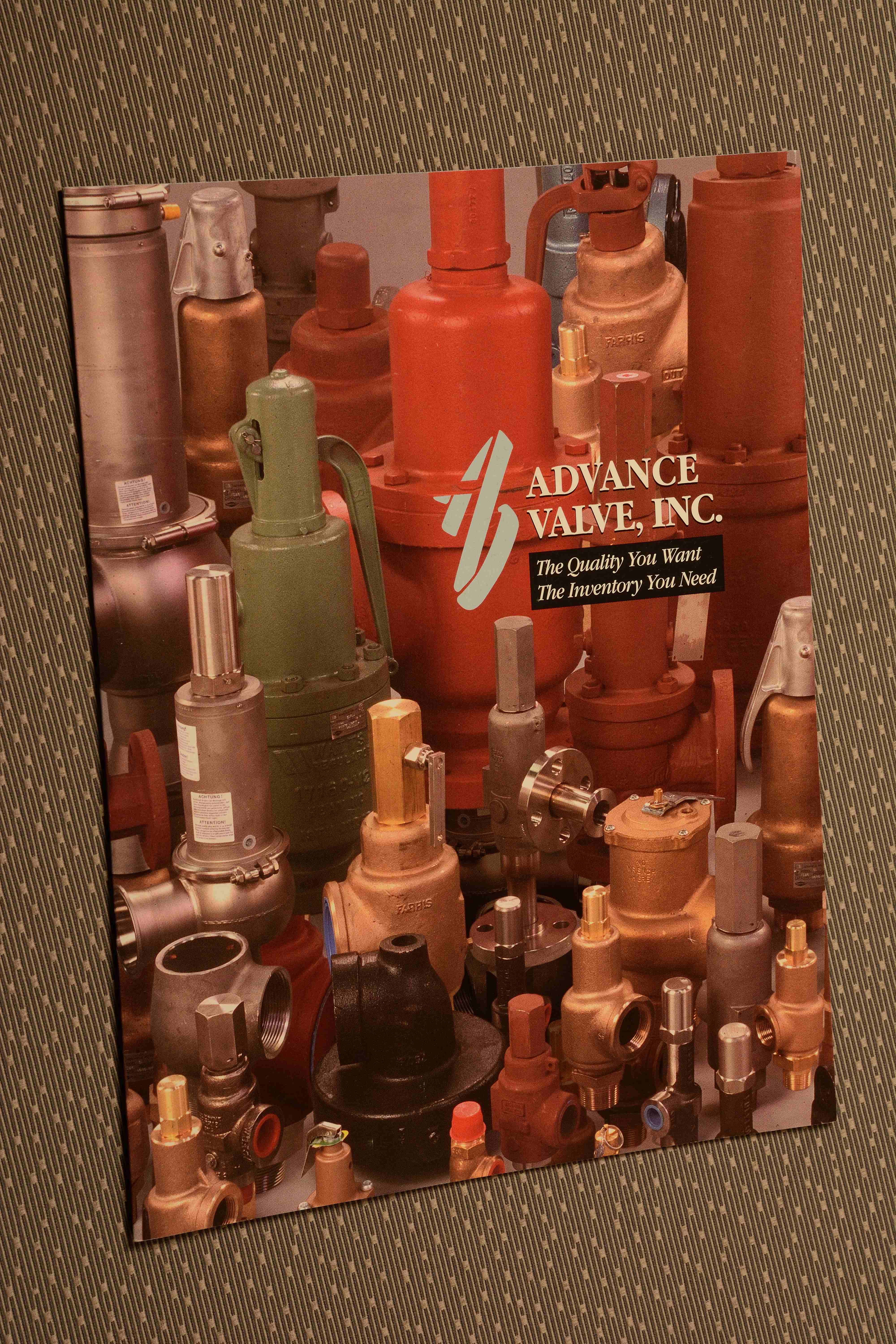
We are well-versed in all file types and styles of media and accompanying software. We use the latest in Artificial Intelligence for all our media services. Our private studio lighting and visual setup is perfect for small productions and interview scenes. Our studio is large enough to incorporate props to round out your set. We support every aspect of your production—from setting up a private, custom interview studio to supplying professional sound and camera operators, as well as providing the right equipment—ensuring your next video production is seamless and successful.

We are also location scouting and b-roll specialists. We can fly our specialized FPV drones indoors, and our drone specialty services include infrared thermal, orthomosaics, and LiDAR. Whether your project calls for polished studio portraits, authentic workplace photography, cinematic video interviews, drone imaging, or a hybrid visual campaign that combines everything into one efficient production, St Louis Corporate Photographer has the experience to help you create media that works.

St. Louis Missouri LiDAR Drone Services: Precision Data Capture for Smarter Business Decisions

In St. Louis, aerial imaging is no longer limited to dramatic photography and marketing video. For many businesses and organizations, the more important question is not simply how a property, project, or facility looks from above, but what the site data can actually tell you. That is where LiDAR drone services become especially valuable.

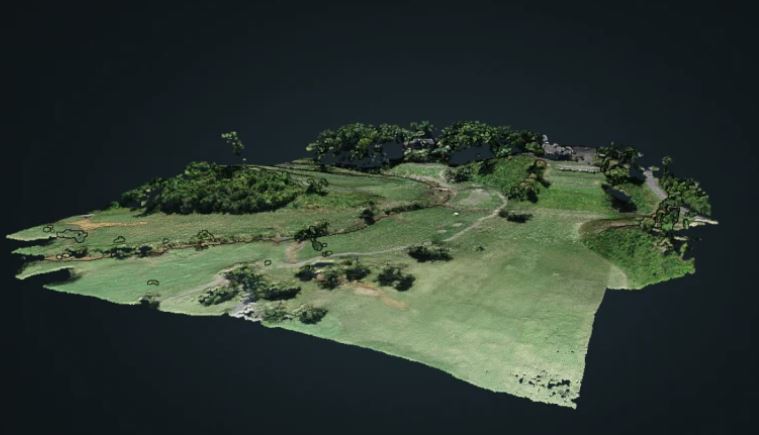
LiDAR, or Light Detection and Ranging, is a remote sensing method that uses pulsed laser light to measure distances and generate precise three-dimensional information about the shape of the earth and surface features. The result is typically a point cloud that can be processed into usable deliverables such as elevation models, contours, terrain surfaces, and other geospatial assets.

For decision makers in construction, engineering, facilities management, real estate, utilities, logistics, industrial operations, and large-site planning, that difference matters. Traditional drone photography is excellent for visual documentation, inspection support, and marketing communications. LiDAR serves a different role. It is designed to help teams measure, analyze, model, and plan with greater confidence when a site is too large, too complex, too uneven, or too operationally sensitive to evaluate efficiently from the ground.

What LiDAR drone services actually do

A LiDAR-equipped drone sends out laser pulses and records the returns from the ground and other surfaces. Because those returns can be processed into dense three-dimensional datasets, LiDAR is especially useful when a client needs more than imagery. It is valuable when the real deliverable is insight: terrain intelligence, elevation change, volumetric understanding, or a more detailed representation of site conditions. NOAA describes LiDAR as a method that generates precise 3D information about surface characteristics, while USGS notes that the original data is collected as a point cloud and can be processed into bare-earth elevation products by removing vegetation and structures where appropriate.

This capability is particularly important on sites with topographic variation, drainage issues, stockpiles, embankments, corridors, rooftops, campuses, industrial yards, or partially obstructed terrain. In those situations, a conventional photo set may show the site, but LiDAR helps quantify it.

Why St. Louis businesses are turning to LiDAR

St. Louis-area organizations operate across a wide range of physical environments: corporate campuses, industrial facilities, construction projects, healthcare properties, educational institutions, transportation corridors, utility sites, and commercial developments. Many of these sites require recurring documentation, planning support, or measurable spatial data rather than a one-time visual overview.

LiDAR drone services can support:

  • topographic mapping
  • terrain and elevation analysis
  • site planning and preconstruction evaluation
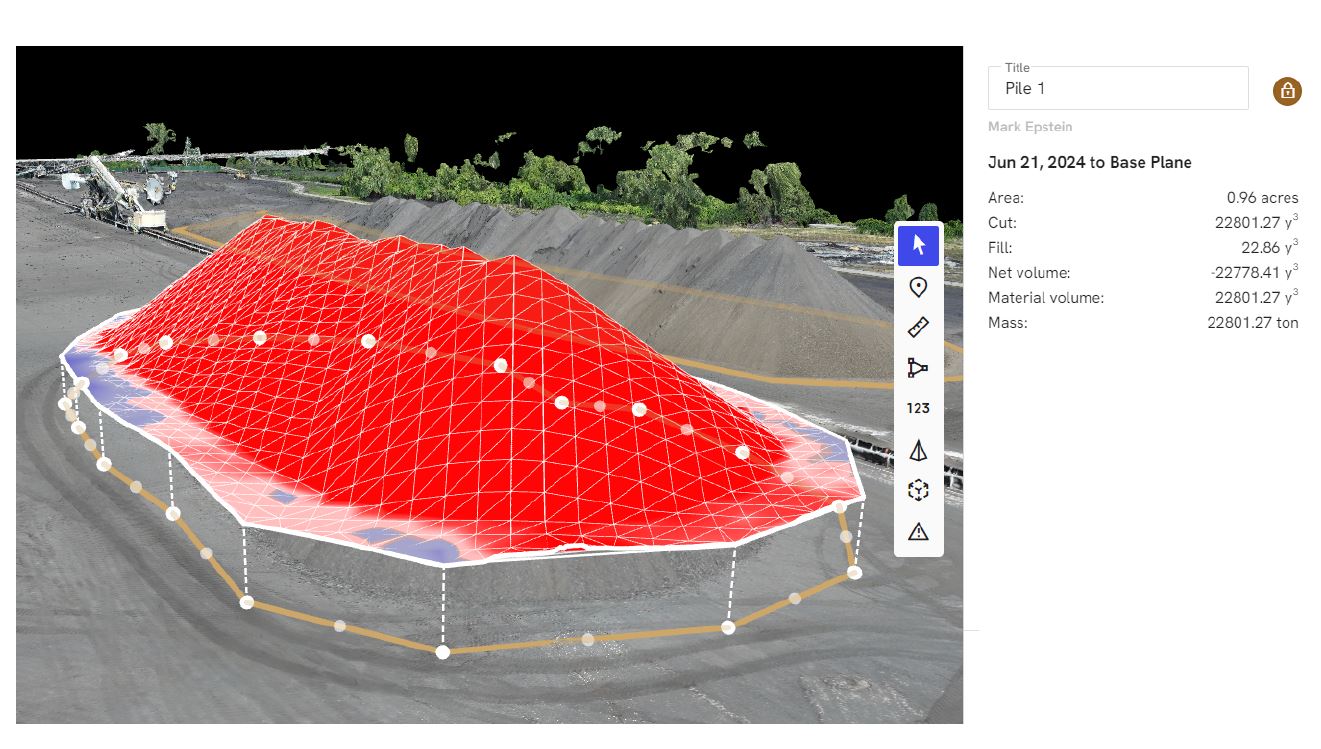
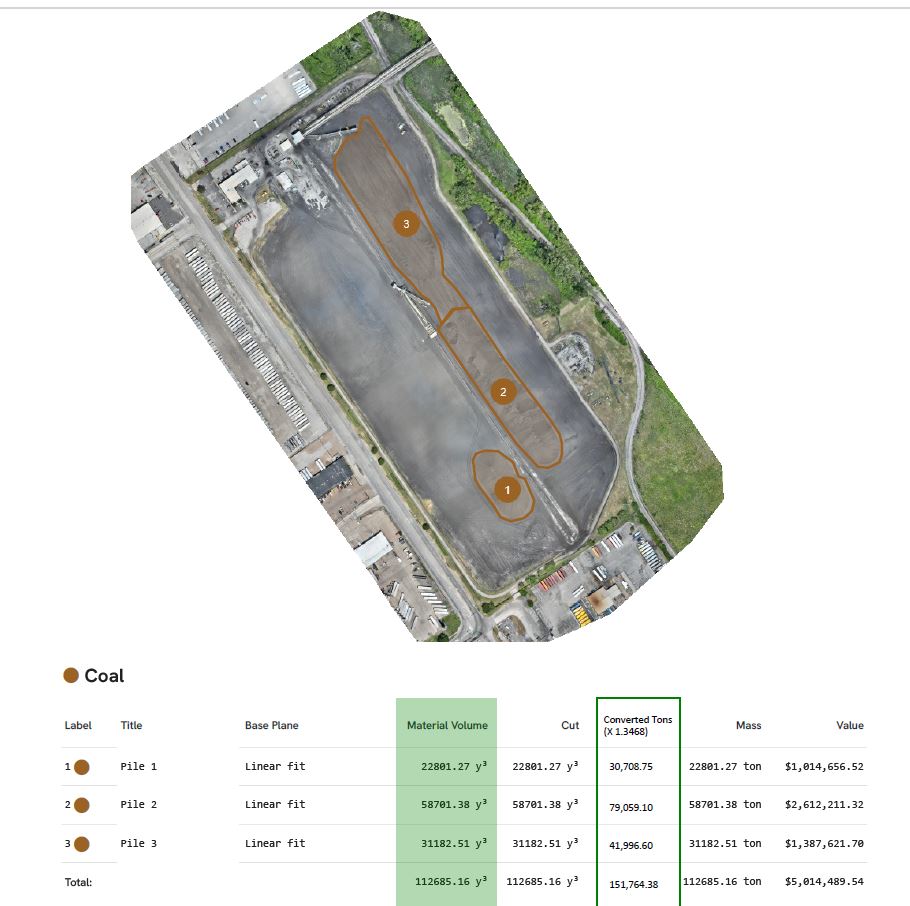
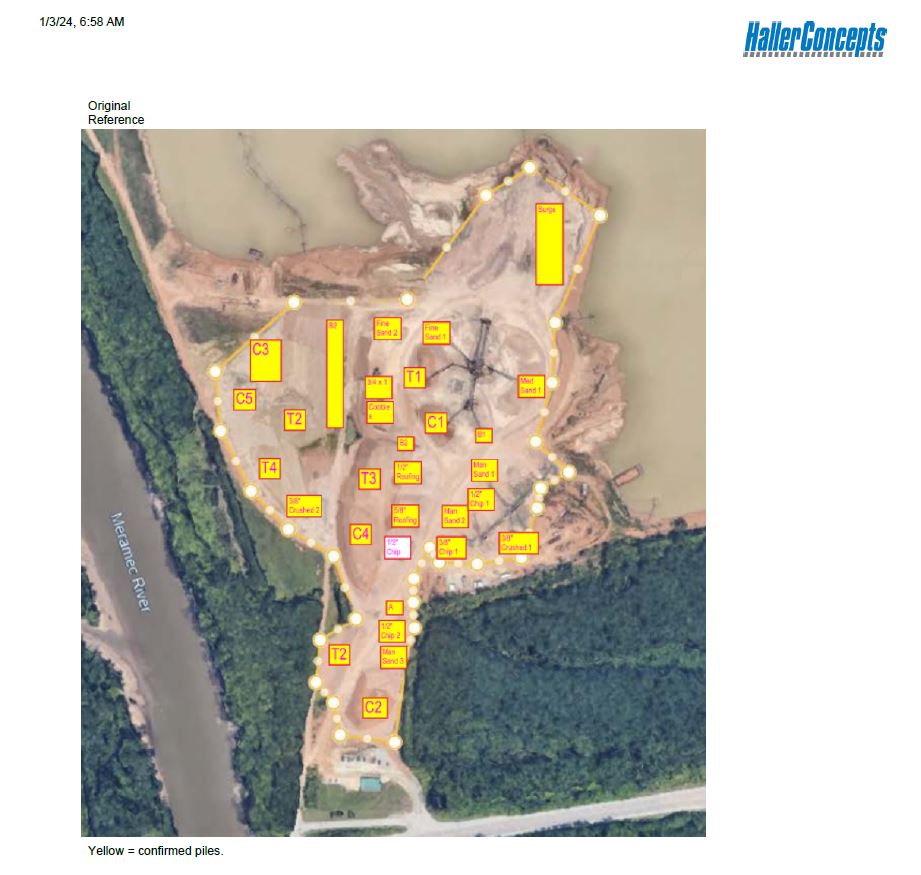
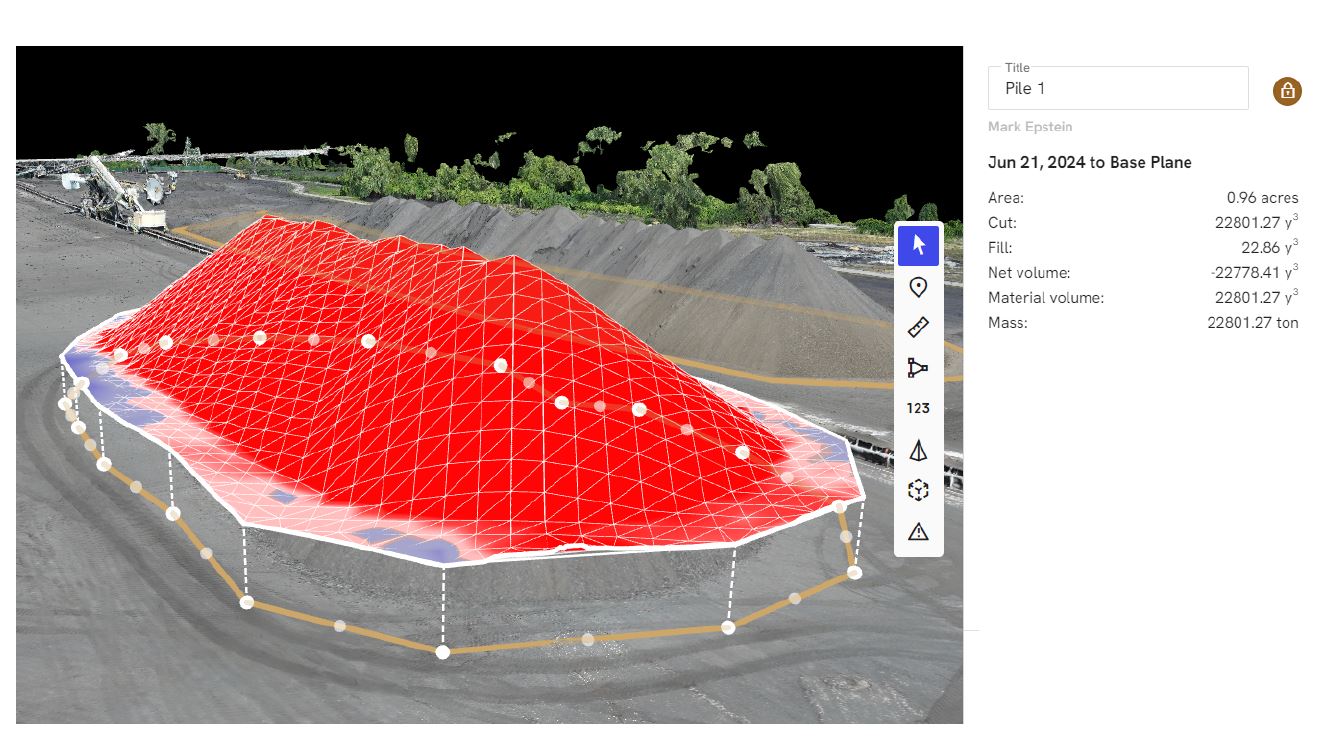
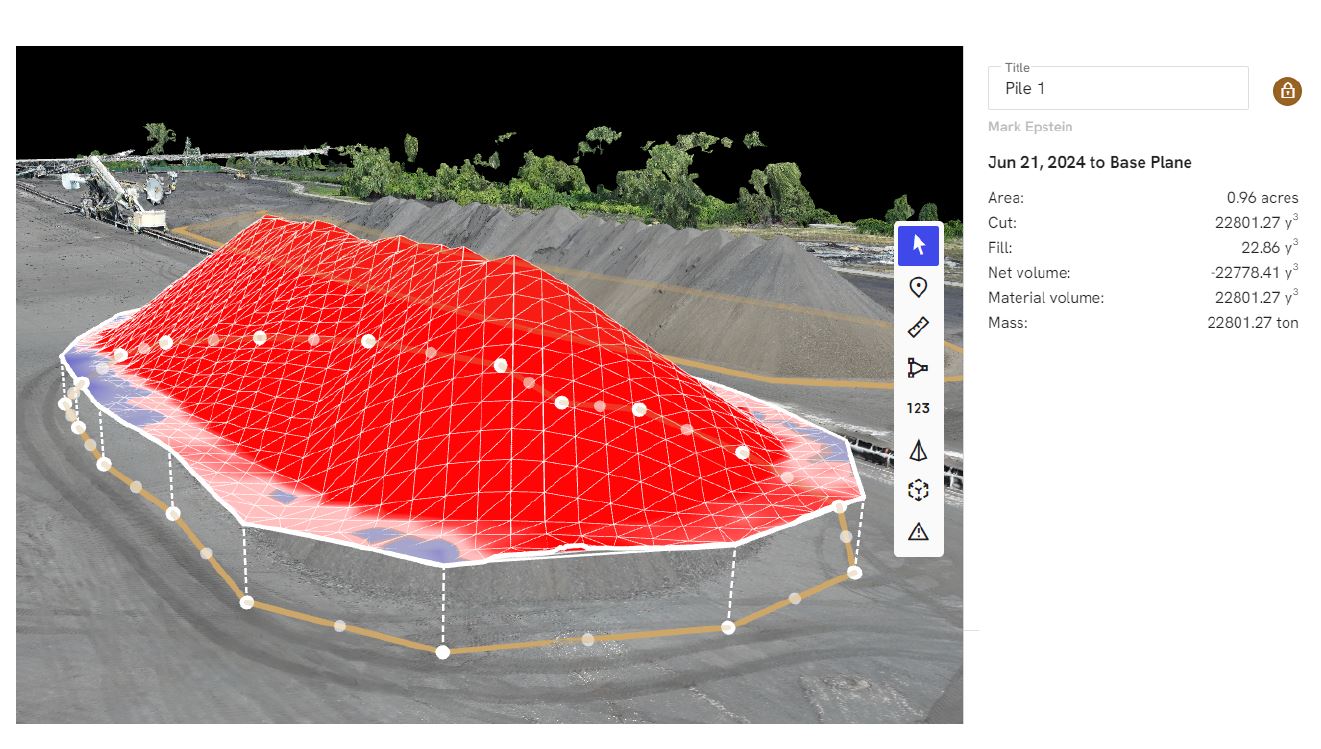
  • stockpile and material volume measurement
  • infrastructure and corridor documentation
  • drainage and stormwater assessment support
  • roof geometry and facility measurement
  • land development and property analysis
  • long-term change tracking across large sites

USGS identifies LiDAR point clouds and digital elevation models as standard products within modern elevation programs, which helps explain why LiDAR has become so valuable wherever reliable surface data matters.

Where LiDAR has an advantage over standard photogrammetry

Photogrammetry remains a strong solution for many commercial drone projects, especially when the goal is visual modeling based on overlapping photography. But LiDAR often becomes the better choice when elevation precision, terrain modeling, or the ability to classify surface data matters more than appearance alone.

One major advantage is that LiDAR data can be processed to distinguish between vegetation, structures, and ground surfaces. USGS specifically notes that LiDAR point clouds initially include returns from everything on the surface and that bare-earth digital elevation models are created by stripping away structures and vegetation. In practical terms, that means LiDAR can help reveal terrain characteristics that ordinary imagery may not describe clearly enough for planning or engineering use.

For organizations making budget, construction, maintenance, or design decisions, that can reduce uncertainty and help teams work from a more dependable dataset.

The real value is in the deliverables

Many clients initially focus on the aircraft or the sensor. Experienced buyers focus on the outputs.

A professionally managed LiDAR project can produce deliverables such as classified point clouds, digital terrain models, elevation surfaces, contour products, measurement-based visuals, and files that integrate into downstream GIS, CAD, engineering, and planning workflows. USGS’s 3D Elevation Program materials emphasize LiDAR point clouds and DEM products as core outputs, underscoring that the purpose of LiDAR is not simply to fly a mission but to produce usable data.

That is an important distinction for business clients. A drone flight by itself is not the product. The product is the information that comes out of it and whether that information can actually support your next decision.

Accuracy, planning, and workflow matter more than the buzzword

LiDAR is not a magic button. The value of the final data depends on mission planning, site conditions, processing methods, coordinate requirements, control strategy, classification workflow, and the skill of the production team managing the project.

A serious LiDAR engagement should begin with the business objective. Are you documenting preconstruction conditions? Comparing site changes over time? Evaluating a facility footprint? Measuring volume? Supporting consultants? Building an internal archive of property data? The answer shapes how the mission should be planned and what deliverables are worth paying for.

Industry standards matter here. ASPRS maintains positional accuracy standards for digital geospatial data and publishes best-practice guidance because geospatial deliverables must be evaluated against defined accuracy expectations, not vague marketing language.

That is why clients should look for a production partner who understands not only drone operations, but also file handling, downstream workflow needs, and how to frame the project around usable outcomes.

Safety and compliance are part of professional drone service

Any commercial drone operation has to be approached with operational discipline. The FAA states that work or business drone operations with small drones generally fall under Part 107, and remote pilots must hold the appropriate FAA certification to operate commercially under those rules. The FAA also provides for waivers in cases where operations need to go beyond specific Part 107 limitations, provided the operator demonstrates that the mission can still be conducted safely.

For commercial clients, this means the provider should already be thinking about airspace, property conditions, safety procedures, site activity, and operational planning before the mission begins. That becomes even more important around active facilities, tight urban environments, industrial sites, rooftops, campuses, or indoor spaces where specialized flight experience can make a major difference.

Why LiDAR should be part of a broader visual strategy

One of the biggest misconceptions about LiDAR is that it replaces conventional photography and video. In reality, the best results often come from combining them.

A business may need LiDAR for measurable site data, aerial photography for stakeholder presentations, ground-level photography for documentation, and video for marketing, internal communication, recruitment, or investor-facing content. When these needs are addressed together, one project can support multiple departments instead of creating separate costs and separate field days.

That broader approach is often where the greatest value appears. Technical capture can inform engineering and operations, while polished visual assets can serve communications, branding, and executive reporting. For a company trying to maximize budget and reduce production friction, that combination is highly effective.

What smart buyers should ask before hiring a LiDAR drone provider

Before committing to any LiDAR engagement, decision makers should ask a few practical questions:

What is the actual business problem we are trying to solve?
What deliverables will we receive?
Will those files work with our software or consultant workflow?
What level of accuracy is appropriate for this use case?
Will the provider also capture supporting imagery or video if needed?
How will the flight be planned for safety, efficiency, and compliance?
Can the same team help translate technical data into clear visuals for presentations or marketing use?

Those questions usually reveal the difference between a basic drone operator and a true production partner.

Experienced LiDAR drone services require more than equipment

The most successful LiDAR projects are not driven by gear alone. They are driven by experience, planning, communication, and the ability to turn technical capture into practical value for the client. That means understanding both the data side and the media side of modern production.

At St Louis Corporate Photographer, we understand that many organizations do not just need drone flights. They need dependable image acquisition, flexible deliverables, and a production team that can support technical, operational, and marketing goals in one place.

St Louis Corporate Photographer is a full-service professional commercial photography and video production company with the right equipment and creative crew service experience for successful image acquisition. We offer full-service studio and location video and photography, as well as editing, post-production and licensed drone services. St Louis Corporate Photographer can customize your productions for diverse types of media requirements. Repurposing your photography and video branding to gain more traction is another specialty.
We are well-versed in all file types and styles of media and accompanying software. We use the latest in Artificial Intelligence for all our media services. Our private studio lighting and visual setup is perfect for small productions and interview scenes. Our studio is large enough to incorporate props to round out your set. We support every aspect of your production—from setting up a private, custom interview studio to supplying professional sound and camera operators, as well as providing the right equipment—ensuring your next video production is seamless and successful. We can fly our specialized drones indoors.

As a full-service video and photography production corporation, since 1982, St Louis Corporate Photographer has worked with many businesses, marketing firms and creative agencies in the St. Louis area for their marketing photography and video. When your project calls for precise aerial data, polished visual assets, and a crew that understands how to align both with business goals, St Louis Corporate Photographer brings the experience, equipment, and production depth to help make that happen.

314-913-5626

stlouiscorporatephotographer@gmail.com

Driving Service Business Growth Through Authentic On-Site Photography

As producers and visual storytellers who have navigated the commercial landscape for decades, we have observed a seismic shift in how service businesses must market themselves. In the past, a polished logo and a generic description were sufficient. Today, in an era characterized by deep market skepticism and digital noise, your audience demands proof.

For service-based businesses—whether you are in construction, healthcare, finance, consulting, or industrial maintenance—you are selling an intangible: a promise of future performance. The challenge facing marketing directors and business owners is realizing that promise visually before the contract is even signed.

The generic handshake stock photo is obsolete. It convinces no one and erodes credibility. The solution lies in strategic, high-quality, on-site photography.

This is not merely about “taking pictures of your staff.” It is about crafting a visual documentary of your operational excellence. Here is an expert perspective on why authentic on-site imagery is the most critical asset in your marketing arsenal, and how to leverage it effectively.

The Psychology of transparency: Why On-Site Matters

When a prospective client evaluates a service provider, they are subconsciously assessing risk. Are these people capable? Do they have the right tools? Are they safe? Are they real?

Stock imagery amplifies risk because it is inherently inauthentic. On-site photography, conversely, acts as a risk-mitigation tool. By pulling back the curtain and showing your actual team, your real equipment, and your genuine working environment, you are leveraging the psychology of transparency.

When a client sees a high-resolution image of your specialized machinery in action, or your consultants engaged in a real strategy session, the abstract “service” becomes a concrete reality in their mind. You move from a faceless entity to a tangible partner.

The Visual Assets You Must Capture

A successful on-site photoshoot is not a random scattering of snapshots; it is a targeted acquisition of strategic assets. To maximize ROI, your shot list must include these three pillars:

1. The Process In Action (The “How”)

Do not just tell them you are efficient; show the workflow. If you are a logistics company, we need dynamic shots of the warehouse floor in motion. If you are an architectural firm, capture the team collaborating over blueprints and 3D models. These images prove competency. They show the “organized chaos” of professionals at work, which is incredibly reassuring to a buyer.

2. Environmental Portraits (The “Who”)

Standard studio headshots have their place, but environmental portraits are superior for service industries. Show your foreman on the job site with a hard hat, or your lead surgeon in scrubs in an OR setting. This contextualizes your team’s expertise and humanizes your brand.

3. The Tools of the Trade (The “What”)

Your equipment is often a major differentiator. High-end manufacturing tech, specialized medical devices, or even proprietary software interfaces should be photographed with the same care as a luxury product. Close-up detail shots of your tools convey precision and investment in quality.

Strategic Repurposing: The ROI of Your Image Library

As experienced producers, we advise clients never to view a photoshoot as a “one-and-done” event. A comprehensive on-site session builds a content library that should fuel your marketing across diverse media requirements for 12 to 18 months.

  • Website Conversions: Replacing stock hero images with authentic on-site photos invariably increases time-on-site and trust signals.
  • Sales Proposals & Decks: When your proposal includes photos of the actual team that will handle the account, your win rate increases.
  • Social Media Traction: Authentic behind-the-scenes content vastly outperforms generic posts on platforms like LinkedIn and Instagram.

We also specialize in repurposing these high-quality stills into motion graphics and short video snippets, maximizing the value of the initial acquisition.

Executing the Vision with St. Louis Corporate Photographer

Acquiring these assets requires more than a camera; it requires a production mindset that understands safety protocols, workflow disruptions, and brand aesthetics.

Since 1982, St. Louis Corporate Photographer has served as a full-service professional commercial photography and video production company. We have worked with countless businesses, marketing firms, and creative agencies in the St. Louis area, providing the right equipment and creative crew service experience for successful image acquisition.

We support every aspect of your production to ensure it is seamless. We are experts in navigating complex on-site environments—from industrial floors to corporate boardrooms—deploying professional sound, lighting, and camera operators without disrupting your operations.
Our capabilities extend far beyond standard photography:

  • Advanced Technology Integration: We use the latest in Artificial Intelligence for all our media services, streamlining editing and post-production for faster, higher-quality turnarounds.
  • Aerial Perspectives: We employ licensed drone pilots for sweeping exterior shots and possess specialized drones capable of flying indoors, perfect for capturing vast warehouse operations or large interior architectural projects safely.
  • Full-Service Studio: While we excel on location, our private studio provides the ultimate controlled environment. Our lighting and visual setup are perfect for executive interviews, and the space is large enough to incorporate significant props to round out your set.

We are well-versed in all file types, media styles, and accompanying software, ensuring that the final deliverables integrate flawlessly into your marketing stack.

If you are ready to move beyond generic imagery and build a visual brand based on authenticity and trust, partner with the experienced producers at St. Louis Corporate Photographer.

314-913-5626

stlouiscorporatephotographer@gmail.com

Easy Ways to Prep Your Venue for Professional Event Photography — A Field-Proven Playbook

As a corporate photographer and producer, I’ve learned that the best event images are won (or lost) before the first guest arrives. Venue prep is the single most controllable lever you have to elevate coverage from “documentation” to “brand asset.” Below is a practical, 30–60 minute playbook your team can run with any venue to ensure clean visuals, consistent lighting, and a friction-free shoot that yields more usable content for marketing, PR, and employer brand.


1) Walk the Space Like a Camera Will

Objective: Identify backgrounds that read “on-brand” and remove visual noise.

Do this:

  • Stand where key moments happen (stage, podium, step-and-repeat, registration, demo stations). Snap phone test shots to check sightlines and background clutter (exit signs, trash cans, fire extinguishers, off-brand sponsor banners, tangled cables).
  • Choose two hero backdrops per room: one wide scene-setter and one tight branded background. Mark them with gaffer tape for repeatable angles.
  • Reserve a 10’ × 12’ “portrait pocket.” This is a quiet corner with clean wall or branded backdrop for VIP headshots, award winners, or last-minute team photos.

Pro tip: A background that looks fine to the eye may look chaotic at f/2.8 under mixed color temperatures. Your phone test frames will reveal it.


2) Light With Intention (and Consistency)

Objective: Avoid “raccoon eyes,” color casts, and mixed color temperatures that complicate post.

Do this:

  • Unify color temperature. Ask the venue to match overheads to 3200K (tungsten) or 5600K (daylight). If that’s not possible, switch off problematic pockets (greenish fluorescents) where key moments occur.
  • Add controlled fill at stage and lectern. A low-power, high-quality LED panel 15° off axis cleans shadows and keeps skin tones consistent for stills and video.
  • Dim house lights slightly during keynotes. This protects highlights on screens while keeping faces readable.

Pro tip: Put a small piece of white gaffer tape on the lectern edge so speakers naturally step to the light. It’s invisible in photos and saves you from silhouettes.


3) De-Clutter Cables, Stands, and Signage

Objective: Reduce retouching and distractions that dilute your message.

Do this:

  • Cable management. Route runs along perimeter walls, then cross at 90° with low-profile ramps; never diagonally across sightlines.
  • Hide cases and carts. Designate one “gear graveyard” out of frame—behind stage drape, service corridor, or storage room.
  • Rationalize signage. Group sponsor logos into one “owned” wall rather than scattering small signs everywhere.

Pro tip: If you can’t move it, mask it—black drape, plants, or branded foam boards clean up backgrounds fast.


4) Design Your “Moment Map” (Shot List That Actually Works)

Objective: Translate the run-of-show into visual priorities with contingency plans.

Do this:

  • Tier A moments (must-capture): stage welcomes, CEO remarks, award handoffs, ribbon cuttings, product reveals, full-room wides, VIP groupings.
  • Tier B moments (should-capture): attendee candids in clusters of 3–5, sponsor booths with engagement, hands-on demos, laugh/smile beats, note-taking.
  • Tier C moments (nice-to-have): environmental details, place settings, lanyards, behind-the-scenes.

Attach each Tier A moment to a physical location and a backup angle. Share with AV and stage manager so cues and lighting support the capture.


5) Build Brand Into the Frame (Subtly)

Objective: Every image should advance brand recognition without screaming “ad.”

Do this:

  • Layer brand elements: foreground branded tote or laptop sticker, mid-ground talent, background logo wall or color-washed uplights.
  • Color blocking: match stage wash and accent uplights to brand palette; avoid clashing gels.
  • Props with purpose: branded notebooks, mic flags, or step-and-repeat kept 4–6 feet behind subjects to allow pleasing bokeh.

Pro tip: If you’re sharing a venue, bring two portable 8’ pop-ups to “own” a corner visually.


6) Make Space for People (and Lenses)

Objective: Keep camera positions clear, safe, and flexible.

Do this:

  • Create two camera lanes: one center aisle for keynote symmetry and one side aisle for speaker profiles and audience reactions.

  • Reserve a tripod zone at back-of-house elevated 12–18” for locked-off wides (video and photo).
  • Add a small riser for group shots of 20–50 people; it changes everything for sightlines and speed.

Pro tip: Tape a 6’ semicircle around the lectern so well-meaning staff don’t crowd the speaker and block angles.


7) Align With AV Early (and Kindly)

Objective: Synchronize lighting, screens, and cues to avoid blown highlights and missed moments.

Do this:

  • Share the moment map with AV. Request: (a) static stage wash during awards, (b) slide-only hold for 10 seconds after reveals, (c) no fast strobe during key photo moments.
  • Stage monitors: set brightness to a consistent level; avoid full-white slides immediately after dark frames.
  • Audio: provide a board feed or ambient mic plan if you’re recording interviews.

Pro tip: Ask AV for a 2-minute “cue parade” in rehearsal so we can lock exposure presets before doors.


8) Prepare People: Brief, Equip, and Obtain Consent

Objective: Smooth human logistics so subjects look confident and legal boxes are checked.

Do this:

  • Speaker briefing (2 minutes): look point, mark on stage, mic protocol, clothing shine check, “pause for the photo” at handoffs.
  • Model releases: Post signage at entrances; gather individual releases for VIP features. Provide a QR code for digital consent where appropriate.
  • Wardrobe guardrails: avoid micro-patterns (moire), high-gloss fabrics, or head-to-toe black in dim rooms; suggest solids in brand-adjacent colors.

Pro tip: Keep a compact “appearance kit”: lint rollers, blotting papers, safety pins, clear nail polish (for snags), matte powder.


9) Plan for Content Repurposing (Before the Shutter Clicks)

Objective: Multiply ROI by designing capture for multiple deliverables.

Do this:

  • Shoot “evergreen” angles (clean backgrounds, no date-stamped signage) for year-round marketing.
  • Capture series-friendly frames—repeatable composition so your events grid looks cohesive on the website.
  • Asset taxonomy: decide file naming and metadata (event, track, speaker, sponsor level) so marketing can find assets in seconds.

Repurposing roadmap:

  • Website hero images, landing pages, case studies
  • Social campaigns (speaker quotes, carousels, reels)
  • Sales decks, recruiting pages, press kits
  • Internal comms and investor updates

10) Indoor Drone? Yes—If You Prep for It

Objective: Deliver dynamic establishing shots and “wow” moments safely.

Do this:

  • Define flight corridors away from HVAC gusts and hanging fixtures.
  • Lock down a launch/land zone with stanchions.
  • Schedule 10 minutes pre-doors for rehearsal.
  • Coordinate with venue and security; provide insurance and flight plan.

Pro tip: FPV micro-drones with prop guards create cinematic lobby fly-throughs without disrupting guests when flown by licensed, experienced pilots.


11) The 30–60 Minute Venue-Prep Checklist

T-60 minutes

  • Pick two hero backdrops per room; remove clutter
  • Confirm stage wash color temperature; dim house lights plan
  • Mark camera lanes, tripod zone, and portrait pocket
  • Coordinate with AV on cues; run the 2-minute cue parade

T-30 minutes

  • Cable management and signage rationalization complete
  • Place appearance kit at green room / portrait pocket
  • Test exposure at lectern, step-and-repeat, demo stations
  • Final walk-through with event lead: Tier A and B moments

T-10 minutes

  • Speakers briefed; lectern mark taped
  • Staff instructed to keep camera lanes clear
  • Drone corridor verified (if applicable)
  • House opens; photographer roams for natural arrivals

12) Technical Specs That Make Post Faster

  • Color & profiles: 10-bit 4:2:2 for video, RAW+JPEG for stills; white balance locked at venue standard
  • Audio: lav + handheld redundancy for interviews; ambient for crowd energy
  • Delivery: hero edits within 24–48 business hours, full gallery in 5–7 business days (agreed SLA); filenames with event-track-speaker; embedded IPTC keywords for search
  • Content credentials: optional C2PA/Content Credentials embedding; rights language provided on delivery note

13) Metrics That Matter (So You Can Prove ROI)

  • Time to first usable asset (for social/press)
  • Gallery utilization rate (assets actually used vs. delivered)
  • Sponsor visibility score (number of clean sponsor impressions)
  • Evergreen asset count (undated images suitable for reuse)
  • Employee brand moments (recognition, culture, recruiting visuals)

Final Thoughts

Venue prep isn’t glamorous, but it’s the simplest way to turn one event into a year’s worth of credible, on-brand visuals. With a disciplined 30–60 minute plan, your photography becomes a strategic asset rather than a cost of doing business.


Why Partner With St Louis Corporate Photographer

Our St Louis Corporate Photographer team is a full-service professional commercial photography and video production company with the right equipment and creative crew experience for successful image acquisition. We offer full-service studio and location video and photography, as well as editing, post-production, and licensed drone pilots—including the capability to fly our specialized drones indoors where appropriate. Since 1982, St Louis Corporate Photographer has worked with businesses, marketing firms, and creative agencies across the St. Louis area to customize productions for diverse media requirements.

We’re experts at repurposing your photography and video branding to gain more traction across websites, social, recruiting, sales, and PR. We are well-versed in all file types, styles of media, and accompanying software, and we use the latest in Artificial Intelligence—ethically and efficiently—across our media services to accelerate delivery while preserving authenticity. Our private studio lighting and visual setup is perfect for small productions and interview scenes, and our studio is large enough to incorporate props to round out your set. We support every aspect of your production—from setting up a private, custom interview studio to supplying professional sound and camera operators, as well as providing the right equipment—ensuring your next video production is seamless and successful.

Mike Haller 314-913-5626

stlouiscorporatephotographer@gmail.com

AI-Ready Corporate Photography: A Practical Playbook for Decision Makers

Executive teams don’t hire AI. They hire outcomes. “AI photography” only pays off when it’s wrapped around disciplined capture, controlled lighting, and a tight production plan. Used well, AI compresses timelines, stabilizes quality, and multiplies the value of every shoot. Used poorly, it creates risk. This playbook shows how to harness it the right way—and what to demand from your vendors.

WHAT COUNTS AS “AI PHOTOGRAPHY” (IN THE REAL WORLD)

AI in corporate production falls into three distinct lanes:

  1. Assistive capture tools
    Fast, reliable focusing and tracking, noise optimization, subject recognition, and on-set look matching that help crews move quickly in constrained environments—manufacturing floors, labs, hospitals, showrooms—without sacrificing control.
  2. Accelerated post-production
    High-precision selections and masks; cleanup of dust, wrinkles, flyaways, glare; background extension or replacement; product colorways and plate cleanups; intelligent upscaling for large display prints—all while preserving accurate skin tones, materials, and brand color.
  3. Selective generative elements
    When it lowers cost or risk, tasteful additions like skies, set extensions, props, or seasonal environments. These are supplements to real photography, disclosed when they materially change the scene.

Bottom line: cameras, lighting, producers, and an organized set still do the heavy lifting. AI speeds the pipeline and improves repeatability. It cannot rescue a poorly designed shoot.

FIVE LEVERS OF ROI FOR BRANDS

Speed with certainty
Quicker selects and retouch rounds mean fewer reshoots and predictable delivery for launches, events, and product drops.

Uniformity at scale
Look-matched angles, backgrounds, and finishes across SKUs, locations, and teams—especially valuable for ecommerce, catalogs, and franchises.

Repurposing without rework
Automated crops, aspect ratios, captions, and short-form cutdowns—one master campaign distributed to web, print, email, digital signage, and paid social with consistent quality.

Risk and compliance control
Virtual set extension mitigates last-minute location issues; smart cleanup removes safety hazards, confidential details, badges, patient information, or whiteboard scribbles captured on-site.

Budget that compounds
Re-usable lighting diagrams, scene templates, and prompt libraries turn recurring shoots—quarterly headshots, ongoing product lines, investor relations videos—into faster, cheaper wins.

GOVERNANCE: AUTHENTICITY, RIGHTS, AND AUDIT TRAILS

Insist on a verifiable chain of custody for your images. Strong programs align to:

• Content Credentials (C2PA): embed who created what, when, and how edits were made.
• Content Authenticity Initiative (CAI): open practices that encourage adoption of provenance metadata.

Bake these into your SOW:

• Clear disclosure whenever generative elements materially alter a scene.
• Delivery files retain EXIF/IPTC/XMP and, where supported, C2PA Content Credentials.
• Written warranties that no third-party IP, logos, or likenesses appear without authorization.
• Data handling terms for any reference assets used to guide AI outputs—how long they’re stored, who can access them, and when they’re deleted.
• An “authenticity critical” rubric for regulated content (no generative tools used).

QUALITY STANDARDS THAT DON’T BEND

Color management
Define spaces before you shoot. Web deliverables often target sRGB; premium print may require Adobe RGB or CMYK conversions with proofs.

Resolution strategy
Capture hero assets natively; apply super-resolution only after visual tests confirm no artifacts in hair, fabric, edges, or small type.

Skin integrity
Retouching keeps real texture. No plastic skin. Agree on thresholds for blemish, pore, and contrast management.

Material truth
Metals, glass, textiles, and foods need honest specular highlights and surface behavior. Avoid algorithmic “enhancements” that change physics.

Micro-details and legal copy
When packaging or disclaimers matter, capture the real thing. AI can distort fine text, tiny logos, and barcodes.

WHEN TO DEPLOY WHAT

Pure photographic capture
Regulatory claims, medical/financial contexts, fine legal copy, forensic documentation, and case-study scenes that require unimpeachable authenticity.

Hybrid (your default)
Real people, places, and products captured on set; AI for cleanup, background extension, sky swaps, and multi-channel repurposing.

Selective generative
Environmental set extensions, weather, crowd fills, or seasonal looks when live capture is unsafe, impractical, or cost-prohibitive—paired with disclosure and internal logging.

RFP LANGUAGE YOU CAN USE AS-IS

• Capture plan: lighting diagram, lens choices, sample frames aligned to brand guidelines.
• AI policy: tools allowed at preproduction, on set, and in post—and tools explicitly not used.
• Provenance: commitment to embed Content Credentials where supported.
• Deliverables matrix: exact crops/ratios (web, paid, OOH, retail), color spaces, file types, compression targets.
• Repurposing plan: social, email, landing-page, and display variants from the master set.
• Data governance: retention periods, access rules, model-training prohibitions or permissions.

• Crew and facility readiness: studio specs, power, sound isolation for interviews, rigging safety, overhead and drone protocols.
• Indoor drone capability (if required): licensing, insurance, flight experience, and safety briefing process.

HOW WE WORK—NO SHORTCUTS, JUST CRAFT

At St Louis Corporate Photographer, every engagement blends disciplined production with modern AI—applied where it improves quality, never where it compromises truth.

• Studio and location production
Advanced lighting, full set design, permits, and a seasoned crew that moves efficiently in corporate environments.

• Photo and video under one roof
Executive interviews, brand stories, product demos, and b-roll—planned for downstream repurposing from the start.

• FAA-licensed drone operations
Exterior and specialty interior flight when the brief calls for it, with documented safety protocols.

• AI-enhanced post built for consistency
Meticulous cleanup, color continuity across lines and locations, and channel-specific versions delivered together.

• A private, configurable studio
Optimized for interviews and small productions with space for props and custom sets.

• Proven experience
Trusted by St. Louis businesses, agencies, and marketing teams since 1982.

PROCUREMENT CHECKLIST

[ ] SOW specifies where AI may be used and preserved in metadata
[ ] “Authenticity critical” shots flagged as no-gen
[ ] File formats, color spaces, and compression finalized before shooting
[ ] Repurposing deliverables listed by channel and aspect ratio
[ ] Indoor/outdoor drone plan and safety documentation approved (if applicable)
[ ] All model, property, and brand releases collected and archived
[ ] Content Credentials embedded in finals where supported

WHY ST LOUIS CORPORATE PHOTOGRAPHER

We’re a full-service corporate photography and video team built for modern marketing: controlled lighting, precise capture, expert producers, professional editors, and licensed drone pilots. We customize for web, print, retail displays, social, and broadcast—and we’re fluent in every major file type and workflow you use. Our AI capabilities are practical and transparent: they speed delivery, improve consistency, and expand what’s possible without sacrificing authenticity.

From a private, custom interview studio to on-site production with sound and camera operators, we support every phase of your project and deliver assets that are ready to ship across channels. We can even fly specialized drones indoors when the story requires it. Since 1982, St Louis Corporate Photographer has partnered with St. Louis businesses, agencies, and marketing teams to produce reliable, brand-correct visuals—on time, on budget, and built for repurposing.

314-913-5626

stlouiscorporatephotographer@gmail.com

Most commonly requested corporate-photography services.

1) Business Headshots & Executive Portraits

We provide consistent, brand-aligned headshots and leadership portraits—shot in our private studio with custom backdrops and controlled lighting, or on-location with our mobile lighting setup. Retouching is included, and we deliver files in multiple resolutions for web, print, and directories.


2) Corporate Events (Meetings, Town Halls, Conferences)

From single-camera coverage to multi-camera crews, we document sessions, speakers, attendee candids, and sponsor activations. Edited deliverables are prepared for internal communications, PR releases, and recap presentations.


3) PR & Media Moments (Press Conferences, Ribbon-Cuttings) and Live Streaming

We provide fast-turn PR photography with newsroom-ready edits and can add live streaming when needed—ideal for announcements, media days, and company milestones.


4) Product & Service Photography

We produce clean e-commerce product images, editorial hero shots, and “service in action” photography for websites, online marketplaces, marketing collateral, and advertising campaigns.


5) Brand and Advertising Campaign Photography

We plan creative concepts, lighting, talent direction, and shot lists around your brand guidelines. Files are delivered with the correct licensing for commercial use, and our AI-enhanced post-production ensures consistent looks across all marketing channels.


6) Architectural, Workplace, and Real Estate Imagery

We create environmental storytelling imagery—exteriors, interiors, and operational spaces—for recruiting, investor relations, and facilities marketing. This includes controlled lighting setups, HDR captures, and color-managed files ready for print or web use.


7) Aerial Imaging – Drone and Airplane Photography

As FAA-licensed drone pilots, we capture aerial views of corporate campuses, facilities, and construction sites. When drones cannot operate due to airspace restrictions, we offer airplane-based aerial photography for wide-area coverage and compliance documentation.


8) Full-Service Studio Production for Photo and Video

We offer more than still photography—producing interviews, testimonials, and brand videos with professional camera and sound crews, custom sets, and private studio lighting. Post-production includes editing, retouching, color grading, and AI-assisted enhancements.


Why Businesses Choose St Louis Corporate Photographers

  • Serving the St. Louis area since 1982, trusted by businesses, agencies, and marketing firms.
  • Flexible coverage with both in-studio and on-location services.
  • Rapid post-production, organized file delivery, and clear licensing for corporate use.
  • Compliance-focused aerial solutions with drone and airplane options.
  • AI-powered editing for consistent, high-quality results across all media platforms.

Mike Haller 314-913-5626

stlouiscorporatephotographer@gmail.com

Cleared for Takeoff: Aerial Airplane Photography for Stockpile Reporting Where Drones Can’t Fly

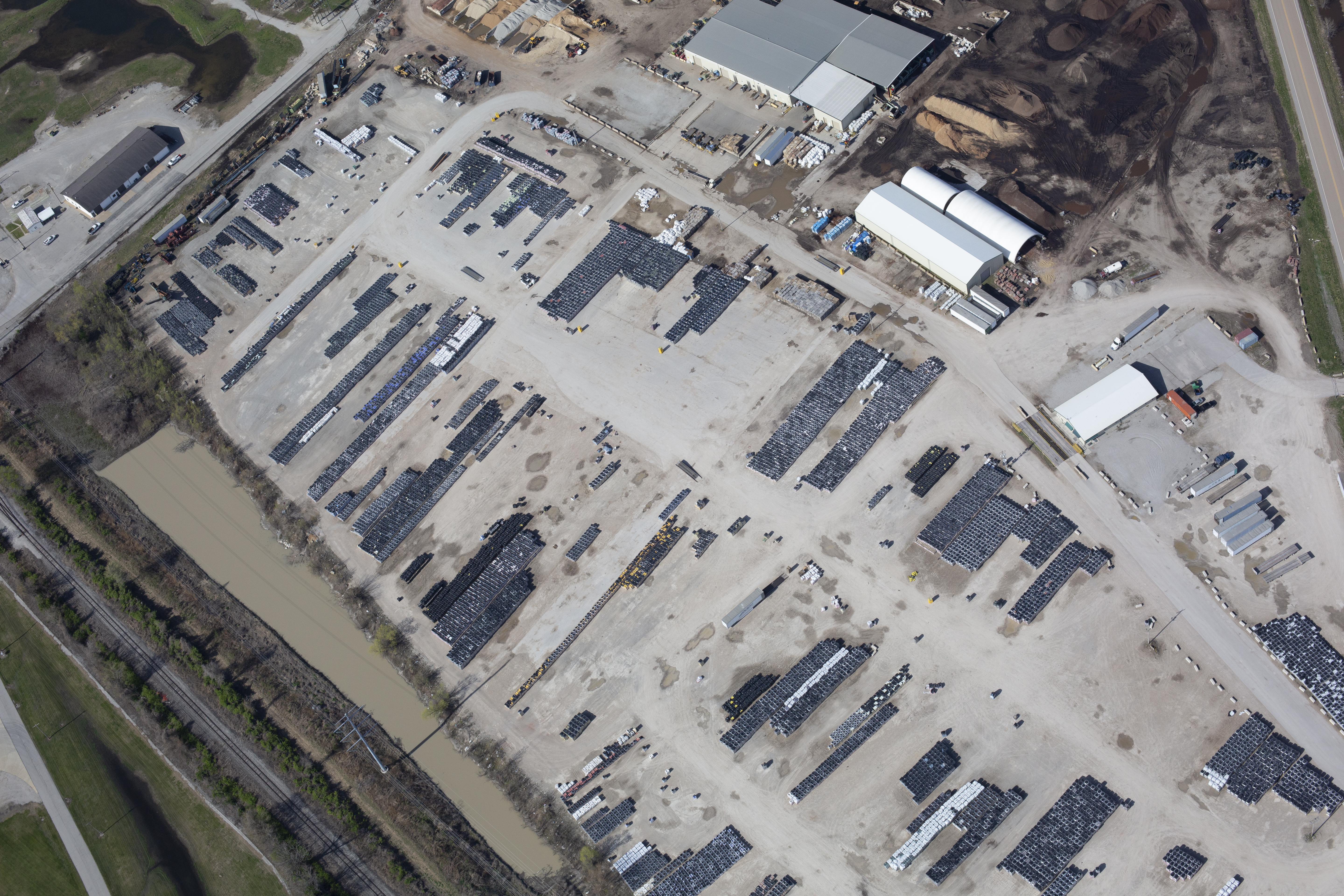
When it comes to modern stockpile measurement, aerial drone photography has quickly become the go-to method for many businesses—offering high-resolution imagery, speed, and cost-efficiency. But what happens when drones aren’t permitted to fly due to FAA restrictions, site limitations, or safety regulations? That’s where traditional airplane photography, guided by experienced visual production professionals, becomes not just a backup—but a mission-critical solution.

Why Drones Aren’t Always an Option

Despite their many advantages, drones are not always viable. Some of the most common limitations include:

  • FAA Flight Restrictions: Airports, military bases, power plants, and other sensitive areas often fall within no-fly or restricted zones.
  • Operational Hazards: Explosive materials or unstable structures in mining or construction sites may legally or practically prohibit drone use.
  • Line-of-Sight & Altitude Constraints: Drones have altitude limits and must stay within visual line-of-sight of the operator, which can be limiting when surveying expansive areas.

In these scenarios, manned fixed-wing aircraft or helicopters provide a legally compliant, highly effective alternative.

The Case for Airplane Photography in Stockpile Reporting

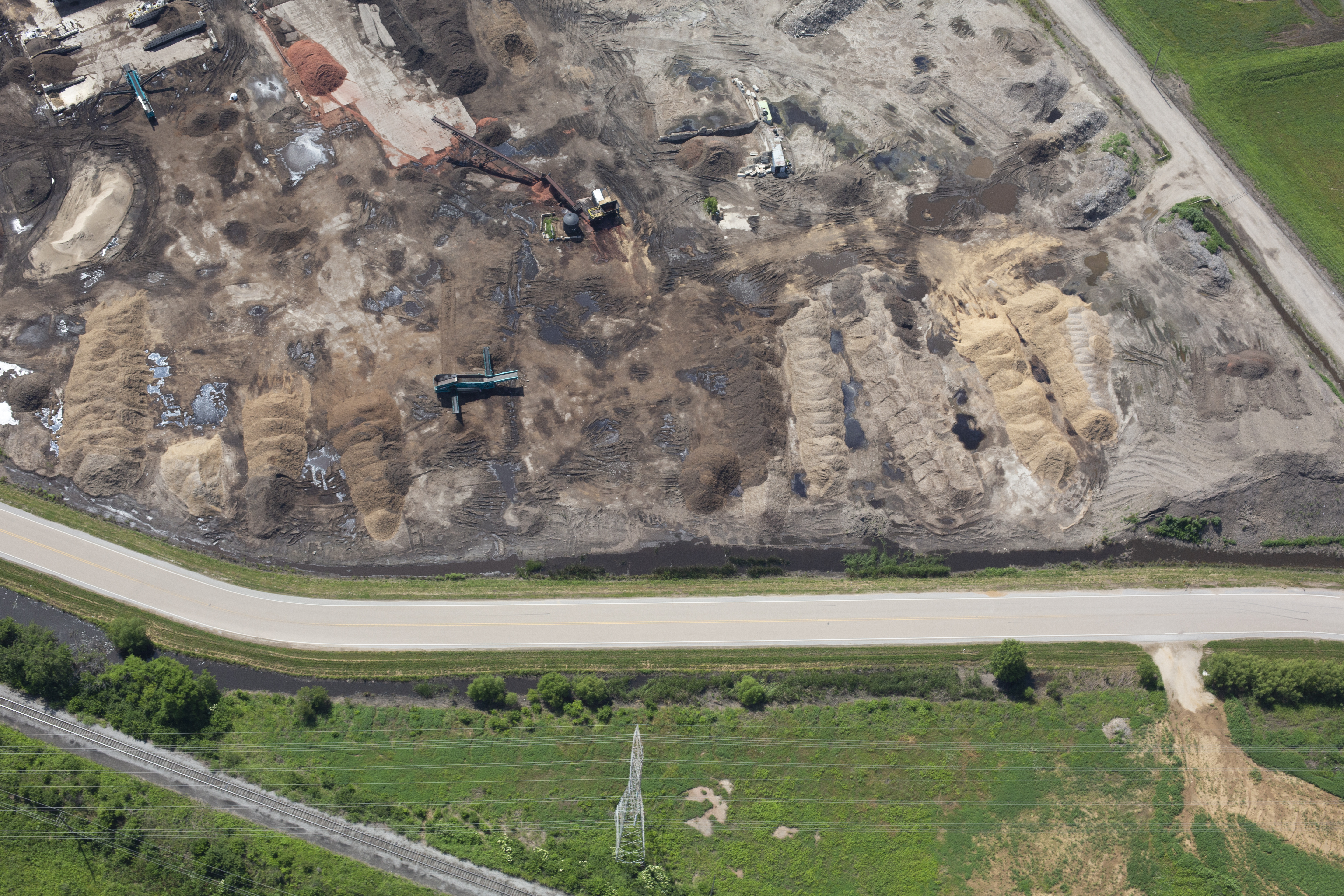
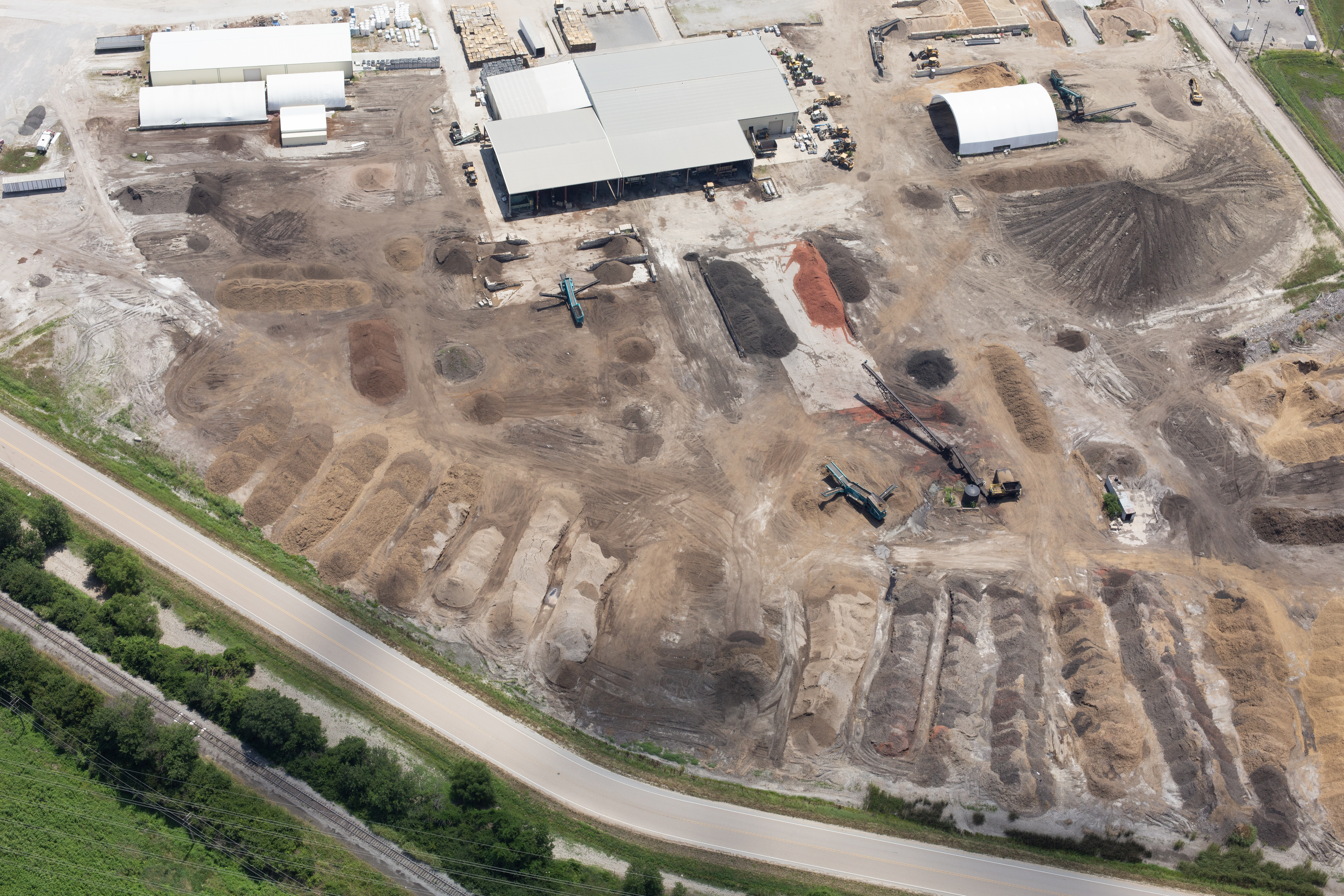
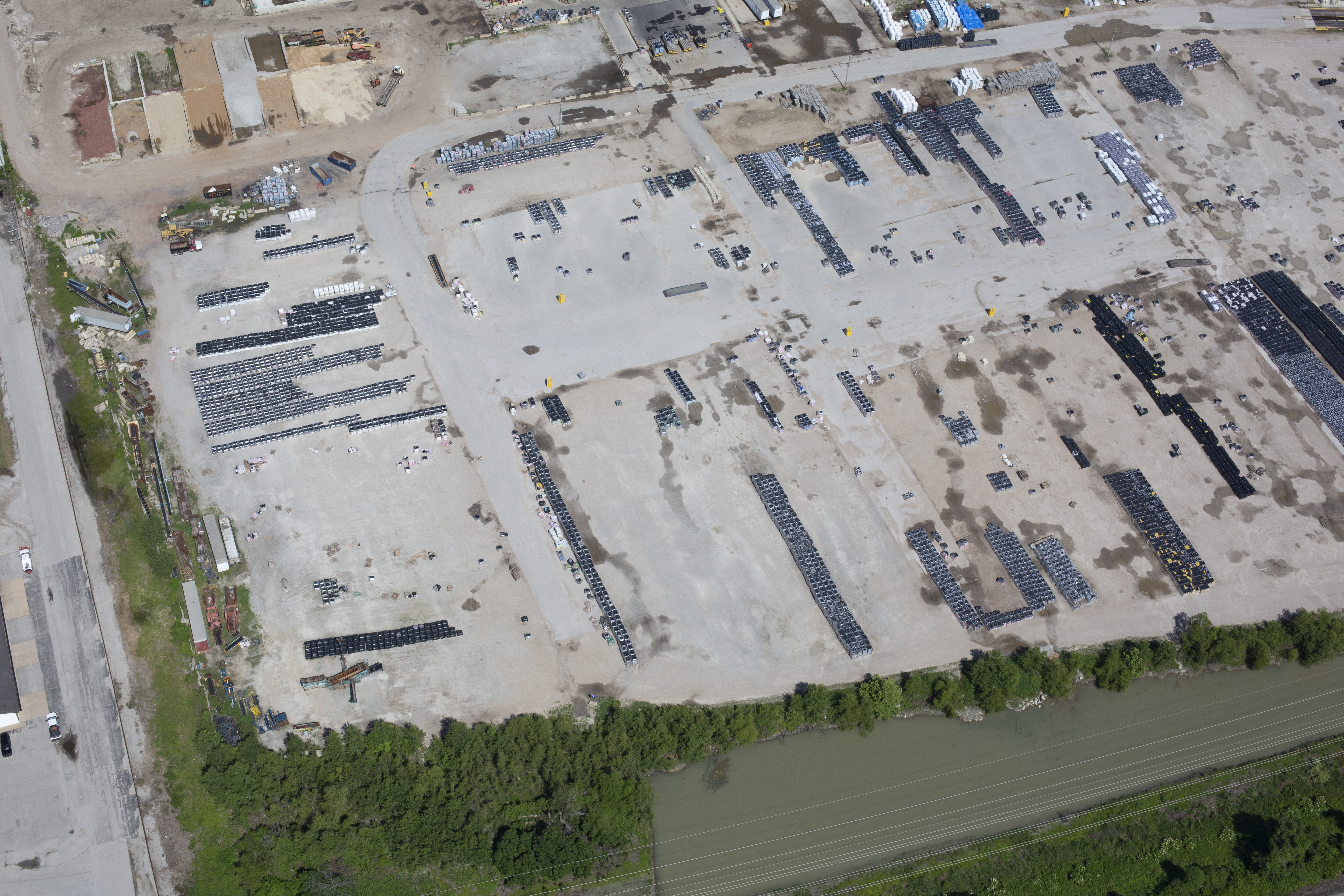
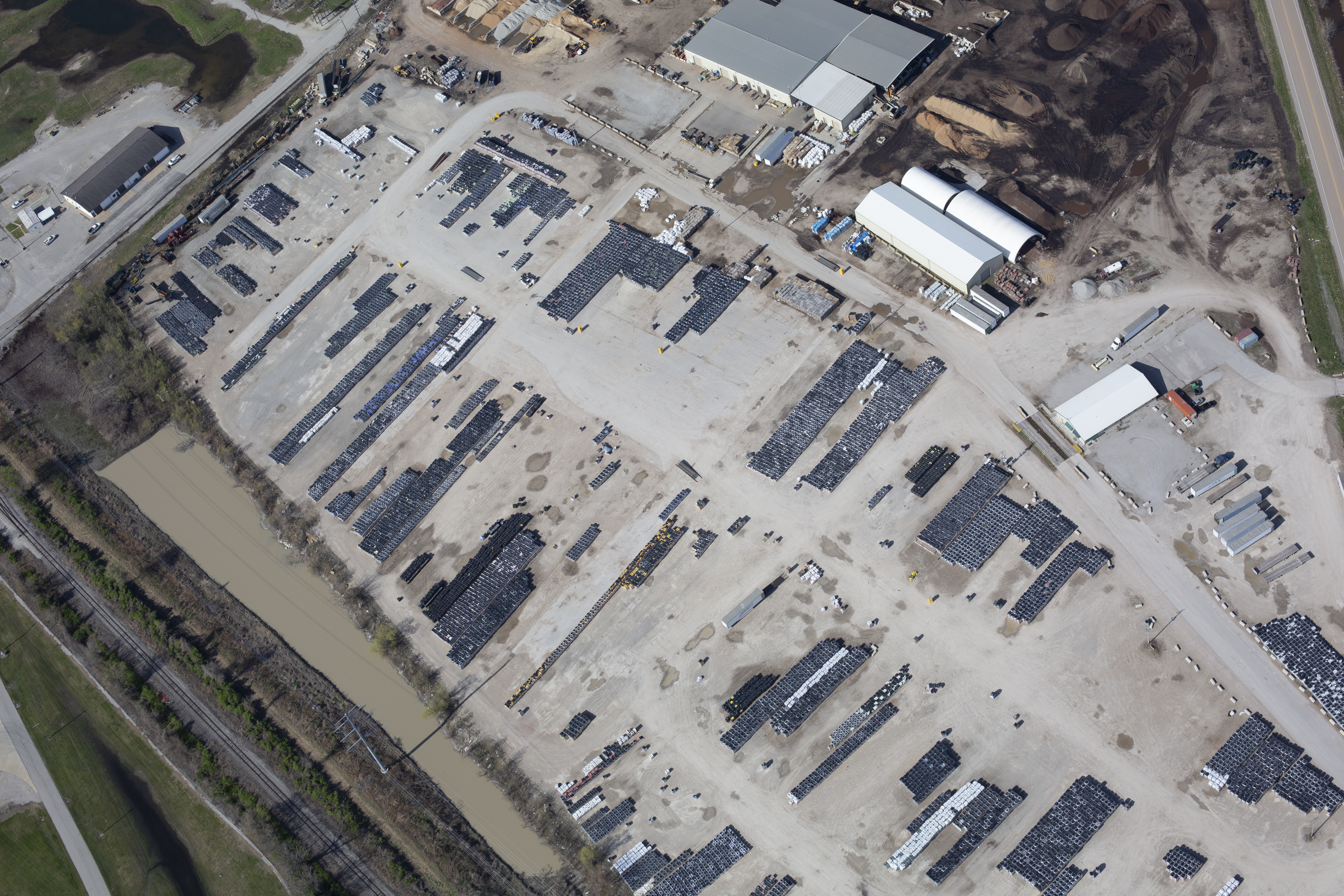
Professional airplane-based aerial photography allows us to document large industrial sites, mining operations, and construction zones from altitudes that provide unmatched scale and context. For volumetric analysis and compliance documentation, this is crucial.

Key benefits include:

  • High-Altitude Coverage: Capture complete site imagery in a single frame—no stitching, fewer shadows, and accurate representation.
  • Advanced Sensors and Camera Stabilization: Mounted high-resolution cameras with gyro-stabilization deliver clear imagery even at speed and altitude.
  • Data for 3D Modeling & Volumetrics: Orthomosaic mapping and photogrammetry from manned aircraft can be processed into volumetric measurements for accurate stockpile assessments.
  • Compliance with Airspace Laws: Airplane-based photography meets all regulatory requirements when drone usage is denied.

Applications Beyond the Fence Line

Industries like mining, aggregates, waste management, and infrastructure development frequently benefit from airplane photography, especially where:

  • Restricted Airspace Exists: We have experience navigating Class B, C, and D airspaces using certified pilots.
  • Ongoing Projects Require Historical Documentation: Regularly scheduled flyovers provide consistent imagery over time for tracking progress or changes.
  • Insurance and Legal Documentation Is Required: Courts, auditors, and insurance agencies often require aerial visuals captured through compliant, licensed operations.
How We Capture the Right Aerial Imagery

At St Louis Corporate Photographer, we handle all aspects of flight coordination, permitting, and safety compliance. Our team includes:

  • FAA-certified professionals who coordinate with ATC when needed
  • Photographers with extensive experience shooting from Cessna, Piper, or helicopter platforms
  • Advanced editing professionals who convert raw captures into clear, accurate, and usable deliverables for your reports or presentations

We also integrate Artificial Intelligence (AI) into our post-processing pipeline, allowing us to rapidly enhance clarity, detect edge boundaries in stockpiles, and generate analytics-ready outputs.
Our Proven Track Record

St Louis Corporate Photographer is a full-service professional commercial photography and video production company with the right equipment and creative crew service experience for successful image acquisition. We offer full-service studio and location photography and video, complete editing and post-production, and licensed drone pilots. But when drones aren’t an option, we pivot to airplane-based aerial solutions, always putting safety, compliance, and clarity first.

We’re well-versed in all file types and media styles, and we use cutting-edge AI tools to optimize our deliverables for presentation, marketing, or engineering analysis. Our private studio setup is ideal for interviews, testimonial shoots, and branded content, while our large production space accommodates custom set builds with props.

Since 1982, St Louis Corporate Photographer has been trusted by businesses, marketing firms, and creative agencies across the St. Louis area for their marketing, documentation, and corporate imaging needs. Whether you’re capturing your company’s expansion from above or tracking aggregates for compliance and inventory, we ensure your visuals are not just functional—but powerful.

Need to document a restricted or expansive area where drones can’t go? Let’s take to the skies—safely, legally, and with the clarity your team needs.
Reach out to St Louis Corporate Photographer to learn more about our airplane-based aerial photography services.

314-913-5626

stlouiscorporatephotographer@gmail.com